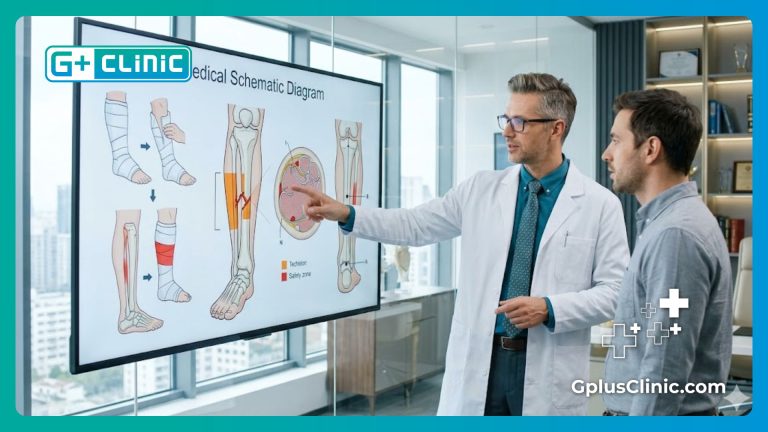
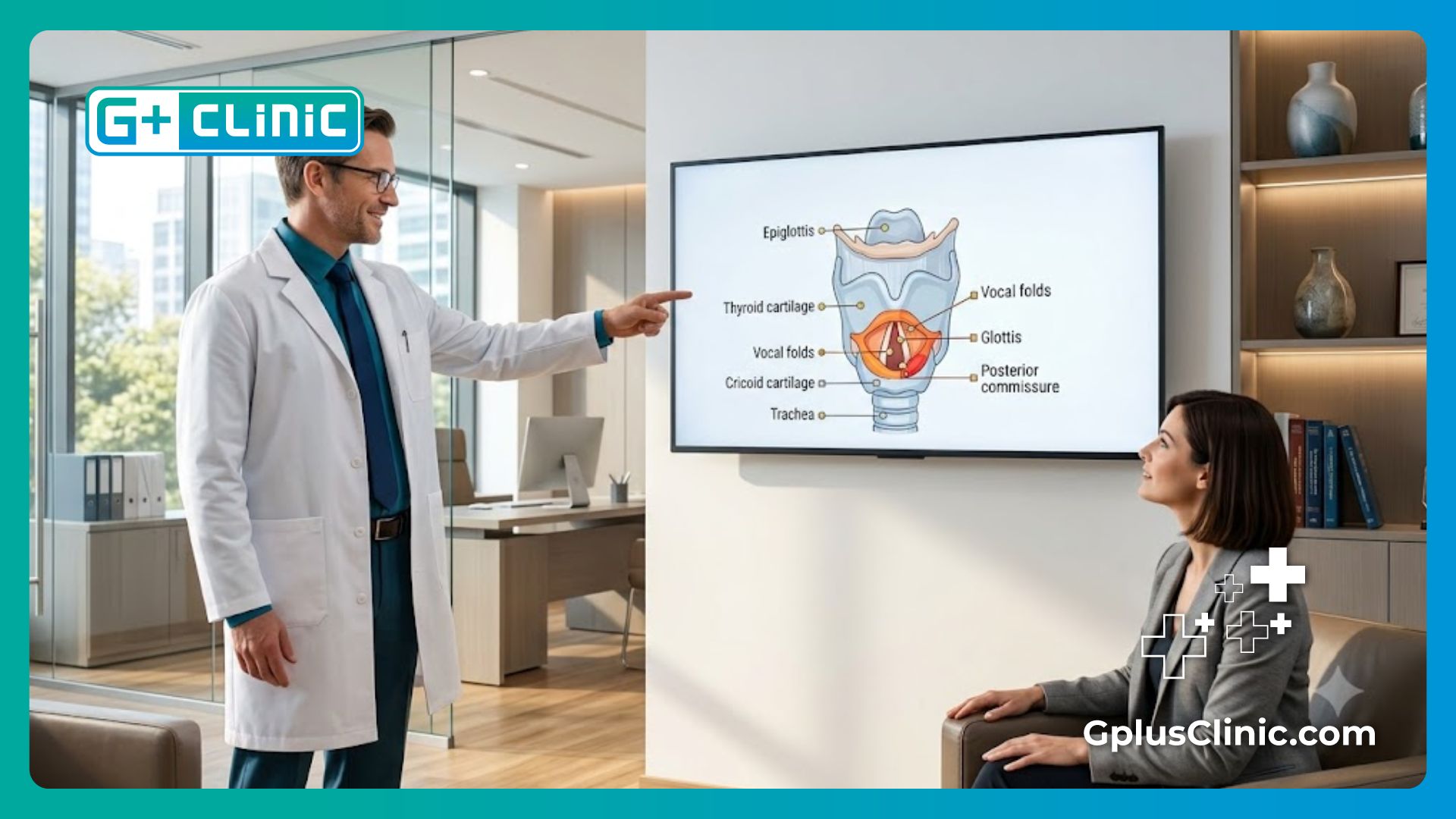
Safety is the priority when considering vocal cord surgery risks (vocal cord surgery risks). Understanding potential complications, surgical safety measures, and expected recovery trajectories empowers patients to make informed, confident choices about their laryngeal health. G+ Clinic offers a state-of-the-art clinical environment engineered to minimize vocal cord surgery risks while achieving excellent voice restoration outcomes.
Potential Vocal Cord Surgery Risks
Vocal cord surgery risks include temporary voice hoarseness, localized laryngeal swelling, minor bleeding, mild sore throat, and rare scarring of the vocal fold mucosa that can alter voice pitch. According to Cleveland Clinic, overall complication rates remain below 5% when procedures are performed by board-certified laryngologists using modern microsurgical equipment.
Vocal cord surgery risks vary depending on individual patient health, the complexity of the underlying lesion, and the surgical technique employed. Furthermore, surgical teams take meticulous precautions to protect delicate laryngeal tissues and minimize vocal cord surgery risks during intervention. Understanding vocal cord surgery risks assists patients in preparing both physically and mentally for their procedure. Consequently, thorough pre-operative evaluations are conducted to rule out systemic factors that might elevate vocal cord surgery risks. Clinical evidence confirms that experienced surgical hands significantly reduce the likelihood of persistent voice changes or structural complications.
“Controlling the surgical field with microscopic accuracy is the absolute foundation of eliminating vocal cord surgery risks, ensuring that mucosal integrity is preserved while achieving optimal therapeutic objectives.”
— Senior Laryngologist at G+ Clinic
What is Vocal Cord Surgery?
Vocal cord surgery encompasses specialized surgical procedures performed on the larynx to remove benign or malignant lesions, repair structural defects, or restore vocal fold mobility and voice clarity. (According to Mayo Clinic, advanced micro-laryngoscopy techniques achieve successful clinical outcomes in over 95% of treated patients).
Vocal cord surgery risks are carefully evaluated before recommending surgical intervention over conservative speech therapy. Moreover, understanding vocal cord surgery risks requires evaluating the specific anatomical site and surgical instruments used during treatment. Consequently, pre-operative stroboscopic assessments allow surgeons to tailor the procedure to each patient’s unique anatomy, minimizing unnecessary tissue disruption and keeping vocal cord surgery risks to an absolute minimum.
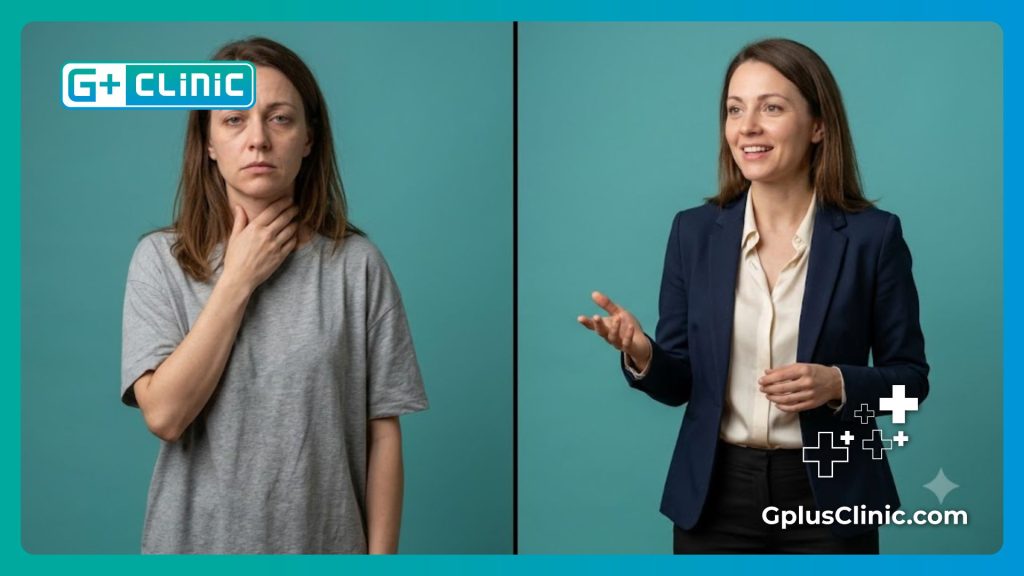
Vocal Cord Surgery Risks Cost Table
Evaluating financial costs alongside vocal cord surgery risks helps international patients plan their treatment journey with complete transparency:
| Procedure Type | Turkey Cost (€) | Europe Cost (€) | USA Cost (€) | Complication Level |
| Vocal Cord Polyp Excision | 2000 | 4500 | 7000 | Low |
| Vocal Cord Cyst Removal | 2200 | 4800 | 7500 | Low |
| CO2 Laser Cordectomy | 2500 | 5500 | 8500 | Moderate |
| Vocal Fold Injection Augmentation | 1500 | 3500 | 5000 | Very Low |
| Medialization Laryngoplasty | 3000 | 6000 | 9500 | Moderate |
| Laryngeal Reconstruction | 4500 | 8500 | 12000 | Higher |
| Micro-Laryngoscopy Biopsy | 1800 | 4000 | 6000 | Low |
| Subglottic Stenosis Repair | 3500 | 7000 | 10500 | Moderate |
| Reinke’s Edema Debulking | 2300 | 5000 | 7800 | Low |
| Laryngeal Papilloma Excision | 2400 | 5200 | 8000 | Moderate |
Evaluating overall financial investment against vocal cord surgery risks ensures patients select accredited institutions providing maximum surgical safety and expertise.
Advanced Technologies to Minimize Vocal Cord Surgery Risks
Leading medical institutions utilize state-of-the-art instruments to control vocal cord surgery risks:
- High-definition operating surgical microscopes.
- Ultrapulse CO2 laser delivery platforms.
- Intraoperative recurrent laryngeal nerve monitoring.
- Micro-flap delicate surgical instruments.
- Cold instrument micro-dissection tools.
- Video-stroboscopic diagnostic imaging equipment.
Implementing these cutting-edge medical technologies significantly reduces vocal cord surgery risks across all clinical scenarios.
Ideal Candidates to Reduce Vocal Cord Surgery Risks
Ideal candidates to minimize vocal cord surgery risks include individuals with non-invasive vocal fold lesions, stable overall cardiopulmonary health, non-smokers, and patients demonstrating strict compliance with post-operative vocal rest protocols. (According to ISAPS, rigorous patient selection protocols dramatically lower procedural risks across specialized surgical fields).
Furthermore, candidates undergoing thorough pre-surgical screening present significantly fewer intraoperative complications. Conversely, patients with uncontrolled gastroesophageal reflux or active respiratory infections may need medical stabilization prior to surgery to mitigate vocal cord surgery risks. Consequently, comprehensive pre-operative testing ensures optimal tissue healing and protects long-term vocal resonance.
Target Anatomical Zones in Laryngeal Procedures
Surgeons focus on distinct anatomical structures while managing vocal cord surgery risks:
- Epithelial mucosal surface layers.
- Reinke’s space lamina propria.
- Vocalis muscle tissue bed.
- Anterior commissure laryngeal joint.
- Posterior arytenoid cartilage frame.
- Subglottic airway lumen area.
- False vocal fold structures.
Protecting these vital structural zones remains crucial for avoiding vocal cord surgery risks during precision surgery.
Anesthesia Protocols in Laryngeal Surgery
Anesthesia administration requires specialized expertise to prevent airway compromise and manage vocal cord surgery risks effectively. General anesthesia with endotracheal intubation is standard for micro-laryngoscopy, using specialized small-diameter tubes that afford the surgeon an unobstructed view of the vocal folds. Furthermore, continuous monitoring of cardiac rhythm, oxygen saturation, and end-tidal carbon dioxide maintains physiological stability throughout the procedure.
Moreover, the duration of most micro-laryngoscopic interventions ranges between 45 minutes and two hours, minimizing prolonged anesthetic exposure. Consequently, smooth emergence from anesthesia is carefully managed to prevent coughing or gagging, which could exert sudden physical stress on delicate vocal fold sutures. Mitigating vocal cord surgery risks during the extubation phase ensures a seamless transition into post-operative recovery.
Vocal Cord Surgery Steps Timeline
Following a standardized chronological workflow helps clinical teams contain vocal cord surgery risks:
| Clinical Phase | Technical Execution | Safety Objective | Estimated Duration |
| Pre-Operative Consultation | Video-stroboscopic evaluation | Confirm lesion diagnosis | 45 Minutes |
| Diagnostic Clearance | Laboratory & cardiac testing | Exclude surgical contraindications | 1 to 2 Days |
| Anesthetic Induction | Specialized endotracheal intubation | Secure open airway | 30 Minutes |
| Laryngoscope Placement | Rigid suspension laryngoscopy | Optimize operative visualization | 15 Minutes |
| Microscopic Dissection | Micro-flap excision of lesion | Preserve mucosal lining | 45 Minutes |
| Hemostasis Verification | Micro-point thermal control | Prevent hematoma formation | 15 Minutes |
| Anesthesia Emergence | Controlled extubation protocol | Avoid post-operative coughing | 30 Minutes |
| PACU Recovery | Continuous pulse oximetry | Monitor airway stability | 2 Hours |
Adhering strictly to every clinical phase limits vocal cord surgery risks from initial preparation to complete recovery.
Why Choose G+ Clinic to Mitigate Vocal Cord Surgery Risks?
Patient safety remains paramount when choosing G+ Clinic to eliminate vocal cord surgery risks:
- Internationally accredited surgical hospital facilities.
- Board-certified ENT micro-surgeons with global experience.
- Dedicated post-operative voice rehabilitation programs.
- Multilingual patient coordinator and translator assistance.
- Comprehensive pre-surgical screening safety protocols.
- All-inclusive luxury recovery and transport packages.
These high standards ensure patients undergo treatment with minimal exposure to vocal cord surgery risks.
Detailed Vocal Cord Surgery Procedure
Every step of the intervention is carefully planned to avoid vocal cord surgery risks:
- Comprehensive pre-operative videostroboscopy assessment examination.
- Administration of targeted endotracheal general anesthesia.
- Insertion of rigid suspension operative laryngoscope.
- High-magnification microscopic visualization of vocal folds.
- Delicate micro-flap mucosal elevation phase.
- Precise excision of underlying pathological tissue mass.
- Careful hemostasis verification using specialized micro-dabs.
- Smooth emergence from anesthesia and airway monitoring.
Executing each step with extreme precision mitigates vocal cord surgery risks effectively.
Laser vs Traditional Technique Comparison
Analyzing procedural methods highlights how technical choices influence vocal cord surgery risks:
| Surgical Feature | Cold Instrument Microsurgery | CO2 Laser Micro-Resection |
| Cut Precision | High tissue specificity | Ultra-precise focal ablation |
| Bleeding Control | Manual micro-compression | Instant thermal hemostasis |
| Thermal Injury Risk | None | Low with pulsed settings |
| Healing Speed | Rapid mucosal closure | Moderate tissue regeneration |
| Equipment Complexity | Standard microsurgical | Advanced laser technology |
| Anesthesia Type | General intubation | General intubation |
| Mucosal Preservation | Superior for benign cysts | Superior for vascular lesions |
| Risk of Scarring | Extremely minimal | Low to moderate |
Selecting the appropriate surgical modality plays a pivotal role in minimizing vocal cord surgery risks.
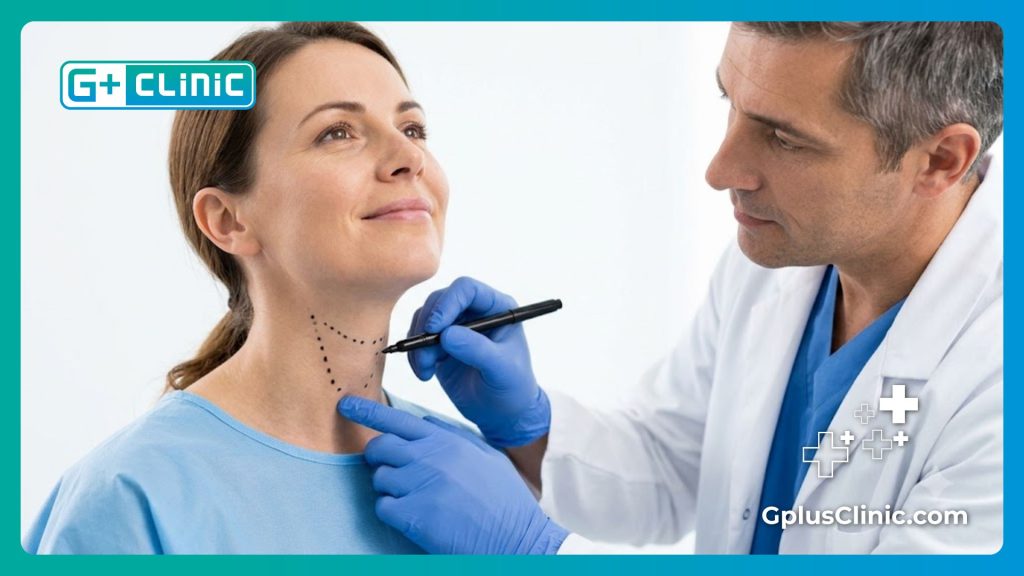
When Do Vocal Cord Surgery Results Appear?
Initial voice functional improvements appear within 3 to 4 weeks following surgery, while full vocal clarity and resonance stabilization occur between 3 and 6 months after mucosal healing and speech therapy.
Consequently, patience and strict adherence to post-operative guidelines are essential during the healing period. Furthermore, early voice therapy plays a vital role in preventing scar tissue formation and optimizing vocal cord vibration. Regular follow-up evaluations at G+ Clinic ensure that recovery progresses smoothly without unexpected vocal cord surgery risks.
Preparation to Avoid Vocal Cord Surgery Risks
Patient preparation is vital for eliminating preventable vocal cord surgery risks:
- Complete cessation of tobacco smoking.
- Discontinuation of blood-thinning medications.
- Control of gastroesophageal reflux symptoms.
- Absolute fasting for eight hours.
- Adequate pre-operative systemic hydration.
- Arrangement of silent home environment.
Thorough pre-operative compliance drastically reduces vocal cord surgery risks prior to operating.
Pros and Cons of Vocal Cord Surgery Procedures
Weighing clinical benefits against potential vocal cord surgery risks allows patients to make informed treatment decisions:
| Expected Clinical Benefits | Potential Surgical Drawbacks |
| Restoration of clear voice quality | Temporary post-operative hoarseness |
| Elimination of vocal cord lesions | Mandatory period of complete silence |
| Improved airway efficiency and breathing | General anesthesia administration risks |
| Increased vocal endurance for speaking | Financial investment for specialized care |
| Enhanced professional communication confidence | Risk of lesion recurrence without care |
| Microscopic surgical precision preserving tissue | Requirement for structured speech therapy |
| Permanent therapeutic resolution of pathology | Minor risk of localized mucosal scarring |
| Minimally invasive approach with no skin incisions | Temporary throat discomfort after surgery |
Understanding both sides empowers patients to navigate vocal cord surgery risks realistically.
VIP Services for International Patients
Overseas patients receive premium support to alleviate stress surrounding vocal cord surgery risks:
- Five-star luxury hotel accommodations.
- Private VIP airport transfer transport.
- Personal medical translator companion.
- Dedicated 24/7 nursing assistance.
- Customized silent communication tools.
Premium healthcare support guarantees complete peace of mind while addressing vocal cord surgery risks.
Common Myths About Vocal Cord Surgery Risks
A common myth is that vocal cord surgery risks inevitably result in permanent loss of voice; in reality, modern microsurgical techniques achieve over 95% success in enhancing voice quality without long-term damage.
Conversely, some patients falsely believe that post-operative voice rest is unnecessary. On the contrary, observing strict vocal silence is critical for proper mucosal healing. Consequently, gathering accurate medical information from accredited specialists clears misconceptions surrounding vocal cord surgery risks.
Recovery Timeline After Vocal Cord Surgery
Following a structured recovery schedule mitigates long-term vocal cord surgery risks:
- Week one absolute vocal rest.
- Week two soft conversational speech.
- Month one voice therapy sessions.
- Month two gradual vocal stamina build.
- Month three final vocal outcome evaluation.
Following these structured milestones protects vocal health against persistent vocal cord surgery risks.
Patient Stories Regarding Vocal Cord Surgery Risks
Sarah (34): “I was terrified of vocal cord surgery risks as a professional vocalist, but the expertise at G+ Clinic restored my confidence and voice entirely.”
Michael (48): “Understanding the real vocal cord surgery risks helped me realize my fears were unfounded, and my polyp surgery went smoothly without complications.”
Elena (29): “The silent recovery period was challenging, but avoiding vocal cord surgery risks through careful guidance brought back my clear voice.”
David (55): “Choosing a clinic experienced in handling vocal cord surgery risks made all the difference in my recovery from Reinke’s edema.”
Hidden Costs Associated with Vocal Cord Surgery
Financial planning must account for peripheral expenses related to vocal cord surgery risks:
- Post-operative voice therapy session fees.
- Prescribed anti-reflux medication costs.
- International flight ticket purchases.
- Extended hotel stay extensions.
- Specialized vocal hydration devices.
Accounting for auxiliary expenses avoids unexpected financial strain while navigating vocal cord surgery risks.
Long-Term Maintenance Tips for Voice Preservation
Maintaining vocal health prevents recurrent pathology and avoids new vocal cord surgery risks:
- Maintain optimal daily hydration levels.
- Avoid forceful vocal strain shouting.
- Manage gastric acid reflux aggressively.
- Refrain from environmental tobacco smoke.
- Utilize microphone amplification devices.
- Practice daily vocal warm-up exercises.
Consistent vocal hygiene ensures lasting therapeutic benefits and minimizes vocal cord surgery risks over time.
Surgical Intervention vs Voice Therapy Comparison
Comparing primary management options clarifies when surgical intervention and associated vocal cord surgery risks are necessary:
| Comparison Factor | Microsurgical Intervention | Behavioral Voice Therapy |
| Primary Objective | Direct lesion removal | Muscle re-education |
| Onset of Results | Rapid anatomical restoration | Progressive over months |
| Target Conditions | Cysts, polyps, papillomas | Muscle tension dysphonia |
| Procedural Risks | Anesthesia & scarring risks | No physiological risks |
| Invasiveness Level | Minimally invasive surgical | Non-invasive behavioral |
| Patient Effort | Post-op rest & compliance | Daily exercise commitment |
| Recurrence Prevention | Requires habit modifications | Directly targets voice habits |
| Long-term Success | High for structural lesions | High for functional disorders |
Evaluating medical indications helps patients weigh vocal cord surgery risks against non-invasive alternatives.
Adopting a healthy lifestyle represents a vital pillar in sustaining surgical outcomes and minimizing vocal cord surgery risks over a lifetime. Surgery addresses structural pathology, but long-term vocal health depends on ongoing self-care. Moreover, controlling gastroesophageal reflux through dietary adjustments prevents stomach acid from irritating delicate laryngeal mucosa. Consequently, avoiding environmental irritants such as cigarette smoke and vocal overuse safeguards against lesion recurrence. (According to WHO, comprehensive post-surgical wellness programs improve long-term functional recovery by over 80%).
How to Book Your Consultation at G+ Clinic
Starting your treatment journey while minimizing vocal cord surgery risks involves simple steps:
- Submit online consultation request form.
- Share existing ENT medical records.
- Receive customized surgical evaluation plan.
- Confirm flight and accommodation dates.
- Undergo pre-operative clinical evaluation.
- Proceed with safe surgical treatment.
Structured booking management guarantees a safe surgical experience free from unmanaged vocal cord surgery risks.

Are You Ready to Address Vocal Cord Surgery Risks?
Making an informed choice regarding vocal cord surgery risks empowers individuals to regain voice clarity and quality of life. Modern microsurgical techniques combined with expert care significantly reduce procedural hazards while delivering predictable results. G+ Clinic combines elite surgical talent with advanced technology to ensure patient safety at every stage. Are you ready to take the next step toward voice restoration?
FAQ About Vocal Cord Surgery Risks
Can vocal cord surgery risks cause permanent voice loss?
No, modern microsurgical procedures are designed to enhance voice quality, and permanent voice loss is an extremely rare complication when performed by experienced laryngologists.
How long should I observe vocal rest to avoid vocal cord surgery risks?
Most patients are advised to observe total vocal rest for 5 to 7 days, followed by relative vocal rest for an additional week to ensure proper mucosal healing.
Is general anesthesia safe during vocal cord procedures?
Yes, general anesthesia is administered by dedicated ENT anesthesiologists using specialized small endotracheal tubes to protect the airway and ensure patient safety throughout.
Does voice therapy help reduce vocal cord surgery risks?
Yes, post-operative voice therapy is essential for retraining laryngeal muscles, preventing hyperfunctional vocal habits, and reducing the risk of scar tissue formation.
What is the success rate of surgery at G+ Clinic?
With board-certified surgeons and advanced equipment, success rates at G+ Clinic exceed 95%, with effective management of all potential vocal cord surgery risks.