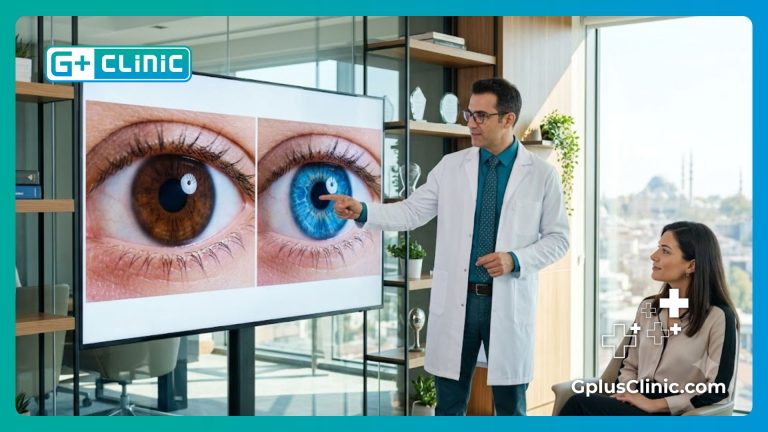
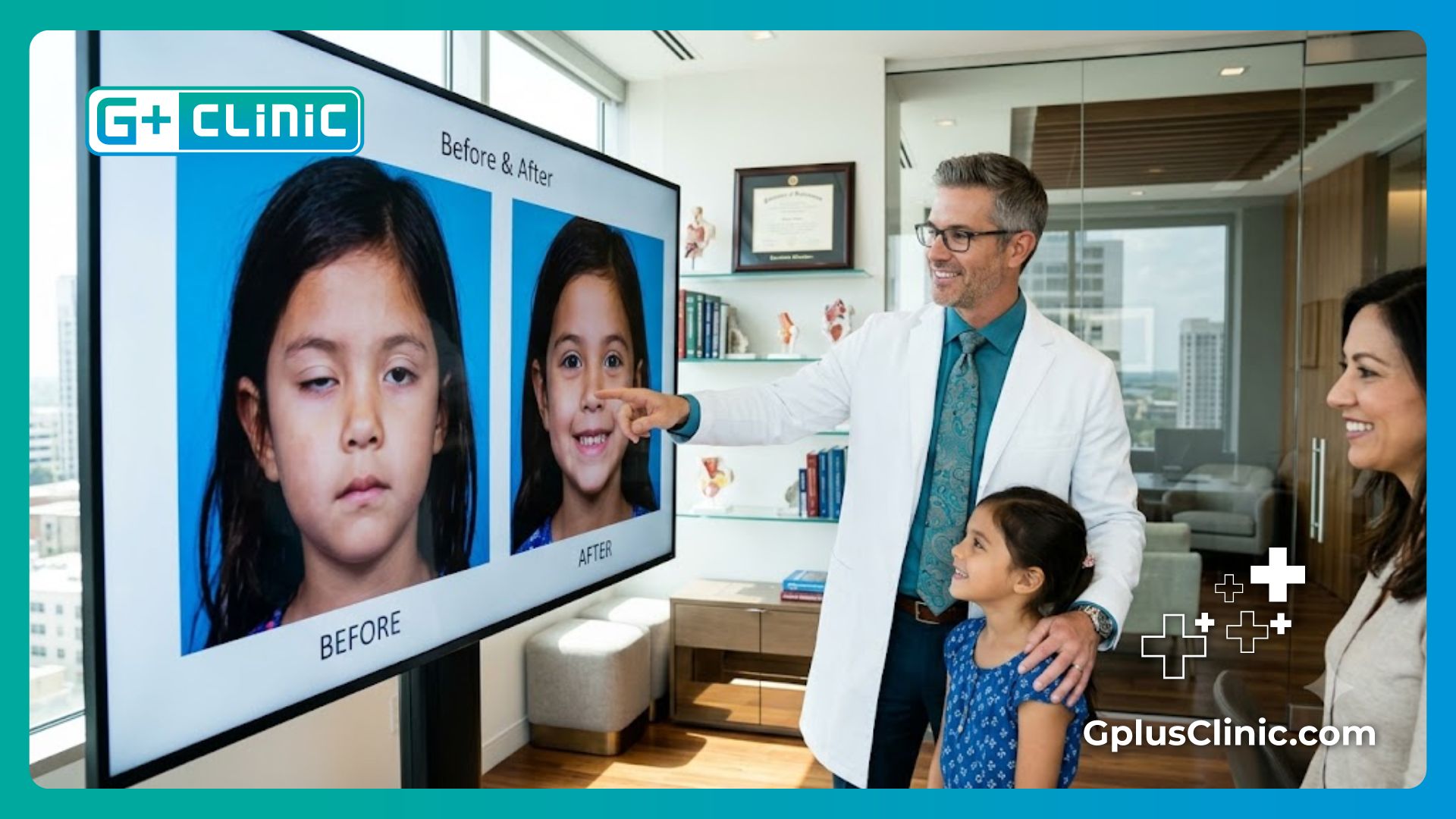
Pediatric Ptosis Surgery (drooping eyelid correction) is a critical medical procedure designed to restore normal vision and prevent long-term ocular defects in children. Choosing the right experts at G+ Clinic ensures that your child receives the highest standard of surgical care and optimal visual development. Consequently, addressing this condition with specialized medical intervention is an investment in your child’s future well-being.
What is Pediatric Ptosis Surgery?
Pediatric Ptosis Surgery is a specialized ophthalmic procedure aimed at lifting a drooping upper eyelid to prevent amblyopia (lazy eye) and restore an unobstructed field of vision. Furthermore, this intervention provides functional restoration alongside significant cosmetic improvements. (According to Cleveland Clinic, early intervention prevents permanent vision loss in over 85% of pediatric cases).
Pediatric Ptosis Surgery corrects the levator muscle deficiency effectively by either shortening or tightening the affected tissues. Moreover, relying on conservative measures instead of definitive correction can lead to irreversible developmental delays in the visual cortex. Therefore, Pediatric Ptosis Surgery stands out as a fundamental necessity rather than a mere aesthetic choice, allowing children to perceive light and images symmetrically.
Pediatric Ptosis Surgery Cost Table
Understanding the financial investment required for Pediatric Ptosis Surgery is essential for parents planning this life-changing procedure:
| Surgical Component | Turkey (Competitive Price) | Europe (High Price) | USA (Highest Price) |
| Unilateral Eyelid Correction | 1500€ | 3500€ | 5000€ |
| Bilateral Eyelid Correction | 2400€ | 5500€ | 8000€ |
| Specialized Pediatric Anesthesia | 300€ | 800€ | 1500€ |
| Comprehensive Pre-op Diagnostics | 150€ | 400€ | 700€ |
| Hospital Stay and Monitoring | 200€ | 600€ | 1000€ |
| Prescription Medications and Drops | 50€ | 150€ | 300€ |
| Initial Surgical Consultation | Free | 200€ | 400€ |
| Dedicated VIP Transport Services | 100€ | 300€ | 500€ |
Analyzing these figures demonstrates why undergoing Pediatric Ptosis Surgery in Turkey offers the best balance of affordability and world-class medical excellence.

Advanced Technologies for Pediatric Ptosis Surgery
Medical advancements have introduced highly precise instruments and techniques for Pediatric Ptosis Surgery:
- High-definition surgical microscopes for extreme tissue magnification.
- Self-dissolving cosmetic sutures to eliminate removal anxiety.
- Advanced biocompatible silicone slings for frontalis suspension.
- Radiofrequency cutting tools to minimize intraoperative bleeding.
- Real-time pediatric vital sign monitoring systems.
- Customized levator resection instruments for exact measurements.
- Laser-assisted incisions for faster epithelial healing.
Utilizing these cutting-edge tools ensures that Pediatric Ptosis Surgery remains a highly safe, meticulously controlled, and minimally invasive experience.
Candidates for Pediatric Ptosis Surgery
The ideal candidate for Pediatric Ptosis Surgery is a child whose drooping eyelid significantly obstructs the pupil, causing them to tilt their head back to see, provided they are in good general health for anesthesia. (According to Mayo Clinic, surgery is strongly indicated when vision obstruction exceeds 30%).
Pediatric Ptosis Surgery requires a thorough preoperative evaluation by both a pediatric ophthalmologist and an oculoplastic surgeon to confirm these exact indications. Moreover, G+ Clinic ensures a rigorous screening process to rule out underlying neurological or muscular disorders like myasthenia gravis. Consequently, proper patient selection guarantees that Pediatric Ptosis Surgery delivers profound and enduring improvements in visual acuity.
Target Adjustments in Pediatric Ptosis Surgery
Surgeons focus on specific muscular and anatomical components during Pediatric Ptosis Surgery:
- Tightening the weakened levator palpebrae superioris muscle.
- Creating a supportive linkage to the frontalis forehead muscle.
- Removing excess redundant skin obstructing the visual axis.
- Adjusting the tarsal plate for enhanced structural stability.
- Realigning the upper eyelid crease for perfect facial symmetry.
- Strengthening the Müller’s muscle in mild drooping cases.
By precisely modifying these tissues, Pediatric Ptosis Surgery achieves both functional symmetry and a natural aesthetic balance.
Anesthesia for Pediatric Ptosis Surgery
Pediatric Ptosis Surgery necessitates the use of general anesthesia to ensure the child remains completely still, relaxed, and pain-free throughout the delicate operation. Furthermore, a specialized pediatric anesthesiologist is present at all times to monitor the patient’s respiratory and cardiovascular parameters meticulously.
Pediatric Ptosis Surgery typically lasts between 45 minutes to two hours, depending heavily on whether one or both eyes require correction and the specific surgical technique deployed. However, the induction and recovery from modern anesthetic agents are incredibly smooth, allowing children to wake up comfortably without severe grogginess.
“Restoring a child’s visual field is not merely an aesthetic enhancement; it is a foundational step in their neurological and cognitive development. Uncompromising microsurgical precision makes this procedure remarkably safe and highly transformative.”
— Senior Surgeon atG+ Clinic
Pediatric Ptosis Surgery Steps Timeline
A meticulously planned clinical pathway defines the entire process of Pediatric Ptosis Surgery:
| Procedural Phase | Clinical Action Performed | Estimated Duration | Treatment Location |
| Comprehensive Evaluation | Detailed visual acuity and muscle testing | 40 Minutes | Outpatient Clinic |
| Preoperative Preparation | Blood tests and anesthesia induction | 2 Hours | Hospital Ward |
| Micro-Incision Phase | Creating hidden crease incisions | 10 Minutes | Operating Room |
| Muscle Modification | Resecting or suspending the eyelid muscle | 45 Minutes | Operating Room |
| Precision Closure | Suturing with dissolvable cosmetic threads | 15 Minutes | Operating Room |
| Immediate Awakening | Extubation and vital sign stabilization | 1 Hour | Recovery Room |
| Postoperative Monitoring | Assessing initial eyelid elevation and symmetry | 3 Hours | Private Suite |
| Medical Discharge | Providing home care instructions and medications | 30 Minutes | Discharge Desk |
Following this structured timeline guarantees that Pediatric Ptosis Surgery is performed with maximum efficiency and optimal patient safety.
Why Choose G+ Clinic for Pediatric Ptosis Surgery?
Families worldwide select our prestigious institution for Pediatric Ptosis Surgery due to several unparalleled advantages:
- Internationally recognized JCI accreditation for medical safety.
- Elite surgeons specializing exclusively in pediatric oculoplastics.
- State-of-the-art sterile operating theaters designed for microsurgery.
- Dedicated 24/7 pediatric nursing care post-operation.
- Professional medical interpreters fluent in multiple languages.
- Comprehensive one-year follow-up tracking visual development.
Consequently, opting for G+ Clinic transforms the complex journey of Pediatric Ptosis Surgery into a reassuring and seamless experience.
Procedure Details for Pediatric Ptosis Surgery
The surgical protocol involves a highly standardized sequence of events during Pediatric Ptosis Surgery:
- Disinfecting the entire periorbital region rigorously.
- Administering weight-adjusted pediatric general anesthesia.
- Marking the natural eyelid crease for a hidden incision.
- Isolating the levator muscle from surrounding orbital fat.
- Shortening the muscle fibers to the predetermined length.
- Securing the adjusted muscle using high-tensile sutures.
- Comparing bilateral symmetry dynamically on the operating table.
- Applying an antibiotic ophthalmic ointment to the cornea.
- Placing a light, protective sterile dressing over the eye.
Adhering strictly to these micro-surgical steps ensures that Pediatric Ptosis Surgery yields permanent and flawless outcomes.
Technique Comparison in Pediatric Ptosis Surgery
Surgeons must choose between distinct anatomical approaches when performing Pediatric Ptosis Surgery:
| Comparison Metric | Levator Resection Technique | Frontalis Sling Suspension |
| Primary Mechanism | Shortening the native lifting muscle | Connecting eyelid to forehead muscle |
| Ideal Candidate | Mild to moderate levator function | Poor or zero levator function |
| Surgical Duration | Approximately 60 minutes | Approximately 90 minutes |
| Expected Recovery | One to two weeks | Two to three weeks |
| Aesthetic Symmetry | Excellent and highly natural movement | Very good, relies on eyebrow movement |
| Functional Success | Extremely high for suitable patients | Highly effective for severe congenital cases |
| Anesthesia Type | General anesthesia for children | General anesthesia for children |
| Overall Cost | Moderate financial investment | Slightly higher due to sling materials |
Evaluating these specific methods allows the medical team to customize Pediatric Ptosis Surgery for every unique pediatric case.
When do Pediatric Ptosis Surgery Results Appear?
Initial results of Pediatric Ptosis Surgery are visible immediately after the operation, as the eyelid is noticeably elevated. However, the final symmetric outcome takes approximately 3 to 6 months to manifest fully once all residual tissue edema subsides.
Pediatric Ptosis Surgery demands patience from parents during the initial healing phase, as the eyelid may temporarily rest higher than desired, or the eye might remain slightly open during sleep (lagophthalmos). Furthermore, this is a standard physiological adaptation, and G+ Clinic provides continuous monitoring to track these developing results. Consequently, proper lubrication of the eye during this period is critical.
Preparation for Pediatric Ptosis Surgery
Proper preoperative readiness is non-negotiable before undergoing Pediatric Ptosis Surgery:
- Enforcing an eight-hour strict fasting period before surgery.
- Discontinuing all blood-thinning medications or supplements.
- Completing all mandatory pediatric blood chemistry panels.
- Performing a final visual acuity and corneal topography check.
- Preparing comfortable, button-down clothing for hospital discharge.
- Purchasing prescribed lubricating eye drops in advance.
Strict adherence to these guidelines minimizes intraoperative risks and ensures smooth execution of Pediatric Ptosis Surgery.

Pros and Cons of Pediatric Ptosis Surgery
Every medical intervention requires a balanced understanding of the benefits and risks associated with Pediatric Ptosis Surgery:
| Core Benefits (Pros) | Potential Risks (Cons) |
| Instantly clears the obstructed central visual axis | Temporary postoperative swelling and bruising |
| Prevents irreversible amblyopia (lazy eye) development | Mild difficulty closing the eye completely at first |
| Eliminates chronic neck pain from abnormal head tilting | Temporary corneal dryness requiring frequent drops |
| Restores natural and symmetrical facial aesthetics | Small possibility of needing a minor surgical revision |
| Significantly boosts the child’s psychological confidence | Standard, yet rare, general anesthesia complications |
| Delivers permanent or highly durable structural correction | Slight risk of minor bleeding at the incision site |
| A relatively fast procedure with same-day discharge | Temporary photophobia (sensitivity to bright light) |
Ultimately, the functional necessity of Pediatric Ptosis Surgery far outweighs the temporary postoperative inconveniences.
VIP Services for Pediatric Ptosis Surgery
To eliminate parental stress, our facility provides exclusive premium amenities alongside Pediatric Ptosis Surgery:
- Private chauffeured transfers from the international airport.
- Accommodation in luxurious five-star partner hotels.
- A dedicated personal host assisting with hospital logistics.
- Private recovery suites equipped for family comfort.
- Nutritional pediatric meals customized for post-anesthesia.
- Arranging light family tourism activities post-recovery.
These luxurious additions guarantee that traveling for Pediatric Ptosis Surgery is both comfortable and highly memorable.
Myths about Pediatric Ptosis Surgery
A common misconception is that Pediatric Ptosis Surgery alters the actual eyeball or degrades visual acuity. In reality, the procedure only involves the external eyelid muscles and is fundamentally necessary to protect the eye from permanent vision loss.
Pediatric Ptosis Surgery does not penetrate the ocular globe; thus, the retina and lens remain completely untouched. Moreover, another dangerous myth suggests waiting until the child is a teenager; however, delaying treatment often leads to untreatable lazy eye. Therefore, parents should not delay Pediatric Ptosis Surgery out of unfounded fears.
Risks of Pediatric Ptosis Surgery
Pediatric Ptosis Surgery carries standard surgical risks such as minor bleeding, temporary dry eyes, or slight under-correction requiring future adjustments. However, employing elite microsurgical protocols drastically mitigates these concerns, ensuring the child’s absolute safety. (According to WHO, strictly sterile operating environments reduce infection risks in elective surgeries to below 1%).
Pediatric Ptosis Surgery requires meticulous postoperative care to manage these minimal risks, particularly concerning corneal protection. Furthermore, parents are thoroughly trained on how to apply lubricating ointments at night to prevent exposure keratitis. Consequently, Pediatric Ptosis Surgery is overwhelmingly safe when executed by sub-specialized experts in a controlled clinical environment.
Recovery after Pediatric Ptosis Surgery
The postoperative healing phase follows a predictable and steady progression after Pediatric Ptosis Surgery:
- Day 1: Complete rest with cool compresses applied gently.
- Day 3: Noticeable reduction in acute eyelid swelling.
- Week 1: Removal of any non-dissolvable superficial sutures.
- Week 2: Safe return to school and light daily activities.
- Month 1: Significant aesthetic improvement and tissue softening.
- Month 3: Full stabilization of the levator muscle function.
- Month 6: Permanent, symmetrical, and final surgical outcome.
Completing these specific milestones ensures that the functional gains of Pediatric Ptosis Surgery remain stable and enduring.
Patient Stories: Pediatric Ptosis Surgery
Real-world experiences highlight the transformative power of Pediatric Ptosis Surgery:
- Emma (Age 4): “Emma used to tilt her chin up just to watch television. After undergoing Pediatric Ptosis Surgery at G+ Clinic, she looks straight ahead naturally, and her confidence has skyrocketed.”
- Liam (Age 6): “We were terrified of the anesthesia, but the medical team was phenomenal. Pediatric Ptosis Surgery saved his vision, and the recovery was much faster than we anticipated.”
- Sophia (Age 5): “Her drooping eyelid was causing severe lazy eye. The Pediatric Ptosis Surgery corrected the muscle perfectly, and today her vision tests are completely normal.”
- Noah (Age 3): “Traveling for Pediatric Ptosis Surgery was the best decision we made. The VIP services took all the stress away, and Noah’s eyes are beautifully symmetrical now.”
These narratives prove that Pediatric Ptosis Surgery is a profound intervention that reshapes a child’s interaction with the world.
Hidden Costs for Pediatric Ptosis Surgery
Transparent financial planning requires acknowledging the supplementary expenses linked to Pediatric Ptosis Surgery:
- International round-trip flights to Istanbul, Turkey.
- High-quality UV-blocking sunglasses for postoperative protection.
- Extended supplies of preservative-free lubricating eye drops.
- Accommodation costs for additional accompanying family members.
- Medical visa application fees for international entry.
- Optional tourist excursions during the extended recovery stay.
Factoring in these variables allows families to budget accurately for their comprehensive Pediatric Ptosis Surgery journey.
Maintaining Pediatric Ptosis Surgery Results
Postoperative diligence is crucial for sustaining the long-term success of Pediatric Ptosis Surgery:
- Administering lubricating eye drops frequently throughout the day.
- Applying antibiotic ointments nightly as strictly prescribed.
- Preventing the child from rubbing or scratching the operated eye.
- Ensuring the child wears sunglasses outdoors to prevent UV irritation.
- Attending all scheduled virtual or in-person follow-up consultations.
- Monitoring visual acuity through regular pediatric eye exams.
Consistent adherence to these protective measures solidifies the excellent outcomes achieved through Pediatric Ptosis Surgery.
Pediatric Ptosis Surgery vs Non-Surgical Alternatives
Parents frequently compare definitive operative correction via Pediatric Ptosis Surgery against conservative management:
| Medical Aspect | Pediatric Ptosis Surgery | Conservative Methods (Patching/Glasses) |
| Core Efficacy | Directly repairs the anatomical muscle weakness | Only stimulates vision, does not lift the lid |
| Result Longevity | Permanent structural and functional correction | Requires daily, continuous, long-term compliance |
| Aesthetic Impact | Instantly restores normal facial symmetry | Leaves the drooping eyelid appearance unchanged |
| Amblyopia Prevention | Highly effective by immediately clearing the visual axis | Effectiveness relies heavily on the child’s cooperation |
| Psychological Benefit | Rapidly eliminates social anxiety and potential bullying | Wearing patches can cause social embarrassment |
| Total Expense | A one-time surgical investment | Ongoing costs for new glasses and medical patches |
| Clinical Recommendation | The absolute gold standard for moderate to severe cases | Limited strictly to very mild, non-obstructive cases |
This comparative analysis definitively proves that Pediatric Ptosis Surgery is the only permanent solution for structural eyelid drooping.
Healthy Lifestyle and Visual Support
Pediatric Ptosis Surgery serves as a critical anatomical correction, but comprehensive visual health requires ongoing environmental support. Proper nutrition, specifically diets rich in Vitamin A and Omega-3 fatty acids, supports retinal health and accelerates tissue healing after surgery. Furthermore, limiting exposure to harsh digital screens during the first few weeks of recovery prevents severe eye strain and exacerbation of temporary dry eyes.
Psychological support is equally paramount following the procedure. Children often experience a profound shift in self-esteem once their facial symmetry is restored. (According to ISAPS, functional-aesthetic reconstructive surgeries in youths yield a 95% psychological satisfaction rate when performed by accredited specialists). Consequently, G+ Clinic emphasizes a holistic approach, ensuring that Pediatric Ptosis Surgery delivers both physical healing and emotional empowerment.
Booking Pediatric Ptosis Surgery at G+
Initiating the medical journey is straightforward when scheduling Pediatric Ptosis Surgery:
- Contact our medical coordinators directly via secure WhatsApp.
- Submit clear, well-lit photographs of the child’s eyes.
- Receive a customized surgical plan and exact financial quote.
- Select an available date for the operative intervention.
- Confirm your flight itinerary with our concierge team.
- Arrive in Istanbul for immediate VIP airport reception.
Our dedicated international coordinators streamline every administrative aspect of your Pediatric Ptosis Surgery.
Ready for Pediatric Ptosis Surgery?
Pediatric Ptosis Surgery is a profound medical decision that safeguards your child’s visual development and cognitive future. By choosing G+ Clinic, you are prioritizing absolute safety, world-class surgical expertise, and compassionate pediatric care. Furthermore, resolving this condition early prevents irreversible complications and restores brilliant confidence to your child’s life. Are you ready to ensure your child sees the world clearly and symmetrically? Reach out to our specialists today to determine if Pediatric Ptosis Surgery is the right transformative step forward.
FAQ about Pediatric Ptosis Surgery
Is Pediatric Ptosis Surgery painful for the child?
Pediatric Ptosis Surgery is performed under deep general anesthesia, meaning the child experiences absolutely no pain during the procedure. Postoperatively, minor discomfort or a sensation of tightness is easily managed with standard oral painkillers prescribed by the medical team.
When can my child return to school after Pediatric Ptosis Surgery?
Children can generally return to their academic routines about one to two weeks after Pediatric Ptosis Surgery. However, rigorous physical education, contact sports, and swimming must be strictly avoided for at least four weeks to protect the delicate surgical incisions.
Will Pediatric Ptosis Surgery leave visible scars on the face?
Expert surgeons perform Pediatric Ptosis Surgery by placing the micro-incision perfectly within the natural crease of the upper eyelid. Consequently, once fully healed, the ultra-fine scar remains completely hidden when the child’s eye is open.
What happens if we delay Pediatric Ptosis Surgery?
If the drooping eyelid significantly covers the pupil, delaying Pediatric Ptosis Surgery will inevitably lead to stimulus deprivation amblyopia (permanent lazy eye). Moreover, chronic head tilting to see can cause long-term cervical spine misalignment and neck muscle strain.
Can the eyelid droop again after Pediatric Ptosis Surgery?
In the vast majority of cases, the results of Pediatric Ptosis Surgery are permanent and stable throughout life. However, in a very small percentage of complex congenital cases, a slight recurrence may happen as the child’s facial structure grows, which can be easily corrected with a minor secondary adjustment.