Hardware removal surgery (Hardware removal surgery) represents a pivotal milestone in a patient’s orthopedic journey, signifying the complete healing of a previous fracture. Choosing to undergo this specialized intervention at G+ Clinic ensures that you receive world-class medical attention, advanced surgical precision, and a seamless transition back to a pain-free, active lifestyle without the discomfort of retained metallic implants.
What is Hardware removal surgery?
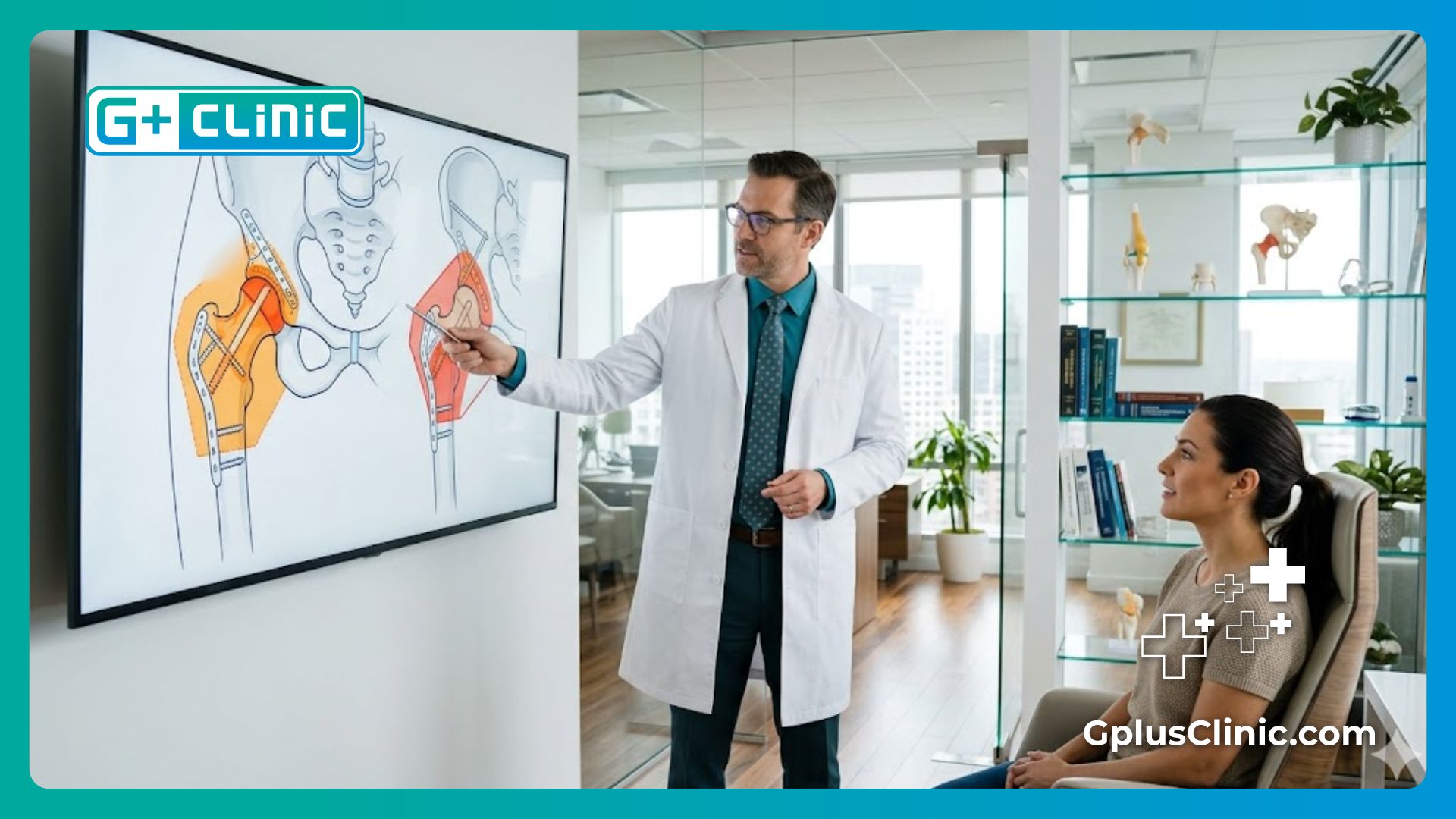
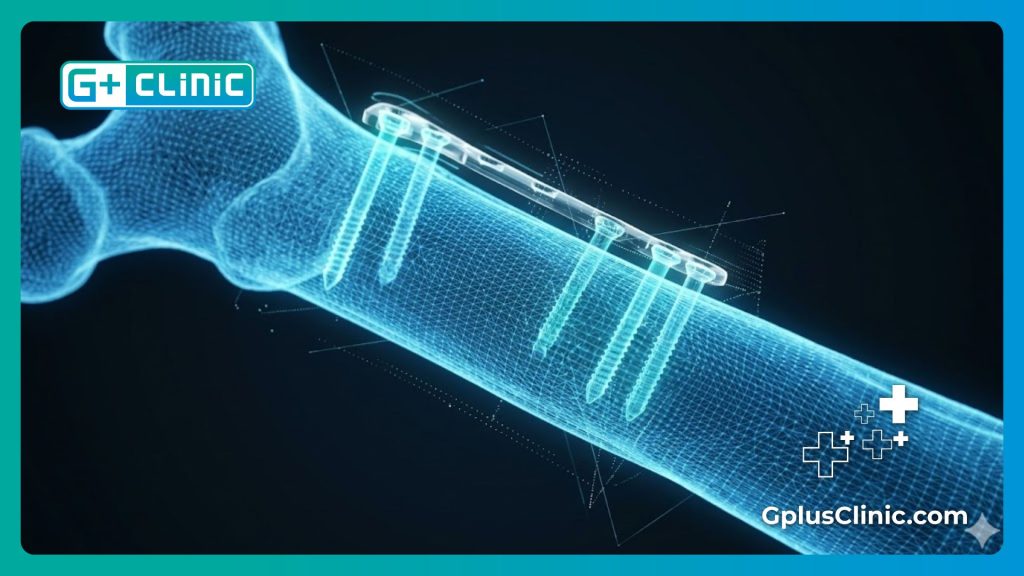
Hardware removal surgery is a definitive orthopedic procedure designed to extract metallic plates, screws, pins, or rods that were previously implanted to stabilize fractured bones during their initial healing phase. According to Cleveland Clinic, this intervention significantly reduces localized inflammation, alleviates chronic soft tissue irritation, and substantially improves the patient’s overall range of motion.
Hardware removal surgery Cost Table
Understanding the financial landscape of Hardware removal surgery is essential for international patients seeking optimal medical value. Furthermore, a comprehensive breakdown allows individuals to evaluate the immense benefits of medical tourism.
| Detailed Medical Procedure | Turkey (Lower Price) | Europe (High Price) | USA (Highest Price) |
| Initial Orthopedic Consultation | 100€ | 300€ | 500€ |
| General or Local Anesthesia | 400€ | 1000€ | 2000€ |
| Expert Surgeon’s Operative Fees | 1000€ | 3000€ | 5000€ |
| Operating Room Facilities | 600€ | 1500€ | 3000€ |
| Overnight Hospital Accommodation | 300€ | 800€ | 1500€ |
| Post-operative Medications | 100€ | 200€ | 400€ |
| Advanced X-ray Imaging | 150€ | 400€ | 800€ |
| Follow-up Medical Assessment | 50€ | 150€ | 300€ |
| Specialized Nursing Care | 100€ | 300€ | 600€ |
| Estimated Total Expenditure | 2800€ | 7650€ | 14100€ |
Consequently, analyzing this financial data proves that choosing Turkey for Hardware removal surgery provides an unparalleled combination of economic efficiency and elite healthcare standards.
Advanced Technologies for Hardware removal surgery
Modern surgical innovations have fundamentally transformed Hardware removal surgery into a highly precise and minimally invasive discipline:
- High-resolution computed tomography scans.
- Real-time intraoperative fluoroscopy imaging.
- Minimally invasive endoscopic surgical tools.
- Advanced titanium extraction instrumentation.
- Neurological monitoring equipment arrays.
- Aesthetic subcuticular wound closure techniques.
Moreover, utilizing these cutting-edge instruments guarantees that Hardware removal surgery remains exceptionally safe, rapid, and protective of the surrounding healthy tissues.
Candidates for Hardware removal surgery
Ideal candidates for Hardware removal surgery are individuals whose fractured bones have fully fused, yet who continue to experience localized pain, prominent hardware visibility, soft tissue irritation, or restricted joint mobility due to the metallic implants. According to Mayo Clinic, surgeons generally recommend waiting a sufficient period, typically between one to two years post-implantation, before considering this extraction procedure.
Target Areas for Hardware removal surgery
The anatomical diversity involved in Hardware removal surgery encompasses virtually every region of the human skeletal system:
- Tibia and fibula lower leg bones.
- Ankle joints and metatarsal regions.
- Patella and complex knee articulations.
- Femur and robust pelvic structures.
- Radius, ulna, and delicate wrist bones.
- Clavicle and shoulder joint formations.
Therefore, skilled orthopedic specialists must meticulously customize every Hardware removal surgery to accommodate the unique biomechanical requirements of the specific anatomical target area.
Anesthesia for Hardware removal surgery
Hardware removal surgery demands a carefully structured anesthetic approach tailored to the patient’s medical history and the complexity of the implant location. Consequently, the highly experienced anesthesiology team at G+ Clinic evaluates whether a comprehensive general anesthesia or a targeted regional nerve block serves as the safest protocol. Additionally, the intervention generally lasts between one to three hours, depending entirely on the extent of bone overgrowth covering the metallic plates and screws.
“Executing Hardware removal surgery is an intricate art that requires profound anatomical knowledge; our primary objective is to delicately extract the foreign bodies while flawlessly preserving the integrity of the newly regenerated bone and adjacent neurovascular structures.”
— Senior Orthopedic Surgeon,G+ Clinic
Hardware removal surgery Steps Timeline
The sequential progression of Hardware removal surgery involves a series of meticulously planned clinical phases. Furthermore, understanding this timeline provides immense psychological comfort to prospective patients.
| Surgical Phase | Detailed Action Description | Estimated Duration |
| Pre-operative | Comprehensive blood tests and cardiac evaluations | One Hour |
| Anesthesia | Administration of sedatives and vitals monitoring | 30 Minutes |
| Incision | Utilizing the original scar line for surgical access | 15 Minutes |
| Extraction | Carefully unscrewing and removing metallic implants | 1 to 2 Hours |
| Irrigation | Thoroughly flushing the surgical cavity with antiseptics | 15 Minutes |
| Closure | Suturing the anatomical layers with aesthetic precision | 30 Minutes |
| Recovery | Transferring to the post-anesthesia care unit | Two Hours |
| Discharge | Final surgeon evaluation and medical clearance | 24 Hours |
Following this rigorous pathway ensures that Hardware removal surgery concludes with optimal clinical success and a predictably smooth healing trajectory.
Why G+ Clinic for Hardware removal surgery?
Selecting the ultimate medical destination for Hardware removal surgery involves prioritizing safety, expertise, and comprehensive patient care:
- Strict Joint Commission International accreditation.
- Board-certified, globally recognized orthopedic surgeons.
- Uncompromising sterilization and infection control protocols.
- State-of-the-art diagnostic and operative suites.
- Dedicated multilingual patient coordination teams.
- Comprehensive one-year post-operative medical follow-up.
Ultimately, entrusting your Hardware removal surgery to our facility guarantees a holistic, luxurious, and clinically flawless medical tourism experience.
Procedure Details for Hardware removal surgery
The exact execution of Hardware removal surgery relies on a standardized, fail-safe protocol to protect the patient. Moreover, each step is designed to minimize trauma:
- Conducting a final pre-operative orthopedic consultation.
- Reviewing high-definition radiological imaging maps.
- Administering precise prophylactic intravenous antibiotics.
- Sterilizing and preparing the designated surgical site.
- Inducing the predetermined optimal anesthetic state.
- Dissecting scar tissue meticulously to reach the bone.
- Utilizing specialized torque screwdrivers for extraction.
- Removing the integrated titanium or stainless steel plates.
- Verifying complete implant clearance via fluoroscopy.
- Applying sterile, compressive surgical dressings securely.
Mastering these critical intraoperative details is precisely what elevates Hardware removal surgery from a routine procedure to a highly refined medical art.
Traditional vs Minimally Invasive Hardware removal surgery
Comparing the available technical approaches for Hardware removal surgery highlights the profound advancements in contemporary orthopedics. On the other hand, patient anatomy heavily influences the chosen method.
| Clinical Parameter | Traditional Open Surgery | Minimally Invasive Surgery |
| Incision Dimensions | Considerably larger and extended | Exceptionally small and targeted |
| Post-operative Discomfort | Moderate to moderately high | Generally mild to highly manageable |
| Initial Tissue Healing | Two to four weeks typically | Several days to two weeks |
| Subsequent Scarring | Noticeable along previous lines | Barely perceptible micro-scars |
| Infection Susceptibility | Moderate if improperly managed | Exceptionally low risk profile |
| Financial Investment | Standard baseline procedural cost | Marginally higher due to technology |
| Operative Precision | Highly effective and reliable | Superior magnification and accuracy |
| Hospitalization Needs | One to two overnight stays | Often an outpatient day procedure |
Selecting the appropriate technical framework for Hardware removal surgery profoundly impacts the speed and comfort of the patient’s functional recovery.
When do Hardware removal surgery Results Appear?
Patients notice immediate relief from hardware-induced pain and soft tissue irritation the moment they awaken from Hardware removal surgery. However, the final definitive results, characterized by total resolution of post-operative edema and the complete restoration of unrestricted joint mobility, typically manifest within three to six months as the bone remodels.
Preparation for Hardware removal surgery
Thorough physical and logistical readiness before Hardware removal surgery significantly mitigates intraoperative risks. Furthermore, compliance with medical directives is absolutely non-negotiable:
- Ceasing all nicotine and tobacco consumption strictly.
- Halting the intake of blood-thinning pharmaceuticals completely.
- Fasting strictly for eight hours prior to admission.
- Completing all mandatory baseline cardiological and blood assessments.
- Organizing a comfortable, accessible home recovery environment.
Strict adherence to these preparatory guidelines optimizes the physiological environment for a successful Hardware removal surgery and a rapid recuperation.
Pros and Cons of Hardware removal surgery
Evaluating the clinical implications of Hardware removal surgery requires an objective analysis of potential benefits against inherent surgical risks. Consequently, informed consent is paramount.
| Transformative Benefits | Potential Surgical Risks |
| Complete eradication of chronic implant pain | Rare adverse reactions to general anesthesia |
| Restoration of natural, unhindered biomechanics | Minor localized bleeding or hematoma formation |
| Elimination of temperature-sensitive metal discomfort | Post-operative surgical site bacterial infection |
| Prevention of future tendon or ligament friction | Temporary structural weakness in the bone |
| Mitigation of potential rare metallosis reactions | Creation of a refreshed surgical scar |
| Superior aesthetic contouring of the affected limb | Transient nerve irritation causing mild numbness |
| Peace of mind regarding foreign body removal | Requirement for a dedicated rehabilitation period |
| Facilitation of future unobstructed MRI imaging | Additional financial expenditure for the procedure |
Balancing these multifaceted variables clarifies whether proceeding with Hardware removal surgery aligns perfectly with your long-term orthopedic health objectives.
VIP Services for Hardware removal surgery
Enhancing the international patient experience during Hardware removal surgery transforms a clinical necessity into a luxurious wellness retreat:
- Exclusive chauffeured airport terminal transfers privately.
- Accommodation in premium five-star hospitality establishments.
- Seamless daily transportation via luxury private vehicles.
- Assignment of a dedicated personal nursing assistant.
- Continuous access to fluent, professional medical translators.
These exceptional supplementary luxuries ensure that your journey for Hardware removal surgery remains profoundly comfortable, entirely stress-free, and culturally enriching.
Myths about Hardware removal surgery
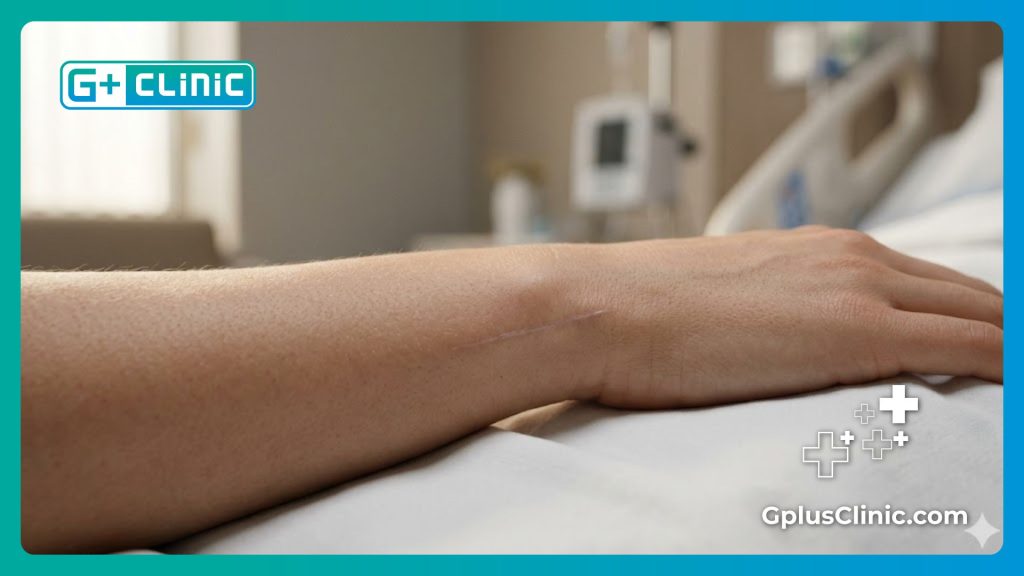
A prevalent myth surrounding Hardware removal surgery asserts that extracting the metal permanently weakens the bone, leaving it highly susceptible to immediate re-fracture. In reality, the bone has already achieved dense biological fusion; although tiny screw holes remain temporarily, the body rapidly fills these voids with new, robust osseous tissue within weeks.
Risks of Hardware removal surgery
Hardware removal surgery carries specific inherent surgical risks that every patient must logically acknowledge despite high global success rates. However, potential complications such as localized seroma accumulation, delayed wound healing, or transient neuropraxia are exceptionally rare when managed by elite professionals. By strictly enforcing advanced global safety protocols at G+ Clinic, our teams systematically neutralize these threats. According to the WHO, rigorous compliance with international surgical safety checklists and sterile prophylactic protocols drastically diminishes operative complication rates by more than eighty percent.
Recovery after Hardware removal surgery
The biological healing phase following Hardware removal surgery follows a predictable and manageable physiological trajectory. Moreover, patience is the cornerstone of this process:
- Day One: Strict bed rest and vital monitoring.
- Week One: Resuming gentle, assisted indoor ambulation.
- Week Two: Clinical removal of external surgical sutures.
- Month One: Initiating structured physical therapy rehabilitation sessions.
- Month Three: Gradual reintroduction of moderate athletic activities.
- Month Six: Achieving absolute structural stability and healing.
Honoring this specific chronologic progression ensures that your body maximizes the long-term functional benefits of Hardware removal surgery.
Patient Stories: Hardware removal surgery
Real-world clinical outcomes consistently validate the life-changing impact of Hardware removal surgery for our diverse international clientele. For instance, Marcus, a 42-year-old athlete, notes, “Living with a titanium plate in my ankle was agonizing during cold weather; undergoing this extraction at G+ Clinic finally gave me my mobility back.”
Similarly, Elena, a 35-year-old architect, states, “I was terrified of reopening my forearm, but the meticulous care and aesthetic suturing made the process incredibly smooth.”
Furthermore, David, 55, shares, “The persistent tendon clicking over my knee screws vanished entirely; it feels like the fracture never even happened.”
Finally, Sophie, 29, adds, “Choosing the right facility was daunting, but the phenomenal support team made my entire journey an absolute triumph.”
Hidden Costs for Hardware removal surgery
Comprehensive financial planning for Hardware removal surgery must account for auxiliary expenses beyond the immediate surgical quotation. Therefore, transparency prevents unexpected financial stress:
- International round-trip aviation logistics and ticketing.
- Prescription analgesics and prophylactic antibiotic therapies.
- Extended outpatient physical therapy and rehabilitation sessions.
- Specialized compressive garments or orthopedic support braces.
- Daily sustenance and leisure expenses for accompanying companions.
Proactively budgeting for these supplementary factors guarantees that your investment in Hardware removal surgery remains economically sound and stress-free.
Maintaining Hardware removal surgery Results
Sustaining the profound biomechanical benefits achieved through Hardware removal surgery requires proactive, long-term personal commitment to musculoskeletal health:
- Completing all prescribed physiotherapeutic motion exercises diligently.
- Avoiding premature high-impact sports or heavy lifting.
- Maintaining optimal hydration for cellular tissue regeneration.
- Consuming a nutrient-dense diet rich in elemental calcium.
- Abstaining completely from all detrimental smoking habits.
Cultivating these positive lifestyle routines actively accelerates the final consolidation phase following Hardware removal surgery.
Hardware removal surgery vs Keeping Implants
The clinical dilemma between electing for Hardware removal surgery versus retaining the metallic implants indefinitely requires careful consideration. Consequently, analyzing the long-term impact is crucial.
| Evaluation Metric | Hardware removal surgery | Retaining Metallic Implants |
| Chronic Pain Relief | Eliminates implant-related friction entirely | Pain and soft tissue irritation may persist |
| Future Joint Arthroplasty | Removes all metallic obstacles for future surgeries | Can severely complicate joint replacement operations |
| Metal Hypersensitivity | Eradicates the potential for metallosis reactions | Carries a rare but possible allergic risk |
| Immediate Financial Cost | Involves a new, distinct surgical investment | Incurs no immediate secondary financial burden |
| Operative Recovery Need | Demands a short, dedicated healing period | Bypasses the need for subsequent postoperative rehabilitation |
| Psychological Well-being | Provides definitive closure to the traumatic injury | May cause subconscious anxiety about foreign bodies |
| Cold Weather Sensitivity | Permanently resolves weather-induced aching sensations | Often exacerbates deep bone pain during winter |
| Radiological Clarity | Allows crystal-clear, unobstructed MRI diagnostics | Creates severe artifact scattering on advanced scans |
Ultimately, weighing these comparative variables often drives active individuals to definitively pursue Hardware removal surgery.
Hardware removal surgery marks the definitive conclusion of your fracture healing process and the beginning of a truly unrestricted, active lifestyle. Furthermore, patients must recognize that while the surgical removal eliminates the mechanical obstruction, rebuilding the atrophied surrounding musculature is an ongoing personal responsibility. By committing to sustained physical therapy, maintaining a healthy body mass index, and following the expert guidance provided by the orthopedic team at G+ Clinic, you can ensure that your skeletal system remains resilient, balanced, and completely pain-free for decades to come.
Booking Hardware removal surgery at G+
Initiating your medical tourism journey for Hardware removal surgery is a highly streamlined and professionally supported process:
- Submitting a comprehensive digital inquiry to our consultants.
- Forwarding recent X-rays and relevant medical documentation.
- Engaging in a detailed virtual consultation regarding strategy.
- Securing your operative date and confirming flight itineraries.
- Arriving safely in Istanbul for comprehensive physical examinations.
- Undergoing the extraction procedure with absolute clinical confidence.
We continuously optimize every logistical step to ensure your transition into Hardware removal surgery is effortlessly efficient.
Ready for Hardware removal surgery?
Concluding your research on Hardware removal surgery brings you to the threshold of a vital health decision designed to restore your absolute physical comfort. If chronic pain, prominent hardware, or limited mobility are hindering your daily life, the solution is clear and accessible. Are you the ideal candidate ready to reclaim your unhindered potential? Contact the elite orthopedic coordinators at G+ Clinic today to schedule your specialized consultation and take the final step toward complete recovery.
FAQ about Hardware removal surgery
Is Hardware removal surgery painful?
Hardware removal surgery is performed under comprehensive general or targeted regional anesthesia, ensuring the patient experiences absolutely no pain during the intervention. Furthermore, post-operative discomfort is highly manageable and systematically controlled using advanced prescription analgesics provided by your surgical team.
How long is the hospital stay for Hardware removal surgery?
Most patients recovering from Hardware removal surgery only require a single overnight stay in the hospital for standard vitals monitoring and intravenous antibiotic administration. In exceptionally straightforward cases involving superficial implants, it may even be executed as a same-day outpatient procedure.
Does Hardware removal surgery leave scars?
Surgeons performing Hardware removal surgery meticulously utilize the exact same incision line created during the original fracture fixation to prevent new scar formation. By employing highly advanced subcuticular aesthetic suturing techniques, the resulting line becomes exceptionally fine and visually discreet over time.
When can I return to work after Hardware removal surgery?
Returning to office-based, sedentary employment after Hardware removal surgery typically occurs within a swift timeframe of one to two weeks. However, individuals employed in physically demanding sectors must generally wait four to six weeks before resuming heavy manual labor to ensure bone stability.
Can partial Hardware removal surgery be done?
Yes, partial Hardware removal surgery is a common approach when certain deeply embedded screws are fully integrated into the bone mass. In such complex scenarios, the surgeon may strategically extract only the specific plates or pins causing soft tissue irritation while safely leaving asymptomatic elements intact.