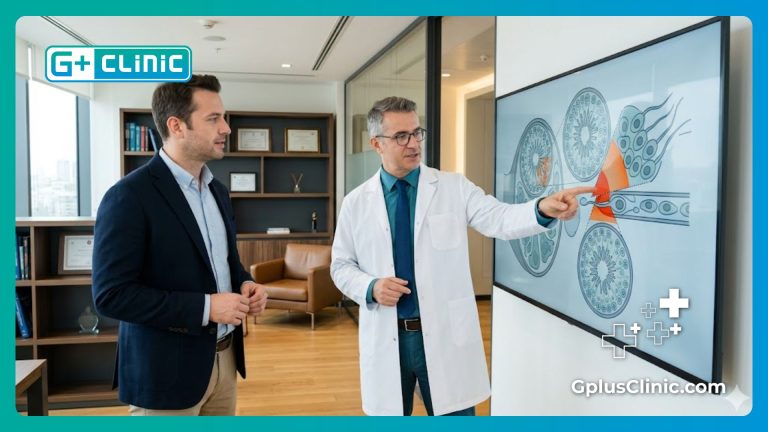

Keratoconus Treatment in Turkey (Keratoconus Treatment in Turkey) represents a fundamental turning point for international patients actively seeking to permanently restore their visual stability and prevent further ocular degradation. Moreover, choosing G+ Clinic provides access to cutting-edge medical interventions that are specifically designed to halt corneal thinning through highly professional, exceptionally safe, and globally accredited clinical methodologies.
What is Keratoconus Treatment in Turkey?
Keratoconus Treatment in Turkey is a comprehensive medical intervention combining ultraviolet light cross-linking and precision corneal rings to halt vision deterioration and strengthen weakening corneal tissue. (According to Cleveland Clinic, keratoconus affects one in two thousand people globally and requires early intervention to prevent severe vision loss). Consequently, Keratoconus Treatment in Turkey delivers a highly targeted approach that begins with precise topographical diagnostics and ultimately ends with long-term visual preservation for the patient.
Keratoconus Treatment in Turkey Cost Table
Understanding the financial breakdown of Keratoconus Treatment in Turkey is absolutely essential for international patients seeking premium medical quality without facing exorbitant healthcare expenses. Furthermore, comparing these global healthcare markets clearly demonstrates the immense value provided by specialized clinics operating within this advanced medical tourism hub.
| Ocular Medical Procedure | Turkey (€) | Europe (€) | USA (€) |
| Cross-linking (One Eye) | 900 | 2500 | 4000 |
| Cross-linking (Both Eyes) | 1600 | 4500 | 7500 |
| Ring Implantation (One Eye) | 1200 | 3500 | 5000 |
| Ring Implantation (Both Eyes) | 2200 | 6000 | 9000 |
| Partial Corneal Transplant Surgery | 3500 | 8000 | 12000 |
| Full Corneal Transplant Surgery | 4500 | 10000 | 15000 |
| Initial Topography Diagnostic Exams | 100 | 300 | 500 |
| Specialized Hard Lenses (Pair) | 400 | 1000 | 1500 |
| Post-Operative Medical Follow-up | 0 | 500 | 800 |
Therefore, selecting Keratoconus Treatment in Turkey allows patients to achieve massive financial savings while simultaneously securing world-class ophthalmological expertise and superior post-operative care. Ultimately, these comprehensive medical packages eliminate hidden fees and provide absolute financial transparency.
Advanced Technologies for Keratoconus Treatment in Turkey
Highly sophisticated medical equipment plays a critical role in ensuring that Keratoconus Treatment in Turkey maintains its exceptional international success rates:
- Targeted ultraviolet light cross-linking systems.
- Femtosecond laser precision ring implantation.
- Advanced topography mapping diagnostic devices.
- High-permeability specialized hard contact lenses.
- Epithelium-off deep tissue riboflavin saturation.
- Custom-tailored stromal reinforcement therapeutic plans.
- Micro-incision surgical techniques for safety.
As a result, integrating these modern technological advancements makes Keratoconus Treatment in Turkey incredibly precise, highly reliable, and exceptionally effective for all patients.

Candidates for Keratoconus Treatment in Turkey
Ideal candidates are individuals experiencing rapid vision decline, frequent prescription changes, and unstable corneas without severe, irreversible stromal scarring. (According to Mayo Clinic, stable overall health and the absolute absence of active eye infections are strict prerequisites for a successful outcome). Indeed, Keratoconus Treatment in Turkey requires a thorough preoperative evaluation to confirm that the patient possesses sufficient corneal thickness to safely undergo ultraviolet cross-linking.
Target Areas for Keratoconus Treatment in Turkey
Specialized ophthalmic surgeons focus on highly specific microscopic anatomical structures during Keratoconus Treatment in Turkey:
- Epithelial outer layer cell management.
- Stromal middle tissue structural reinforcement.
- Endothelial inner layer protection protocols.
- Anterior chamber fluid dynamic stabilization.
- Peripheral corneal curvature structural mapping.
- Central visual axis distortion correction.
- Collagen fiber interlinking and strengthening.
- Microscopic tissue stabilization and hardening.
Consequently, precisely targeting these delicate cellular layers guarantees that Keratoconus Treatment in Turkey delivers lasting biochemical stability for individuals suffering from deteriorating vision.
Anesthesia for Keratoconus Treatment in Turkey
Keratoconus Treatment in Turkey relies entirely on advanced topical numbing drops rather than invasive general anesthesia protocols, thereby eliminating massive systemic risks. Furthermore, this localized anesthetic approach ensures that the patient remains completely conscious, entirely pain-free, and perfectly comfortable throughout the entire clinical procedure. As a result, Keratoconus Treatment in Turkey facilitates immediate patient mobility, allowing individuals to leave the medical facility the exact same day without experiencing prolonged grogginess or intense nausea.
“Halting corneal thinning rapidly is the absolute key to preserving long-term vision. Our comprehensive protocols ensure every intervention is uniquely tailored to the patient’s topography, elevating success rates dramatically while maintaining unparalleled clinical safety.”
— Senior Surgeon at G+ Clinic
Keratoconus Treatment in Turkey Steps Timeline
Tracking the precise clinical sequence of Keratoconus Treatment in Turkey helps nervous patients feel completely prepared and mentally reassured before their upcoming medical journey. Therefore, understanding this structured timeline is crucial for managing personal expectations.
| Medical Procedure Step | Specific Step Details | Estimated Time |
| Comprehensive Eye Exam | Utilizing topography to map the cornea | One Hour |
| Topical Anesthesia | Applying numbing drops directly into eyes | Five Minutes |
| Epithelial Cell Removal | Preparing the cornea for riboflavin absorption | Ten Minutes |
| Riboflavin Application | Saturating corneal tissue with vitamin B2 | Thirty Minutes |
| Ultraviolet Irradiation | Applying UV light to harden tissue | Thirty Minutes |
| Ocular Rinsing | Removing excess residual chemical drops thoroughly | Two Minutes |
| Bandage Lens Placement | Applying a protective soft contact lens | One Minute |
| Post-Op Instructions | Explaining medication and hygiene routines meticulously | Twenty Minutes |
| Initial Follow-Up | Verifying early tissue healing and stability | Next Day |
Following this meticulously structured timeline ensures that Keratoconus Treatment in Turkey is performed flawlessly, efficiently, and with zero unexpected intraoperative complications.
Why G+ Clinic for Keratoconus Treatment in Turkey?
Discerning international patients consistently choose our premium medical facility when pursuing Keratoconus Treatment in Turkey for several highly compelling reasons:
- Joint Commission International healthcare accreditation.
- Elite roster of experienced ophthalmic surgeons.
- State-of-the-art laser diagnostic medical equipment.
- Personalized treatment plans for every patient.
- Comprehensive one-year ongoing medical follow-up.
- Dedicated medical translators for seamless communication.
- Transparent pricing without hidden medical fees.
- Extremely sterile surgical operating room environments.
- Luxury private transportation for medical transfers.
Because of these uncompromising standards, Keratoconus Treatment in Turkey at G+ Clinic remains the ultimate destination for individuals seeking absolute clinical excellence and profound peace of mind.
Procedure Details for Keratoconus Treatment in Turkey
The comprehensive execution of Keratoconus Treatment in Turkey follows a highly specific, universally recognized medical protocol designed to maximize biomechanical stability:
- Initial remote consultation analyzing topographical scans.
- Detailed in-person surgical strategy discussion.
- Preoperative suspension of all contact lenses.
- Application of sterile topical numbing drops.
- Gentle mechanical removal of the epithelium.
- Continuous administration of riboflavin saturation drops.
- Controlled exposure to calibrated ultraviolet light.
- Careful insertion of protective bandage lenses.
- Prescription of antibiotic and anti-inflammatory drops.
- Scheduling of mandatory next-day clinic visits.
By strictly adhering to these fundamental steps, Keratoconus Treatment in Turkey consistently achieves remarkably high rates of long-term ocular structural success.
Epi-Off vs Epi-On Keratoconus Treatment in Turkey
When considering Keratoconus Treatment in Turkey, patients frequently must compare different cross-linking methodologies to determine the absolute best clinical approach for their specific anatomical condition. Moreover, understanding these nuanced differences empowers patients to make highly informed healthcare decisions.
| Medical Comparison Criteria | Epithelium-Off (Epi-Off) Technique | Epithelium-On (Epi-On) Technique |
| Tissue Penetration Depth | Excellent deep stromal riboflavin saturation | Shallower and less comprehensive penetration |
| Post-Operative Pain Level | Moderate discomfort requiring dedicated analgesics | Very mild and easily tolerated discomfort |
| Initial Recovery Period | Three to five days of rest | One to two days of rest |
| Disease Halting Efficacy | Extremely high and clinically proven worldwide | Good but actively undergoing continued research |
| Infection Risk Profile | Slightly higher requiring strict hygienic care | Almost nonexistent due to intact surface |
| Clinic Procedure Speed | Takes significantly longer to execute fully | Faster to perform in the clinic |
| Bandage Lens Requirement | Absolutely mandatory for one full week | Rarely necessary for the patient |
| Visual Clarity Timeline | Clears gradually over several long weeks | Clears relatively quickly after the procedure |
Analyzing this detailed clinical comparison allows surgeons performing Keratoconus Treatment in Turkey to perfectly customize the surgical intervention based upon precise individual corneal thickness measurements.
When do Keratoconus Treatment in Turkey Results Appear?
Keratoconus Treatment in Turkey results manifest gradually; the primary objective is to fundamentally freeze disease progression rather than instantly restoring perfect vision, with refraction stabilizing after three to six months. Furthermore, Keratoconus Treatment in Turkey acts fundamentally as a powerful preventative measure, meaning subsequent vision correction via specialized scleral lenses will likely be required once the structural edema fully subsides.
Preparation for Keratoconus Treatment in Turkey
Strict adherence to preoperative guidelines ensures that Keratoconus Treatment in Turkey proceeds smoothly and delivers the maximum possible biomechanical strengthening:
- Stop wearing hard lenses weeks prior.
- Discontinue soft lenses several days beforehand.
- Disclose all current systemic medical prescriptions.
- Avoid applying facial cosmetics or creams.
- Wash the face and eyes thoroughly.
- Arrange a companion for hotel transport.
- Never rub the eyes before surgery.
- Wear comfortable clothing on procedure day.
Consequently, respecting these fundamental preparation rules makes the entire process of Keratoconus Treatment in Turkey incredibly straightforward and entirely devoid of unnecessary clinical delays.

Pros and Cons of Keratoconus Treatment in Turkey
Like any advanced medical intervention, Keratoconus Treatment in Turkey presents a distinct balance of profound structural benefits alongside a few temporary inconveniences that demand total transparency. Therefore, evaluating this balance is critical.
| Clinical Advantages and Benefits | Potential Drawbacks and Minor Risks |
| Halts progressive weakening of the cornea | Cannot completely reverse existing vision damage |
| Prevents future need for invasive transplants | Requires a mildly uncomfortable initial recovery |
| Fast outpatient procedure completed very quickly | Intense light sensitivity lasts several days |
| Utilizes highly advanced and safe technologies | Temporary hazy vision occurs quite frequently |
| Significantly lower cost than major surgeries | Requires prolonged usage of steroid drops |
| Delivers highly stable and permanent results | Often necessitates specialized hard lenses later |
| Substantially increases ocular tissue rigidity | Post-operative pain with Epi-off techniques |
| Boasts success rates exceeding ninety percent | Very rare probability of bacterial infections |
These facts conclusively demonstrate that the permanent structural advantages of Keratoconus Treatment in Turkey overwhelmingly outweigh the incredibly brief, manageable periods of post-operative ocular discomfort.
VIP Services for Keratoconus Treatment in Turkey
International patients flying abroad for Keratoconus Treatment in Turkey receive an array of extraordinary luxury services designed to completely eliminate travel-related stress:
- VIP airport reception and private transfer.
- Premium accommodation in five-star luxury hotels.
- Private chauffeured cars for clinic visits.
- Dedicated customer support available around the clock.
- Personal medical companions assisting you constantly.
- Delivery of all prescribed pharmaceutical medications.
- Arranged tourism activities following medical clearance.
- Remote telemedicine consultations after returning home.
Because of these unparalleled amenities, G+ Clinic transforms Keratoconus Treatment in Turkey into a highly relaxing, profoundly supportive, and deeply memorable medical tourism vacation.
Myths about Keratoconus Treatment in Turkey
Keratoconus Treatment in Turkey does NOT immediately restore perfect 20/20 vision; rather, it fundamentally freezes the disease progression to prevent blindness and structural collapse. Consequently, Keratoconus Treatment in Turkey focuses entirely on reinforcing the microscopic collagen fibers of the eye, requiring patients to maintain realistic expectations regarding their immediate post-operative visual acuity.
Risks of Keratoconus Treatment in Turkey
While inherently extremely safe, neglecting stringent post-operative care following Keratoconus Treatment in Turkey can potentially expose patients to localized infections or delayed epithelial healing. (According to WHO, strict adherence to post-operative hygiene protocols and the proper application of sterile eye drops reduces ophthalmic complications by ninety percent). Therefore, Keratoconus Treatment in Turkey incorporates mandatory, highly rigorous follow-up appointments to meticulously monitor tissue response, aggressively prevent bacterial contamination, and ensure optimal collagen hardening.
Recovery after Keratoconus Treatment in Turkey
The immediate recuperation phase is undeniably critical for maximizing the ultimate clinical efficacy of Keratoconus Treatment in Turkey:
- Rest with eyes closed for days.
- Apply lubricating and anti-inflammatory drops strictly.
- Wear UV-blocking sunglasses constantly outdoors always.
- Have the surgeon remove bandage lenses.
- Prevent water and soap from entering.
- Absolutely never rub your eyes forcefully.
- Avoid swimming pools for one month.
- Suspend heavy weightlifting and intense cardio.
By meticulously following these essential recovery protocols, Keratoconus Treatment in Turkey heals beautifully, ensuring the newly reinforced stromal collagen fibers remain perfectly undisturbed and robustly stable.
Patient Stories: Keratoconus Treatment in Turkey
Real-world patient testimonials vividly highlight the profound psychological and physical relief generated by undergoing Keratoconus Treatment in Turkey. “Michael (28): My vision was degrading so aggressively that I needed new glasses every few months; however, after receiving cross-linking at G+ Clinic, the terrifying deterioration completely stopped, and my corneal topography finally stabilized.” Furthermore, another satisfied international patient shares: “Elena (34): The constant looming fear of needing a major corneal transplant paralyzed me, but the exceptional professionalism of the surgical team during my Keratoconus Treatment in Turkey entirely calmed my nerves, and today I wear my scleral lenses with absolute total comfort.” Ultimately, these authentic narratives validate the immense, life-changing power of Keratoconus Treatment in Turkey.
Hidden Costs for Keratoconus Treatment in Turkey
When accurately calculating the comprehensive financial budget for Keratoconus Treatment in Turkey, patients must proactively account for several secondary expenses to avoid stressful surprises:
- International flight tickets and tourist visas.
- Purchasing customized scleral lenses back home.
- Accommodation expenses for accompanying travel companions.
- Stocking up on premium lubricating drops.
- Mandatory follow-up topography scans back home.
- Investing in high-quality polarized prescription sunglasses.
- Upgrading hotel rooms for extended recovery.
- Unexpected extra days needed for observation.
Consequently, thoroughly discussing all potential financial variables guarantees that choosing Keratoconus Treatment in Turkey remains a highly predictable, economically advantageous, and stress-free medical decision.
Maintaining Keratoconus Treatment in Turkey Results
To permanently protect the newly fortified ocular tissues achieved through Keratoconus Treatment in Turkey, patients must adopt lifelong healthy vision habits:
- Stop rubbing eyes under any circumstances.
- Wear protective sunglasses shielding UV rays.
- Keep eyes heavily lubricated with drops.
- Schedule annual corneal topography monitoring exams.
- Wash hands thoroughly before touching face.
- Aggressively treat any underlying ocular allergies.
- Consume diets rich in vitamin A.
Ultimately, integrating these protective lifestyle habits brilliantly complements the structural success of Keratoconus Treatment in Turkey, ensuring the ocular surface remains resilient against any future biomechanical degradation.
Keratoconus Treatment in Turkey vs Corneal Transplant
Physicians generally reserve invasive transplant surgeries as a last resort, whereas Keratoconus Treatment in Turkey acts proactively. Therefore, contrasting these interventions provides crucial clarity for hesitant patients.
| Medical Comparison Metric | Preventative Intervention (Cross-linking/Rings) | Full or Partial Corneal Transplant |
| Primary Medical Objective | Halting deterioration and saving native tissue | Replacing irreparably damaged tissue completely |
| Surgical Invasiveness Level | Minimally invasive surface and stromal procedure | Major, highly complex intraocular surgical operation |
| Organ Donor Requirement | Requires absolutely zero human donor tissue | Strictly requires a matched human donor |
| Recovery and Healing Time | A few days to several weeks | Many long months up to a year |
| Tissue Rejection Probability | Completely impossible (utilizes own native tissue) | Highly possible requiring strong immunosuppressant drugs |
| Total Financial Cost | Very affordable and economically accessible | Extremely expensive requiring massive financial budgets |
| Optimal Execution Timing | During early to moderate disease stages | During severe late stages with scarring |
| Medical Suture Usage | Requires absolutely zero surgical stitches | Requires extremely delicate microscopic surgical sutures |
This definitive comparison starkly illustrates that urgently seeking Keratoconus Treatment in Turkey spares patients from the immense physical trauma, astronomical costs, and daunting recovery associated with major transplant surgeries.

Adopting a comprehensively healthy lifestyle serves as a foundational pillar for sustaining optimal physical healing. Maintaining long-term visual stability heavily relies on the patient’s continuous proactive healthcare awareness, meaning the surgical intervention is merely the starting line of the journey. By strictly adhering to all given medical guidelines and completely eliminating harmful ocular habits like aggressive eye rubbing, you can exponentially maximize the biomechanical efficacy of the procedure. Moreover, attending routine annual ophthalmological evaluations plays a highly critical role in ensuring this newly achieved ocular stability endures for decades, which makes Keratoconus Treatment in Turkey a profoundly successful investment in your lifelong physical well-being. Caring for your delicate eyes demands relentless vigilance to rapidly detect and immediately counteract any potential microscopic regression in visual acuity. Consequently, the ultimate long-term success of Keratoconus Treatment in Turkey remains permanently intertwined with the patient’s unwavering dedication to preserving their newly strengthened corneal architecture.
Booking Keratoconus Treatment in Turkey at G+
To seamlessly initiate your transformative healthcare journey, we have meticulously established a highly streamlined process for securing your Keratoconus Treatment in Turkey online:
- Contact the dedicated medical consultants directly.
- Submit your latest corneal topography scans.
- Receive a personalized initial medical evaluation.
- Discuss pricing and select treatment packages.
- Finalize the surgery date and hotel.
- Book flights and share arrival itineraries.
- Enjoy VIP airport reception upon arrival.
This flawlessly organized logistical framework guarantees that experiencing Keratoconus Treatment in Turkey is entirely devoid of anxiety, incredibly efficient, and fully supported at every single step.
Ready for Keratoconus Treatment in Turkey?
Safeguarding your precious vision is undeniably an incalculable investment, and taking swift, decisive medical action today can fundamentally alter your future trajectory, effectively protecting you from devastating, irreversible ocular complications. By brilliantly leveraging the latest state-of-the-art technological advancements alongside globally recognized surgical expertise, Keratoconus Treatment in Turkey provides a definitive, highly secure pathway to immediately halt the relentless progression of this degenerative disease. If you are currently suffering from rapidly shifting optical prescriptions and terrifyingly blurry vision, are you finally prepared to take the necessary clinical steps and embrace Keratoconus Treatment in Turkey to permanently restore your visual peace of mind?
FAQ about Keratoconus Treatment in Turkey
Can I have both eyes treated on the exact same day?
Yes, surgeons frequently perform cross-linking on both eyes simultaneously during one clinical session to drastically minimize total recovery time and reduce clinic visits, which is a highly preferred strategy when scheduling Keratoconus Treatment in Turkey to maximize convenience for traveling international patients.
Is the ultraviolet cross-linking procedure painful?
Doctors utilize incredibly potent numbing drops that completely eliminate pain during the actual surgical intervention, however, you may experience moderate discomfort, stinging, and intense light sensitivity during the initial days following Keratoconus Treatment in Turkey, which is entirely normal and managed with prescribed painkillers.
Will I still need to wear prescription glasses after surgery?
Yes, the primary clinical objective of the procedure is strictly to freeze disease progression rather than fully correcting visual acuity to perfect 20/20, therefore, you will almost certainly need to wear prescription glasses or specialized hard contact lenses to optimize visual clarity after Keratoconus Treatment in Turkey stabilizes.
What is the absolute best age to undergo this ocular procedure?
Ophthalmologists strongly recommend performing the surgery immediately upon confirming progressive corneal deterioration, which typically occurs between the late teenage years and early thirties, because intervening swiftly with Keratoconus Treatment in Turkey guarantees the absolute best preventative results before severe tissue thinning occurs.
Can the disease progression return aggressively after the treatment?
The clinical success rate for permanently halting the disease exceeds ninety-five percent, making any subsequent structural degradation exceptionally rare, nevertheless, experts performing Keratoconus Treatment in Turkey strictly mandate annual medical follow-ups to definitively monitor and confirm continuous lifelong tissue stability.