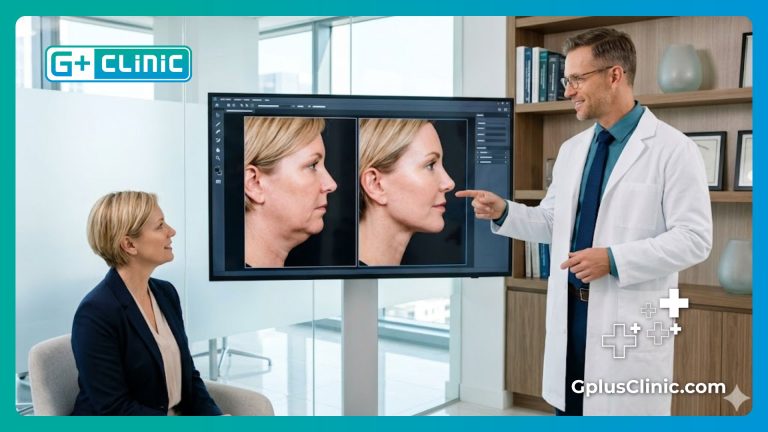

Safety is the absolute priority when considering the Risks of Blepharoplasty in Turkey, as patients seek cosmetic enhancement without compromising their vision or health. G+ Clinic provides advanced surgical solutions designed to mitigate these concerns through internationally accredited safety protocols.
What is Blepharoplasty? (Understanding Safety)
Blepharoplasty is a surgical procedure that removes excess skin and fat from the eyelids to improve vision and rejuvenate appearance, with a primary focus on minimizing the Risks of Blepharoplasty in Turkey. (According to the Mayo Clinic, the goal is to resolve functional issues like obstructed vision while ensuring the structural integrity of the eye is preserved).
Risks of Blepharoplasty in Turkey are significantly reduced when the procedure is performed by board-certified surgeons who understand the delicate anatomy of the periorbital region. Patients must recognize that this is a medical procedure requiring strict adherence to pre-operative and post-operative care to ensure a complication-free recovery.
Potential Risks and Complications
While complications are rare in accredited facilities, the potential Risks of Blepharoplasty in Turkey include temporary dry eyes, bruising, infection, or slight asymmetry if surgical precision is compromised. However, selecting a high-quality medical provider drastically lowers these probabilities, as statistics show a satisfaction rate of over 95% when safety standards are met.
“Understanding the intricate anatomy of the eye is the best defense against complications. AtG+ Clinic, we do not just remove tissue; we preserve the natural function of the eyelid, ensuring that our safety records surpass international benchmarks.”
— Senior Plastic Surgeon at G+ Clinic
Cost Comparison Table (Value vs. Safety)
Financial considerations are important, but low cost should never come at the expense of quality, as extremely cheap offers may increase the Risks of Blepharoplasty in Turkey.
Risks of Blepharoplasty in Turkey are often managed better in clinics that balance cost with high-end medical infrastructure:
| Procedure | Turkey (High Safety/Low Cost) | UK/Europe (High Cost) | USA (Highest Cost) |
| Upper Eyelid Surgery | €1,500 – €2,000 | €3,500 – €5,000 | €4,500 – €7,000 |
| Lower Eyelid Surgery | €1,800 – €2,200 | €4,000 – €6,000 | €5,000 – €8,000 |
| Full Blepharoplasty (4 Lids) | €2,500 – €3,500 | €6,500 – €9,000 | €10,000 – €15,000 |
| Fat Pad Removal | €1,200 – €1,800 | €3,000 – €4,500 | €4,000 – €6,500 |
| Laser Eyelid Lift | €1,000 – €1,500 | €2,500 – €4,000 | €3,500 – €5,500 |
| Under Eye Fat Injection | €800 – €1,200 | €2,000 – €3,000 | €3,000 – €5,000 |
| Canthoplasty (Cat Eye) | €2,000 – €2,800 | €4,500 – €7,000 | €6,000 – €9,000 |
| Consultation & Follow-up | Free at G+ Clinic | €150 – €300 | €200 – €500 |
This data demonstrates that the affordable pricing in Turkey reflects lower operational costs, not a compromise on safety, effectively managing the financial aspect of the Risks of Blepharoplasty in Turkey.
Advanced Technologies to Minimize Risks
G+ Clinic utilizes cutting-edge medical technologies to ensure precision and significantly reduce the Risks of Blepharoplasty in Turkey:
- CO2 Fractional Laser: cuts skin with micron-level precision to minimize bleeding.
- J-Plasma Technology: tightens loose skin without deep surgical intervention.
- Microsurgical Loupes: provides high magnification to protect nerves and vessels.
- Radiofrequency (RF) Devices: coagulates blood vessels instantly to prevent hematoma.
- Enhanced Local Anesthesia: reduces the systemic risks associated with general anesthesia.
- Hilotherapy (Cooling System): controls swelling and bruising immediately post-surgery.
Utilizing these advanced tools allows surgeons to achieve natural results while maintaining strict control over the Risks of Blepharoplasty in Turkey.
Ideal Candidates for Safe Surgery
The ideal candidate for eyelid surgery is a non-smoker with healthy facial tissue and realistic goals, as these factors are crucial for minimizing the Risks of Blepharoplasty in Turkey. A thorough medical evaluation is the cornerstone of safety. (According to the Cleveland Clinic, patients with thyroid eye disease or severe dry eye syndrome must proceed with extreme caution).
Risks of Blepharoplasty in Turkey are also mitigated when patients are psychologically stable. Individuals seeking improvement rather than perfection report higher satisfaction rates, whereas unrealistic expectations can lead to dissatisfaction unrelated to the surgical outcome.
Target Areas and Specific Risks
Surgical interventions target specific zones around the eye, and each area requires a unique approach to avoid the Risks of Blepharoplasty in Turkey:
- Upper Eyelid: removes hooding skin that impairs the visual field.
- Lower Eyelid: eliminates puffiness and bags under the eyes.
- Outer Corners: lifts drooping corners to create a youthful alert look.
- Brow Area: elevates the brow to reduce pressure on the upper lids.
- Tear Troughs: repositions fat to smooth the transition between lid and cheek.
- Crow’s Feet: softens lateral wrinkles using auxiliary non-surgical methods.
Precise targeting of these areas ensures that the surgical plan is effective and avoids the functional Risks of Blepharoplasty in Turkey.
Anesthesia and Surgical Duration
Anesthesia choice plays a pivotal role in patient safety and the management of Risks of Blepharoplasty in Turkey. Most eyelid surgeries are performed under local anesthesia with sedation, meaning the patient is awake but completely relaxed and pain-free. This method is safer than general anesthesia as it lowers the risk of nausea and cardiovascular stress.
Risks of Blepharoplasty in Turkey are further minimized by keeping the surgery time efficient, typically between one to three hours. At G+ Clinic, surgeons prioritize precision over speed, ensuring every incision is calculated to prevent asymmetry or over-correction.
Steps Timeline for the Procedure
To alleviate anxiety regarding the Risks of Blepharoplasty in Turkey, it is helpful to understand the structured timeline of the surgery:
Here is the step-by-step process that ensures patient safety and operational excellence, minimizing the Risks of Blepharoplasty in Turkey.
| Phase | Detailed Medical Action | Duration |
| 1. Preparation | sterilization of the face and precise marking of incision lines. | 15 – 20 mins |
| 2. Anesthesia | administration of local anesthesia to numb the area completely. | 10 – 15 mins |
| 3. Incision | creating microscopic incisions in natural creases to hide scars. | 30 – 45 mins |
| 4. Tissue Removal | excision of excess skin and herniated fat pads with caution. | 45 – 60 mins |
| 5. Closure | suturing with ultra-fine threads to ensure minimal scarring. | 20 – 30 mins |
| 6. Recovery | application of cold compresses and monitoring of vital signs. | 1 – 2 hours |
Strict adherence to this timeline at G+ Clinic ensures maximum safety and full control over the Risks of Blepharoplasty in Turkey.
Why Choose G+ Clinic for Safety?
The choice of clinic is the single most critical factor in avoiding the Risks of Blepharoplasty in Turkey, which is why G+ Clinic adheres to the strictest global standards. Here are the key pillars of our safety protocol:
- JCI Accreditation: compliance with the gold standard in global healthcare.
- Expert Surgeons: specialists with over 15 years of experience in oculoplastics.
- Sterile Operating Theaters: HEPA-filtered air systems to prevent airborne infections.
- 24/7 Nursing Care: dedicated staff to monitor recovery immediately post-op.
- Full Transparency: detailed informed consent covering all potential outcomes.
- Pre-op Screening: comprehensive eye exams to detect underlying issues.
Our unwavering commitment to these protocols ensures that the Risks of Blepharoplasty in Turkey are kept to an absolute minimum for our patients.
Detailed Procedure to Mitigate Risks
G+ Clinic implements a rigorous surgical checklist to eliminate the Risks of Blepharoplasty in Turkey at every stage:
- Double Sterilization: of all instruments and the surgical field.
- Corneal Shields: protective lenses inserted to guard the eye during surgery.
- Hemostasis: meticulous control of bleeding using electrocautery.
- Layered Closure: suturing muscle and skin separately for structural support.
- Conservative Resection: removing only necessary tissue to prevent “hollow eyes”.
- Symmetry Check: intra-operative evaluation of lid height and contour.
- Vital Monitoring: continuous tracking of heart rate and oxygen saturation.
By following these detailed steps, we ensure a smooth procedure that effectively neutralizes the Risks of Blepharoplasty in Turkey.

Technology Comparison: Managing Risks
Choosing the right technology is pivotal in controlling the Risks of Blepharoplasty in Turkey, as different tools offer varying degrees of precision and safety.
| Comparison Factor | Traditional Surgery (Scalpel) | CO2 Laser Blepharoplasty | Plasma (Non-Surgical) |
| Precision | High (Surgeon Dependent) | Ultra-High (Micron Level) | Moderate (Surface Only) |
| Bleeding Risk | Moderate (Requires Cautery) | Very Low (Seals Vessels) | None (Non-Invasive) |
| Recovery Time | 10 – 14 Days | 7 – 10 Days | 5 – 7 Days |
| Bruising & Swelling | Significant initially | Reduced by ~50% | Mild to Moderate |
| Scarring Risk | Present (Suture Dependent) | Minimal (Faster Healing) | No Incision Scars |
| Pain Level | Managed with meds | Mild | Heat Sensation |
| Suitability | Severe Drooping & Fat | Moderate to Severe | Mild Sagging Only |
| Relative Cost | Economical | Moderate to High | Moderate |
This comparison highlights that modern techniques like CO2 Laser significantly mitigate the Risks of Blepharoplasty in Turkey, particularly regarding bleeding and recovery time.
When Do Safe Results Appear?
Initial improvements are visible immediately after suture removal (5-7 days), but the final, risk-free result stabilizes between 3 to 6 months once all residual swelling has dissipated. During this maturation phase, patients may experience minor tightness, which is a normal part of healing and not one of the alarming Risks of Blepharoplasty in Turkey.
Patience is essential for the final outcome. G+ Clinic advises patients that the tissue needs time to settle. Rushing to judge the results can lead to unnecessary anxiety about the Risks of Blepharoplasty in Turkey, whereas the reality is simply a natural physiological process.
Preparation: The First Step to Safety
Proper preparation is the most effective way for a patient to actively reduce the Risks of Blepharoplasty in Turkey.
- Stop Blood Thinners: Discontinue Aspirin/Ibuprofen 2 weeks prior to avoid bleeding.
- Quit Smoking: Nicotine constricts vessels and increases necrosis risk significantly.
- Medical Clearance: Complete blood work and EKG to ensure systemic health.
- Hydration: Drink plenty of water to prepare the body for surgical stress.
- Home Setup: Prepare ice packs and prescribed eye drops before arrival.
- Supplements: Avoid Vitamin E and herbal teas that may thin the blood.
Adhering to this checklist minimizes intra-operative complications and shields the patient from the preventable Risks of Blepharoplasty in Turkey.
Pros and Cons: A Balanced View
Transparency allows patients to weigh the benefits against the potential Risks of Blepharoplasty in Turkey to make an informed decision.
| Aspect | Medical & Aesthetic Details |
| Pros (Benefits) | 1. Restores peripheral vision obstructed by sagging skin. 2. Rejuvenates the face, removing the “tired” look. 3. Eliminates under-eye bags and dark circles. 4. Boosts self-confidence and social interaction. 5. Long-lasting results (10+ years). |
| Cons (Potential Risks) | 1. Temporary dry eye syndrome. 2. Visible bruising for 1-2 weeks. 3. Sensitivity to sunlight during recovery. 4. Rare need for revision surgery. 5. Minimal Risks of Blepharoplasty in Turkey like infection (<1%). |
Analyzing this table helps G+ Clinic patients understand that while there are Risks of Blepharoplasty in Turkey, the life-changing benefits often outweigh them when performed correctly.
VIP Services to Reduce Stress
Stress can negatively impact recovery, which is why we offer premium services to handle logistics, indirectly lowering the Risks of Blepharoplasty in Turkey associated with anxiety and fatigue:
- Private Chauffeur: VIP transport for all airport and clinic transfers.
- 5-Star Accommodation: Recovery in a luxury hotel environment.
- Personal Translator: Eliminates communication barriers completely.
- Private Nurse: Available for post-op care and dressing changes.
- Nutritional Support: Meals designed to reduce inflammation.
- Leisure Tours: (Post-recovery) to enjoy Istanbul safely.
These comprehensive services ensure the patient focuses solely on healing, thereby minimizing any lifestyle-related Risks of Blepharoplasty in Turkey.
Common Myths About Risks
A prevalent myth is that eyelid surgery changes the shape of the eye or causes blindness; in reality, the procedure is extra-ocular (outside the eyeball) and strictly aims to rejuvenate the existing eye shape. debunking these misconceptions is vital to understanding the true nature of Risks of Blepharoplasty in Turkey.
Another common fallacy is that the eyes will not close properly after surgery. While a slight gap may occur due to swelling in the first few days, permanent inability to close the eye (Lagophthalmos) is extremely rare and is considered one of the avoidable Risks of Blepharoplasty in Turkey when choosing an expert surgeon. (According to ISAPS, functional complications are exceptionally rare in the hands of board-certified plastic surgeons).
Managing Complications (Safety Protocols)
Although the Risks of Blepharoplasty in Turkey are low at our facility, G+ Clinic maintains a strict protocol for managing any unexpected events:
If a hematoma (blood collection) occurs, it is drained immediately to prevent pressure on the tissue. For dry eyes, punctal plugs or advanced lubricants are utilized to protect the cornea. Our team is trained to identify early signs of infection or healing issues, treating them aggressively to ensure they do not become permanent Risks of Blepharoplasty in Turkey. This proactive approach is what differentiates a top-tier clinic from a budget provider.
Recovery Timeline for Safe Healing
Following the recovery schedule is the patient’s responsibility to avoid late-stage Risks of Blepharoplasty in Turkey.
- Day 1-3: Maximum swelling; keep head elevated and apply cold compresses.
- Day 5-7: Suture removal; bruising begins to fade significantly.
- Week 2: Return to office work; makeup can be applied to cover discoloration.
- Week 4: Light exercise allowed; contact lenses can be worn again.
- Month 3: 90% of swelling is gone; incision lines fade to pink.
- Month 6: Final result; scars are white and invisible; full sensation returns.
Sticking to this timeline ensures a smooth journey free from the complications associated with the Risks of Blepharoplasty in Turkey.
Maintenance: Preventing Recurrence
Long-term care is required to ensure that the results last and to prevent the re-emergence of issues that might mimic the Risks of Blepharoplasty in Turkey.
- Sun Protection: Always wear UV-protection sunglasses outdoors.
- Skin Care: Use medical-grade eye creams to maintain elasticity.
- Hydration: Drink water to keep skin plump and healthy.
- No Smoking: Avoid nicotine to prevent accelerated aging.
- Allergy Management: Treat seasonal allergies to avoid rubbing eyes.
- Check-ups: Annual eye exams to monitor general eye health.
By maintaining these habits, patients protect their investment and minimize future Risks of Blepharoplasty in Turkey.
Comparison: Surgery vs Non-Surgical Options
Patients often ask if non-surgical methods are safer regarding the Risks of Blepharoplasty in Turkey.
| Feature | Surgical Blepharoplasty | Thread Lift | Plasma Pen (Plexr) | Dermal Fillers |
| Primary Goal | Removal of skin & fat | Lifting tissue | Surface tightening | Volume replacement |
| Longevity | 10 – 15 Years | 6 – 12 Months | 1 – 2 Years | 6 – 9 Months |
| Risk Profile | Low (Surgical) | Moderate (Infection) | Low (Burns) | Moderate (Migration) |
| Downtime | 1 – 2 Weeks | 2 – 3 Days | 5 – 7 Days | None |
| Cost Efficiency | High (Long Term) | Low (Recurring) | Medium | Low (Recurring) |
| Effectiveness | High (Severe cases) | Low | Low | Low |
While non-surgical options seem less invasive, surgery remains the gold standard for significant correction, offering a safety profile that is well-understood compared to the variable Risks of Blepharoplasty in Turkey associated with temporary fixes.

Real Patient Stories: Overcoming Risks
Hearing from those who have navigated the process is the best way to understand the reality of the Risks of Blepharoplasty in Turkey versus the rewards. These testimonials from G+ Clinic patients highlight safety and satisfaction:
- Sarah (34, UK): “I was terrified of the Risks of Blepharoplasty in Turkey, specifically regarding scars. The surgeon at G+ explained the hidden incision technique perfectly. Now, six months later, my eyes look refreshed, and there is absolutely no visible trace of surgery.”
- Ahmed (52, Kuwait): “Drooping eyelids were affecting my driving. I worried about infection as one of the Risks of Blepharoplasty in Turkey. The clinic’s hygiene standards were higher than hospitals back home. My vision is clear, and the recovery was faster than expected.”
- Elena (45, Russia): “I read horror stories about dry eyes being one of the Risks of Blepharoplasty in Turkey. My doctor prescribed special drops and monitored me daily. The dryness was mild and gone in two weeks. I look 10 years younger.”
- Carlos (60, Spain): “Price was my main driver, but I didn’t want to compromise on safety. G+ Clinic offered JCI accreditation, which eased my mind about the Risks of Blepharoplasty in Turkey. The VIP service made the whole experience stress-free.”
These stories confirm that while the Risks of Blepharoplasty in Turkey exist, they are manageable and rare in expert hands.
Hidden Costs to Consider
Planning your budget accurately helps you avoid financial stress, which can indirectly compound the Risks of Blepharoplasty in Turkey by forcing cost-cutting on essential care items:
- Flight Tickets: Prices vary by season and booking class.
- Extended Stay: Extra hotel nights for safety monitoring.
- Prescriptions: High-quality eye drops and scar gels.
- Companion Costs: Airfare and food for a support person.
- Comfort Wear: UV-protective sunglasses and hats.
- Dietary Needs: Low-sodium meals to reduce swelling.
Accounting for these expenses ensures a smooth journey where the only focus is healing, minimizing the lifestyle-related Risks of Blepharoplasty in Turkey.
Maintenance Tips for Long-Lasting Results
Preserving the results of your surgery requires dedication to a routine that protects the delicate skin around the eyes. Ignoring these steps can lead to premature aging, often mistaken for one of the Risks of Blepharoplasty in Turkey:
- Sun Protection: Wear sunglasses with 100% UV protection daily.
- Hydration: Drink 2-3 liters of water to maintain skin elasticity.
- Sleep Position: Sleep with head elevated to prevent morning puffiness.
- No Smoking: Nicotine destroys collagen and reverses surgical results.
- Gentle Cleansing: Avoid rubbing eyes aggressively when removing makeup.
- Regular Checkups: Annual visits to an ophthalmologist are recommended.
By adhering to these simple habits, patients can enjoy their rejuvenated look for over a decade without worrying about recurring Risks of Blepharoplasty in Turkey.
Comparison: Blepharoplasty vs. Brow Lift
Patients often confuse eyelid surgery with brow lifts, yet understanding the difference is crucial to addressing the right anatomical issue and avoiding unsatisfied expectations, which are non-medical Risks of Blepharoplasty in Turkey.
| Feature | Blepharoplasty (Eyelid Surgery) | Brow Lift (Forehead Lift) |
| Primary Target | Excess skin/fat on the eyelid itself. | Drooping eyebrows and forehead lines. |
| Incision Location | Eyelid crease (upper) or lash line (lower). | Hairline or within the hair. |
| Effect on Vision | Directly improves obstructed peripheral vision. | Lifts heavy brows off the lids. |
| Recovery Time | 1 – 2 weeks. | 2 – 3 weeks. |
| Anesthesia | Local + Sedation (usually). | General Anesthesia (usually). |
| Scar Visibility | Invisible (hidden in folds). | Hidden in hair. |
| Cost Range | €1,500 – €2,500. | €2,500 – €3,500. |
| Risk Profile | Low (Dry eye, bruising). | Moderate (Nerve sensation, hair loss). |
Selecting the correct procedure ensures that the patient treats the root cause of the aging look, thereby mitigating the Risks of Blepharoplasty in Turkey associated with misdiagnosis.
Healthy Lifestyle: The Safety Net
Surgery is a fresh start, not a magic wand that works in isolation. Adopting a healthy lifestyle is the ultimate safeguard against the long-term Risks of Blepharoplasty in Turkey.
Nutrition rich in antioxidants, regular cardiovascular exercise, and stress management play a pivotal role in how well the body heals and maintains the surgical results. G+ Clinic emphasizes that a healthy body supports healthy tissue, significantly reducing the likelihood of late-onset complications or the need for revision, which carries its own set of Risks of Blepharoplasty in Turkey.
How to Book Your Surgery at G+ Clinic
Securing your procedure with a trusted provider is the final step in ensuring you are protected against the Risks of Blepharoplasty in Turkey. Follow this streamlined process:
- Contact: Reach out via WhatsApp or our website form.
- Photos: Send clear images of your eyes for assessment.
- Plan: Receive a detailed treatment plan and safety profile.
- Book: Confirm your surgery date and flight tickets.
- Arrival: VIP transfer from the airport to your hotel.
- Surgery: Pre-op consultation followed by the procedure.
This organized approach guarantees that every medical and logistical detail is handled professionally, leaving no room for the Risks of Blepharoplasty in Turkey.
Conclusion: Are You Ready?
In conclusion, the Risks of Blepharoplasty in Turkey are statistically low and manageable when the procedure is performed in a high-quality, JCI-accredited facility like G+ Clinic. The combination of advanced technology, expert surgeons, and comprehensive care protocols ensures that safety is never compromised for cost.
If you are struggling with tired-looking eyes or impaired vision due to sagging skin, the benefits of this life-changing procedure far outweigh the potential Risks of Blepharoplasty in Turkey. You deserve to look as young and vibrant as you feel.
Are you ready to see the world with fresh eyes?
FAQ about Risks of Blepharoplasty in Turkey
Can Blepharoplasty cause blindness?
Blindness is the most feared of the Risks of Blepharoplasty in Turkey, but it is exceptionally rare, occurring in less than 1 in 10,000 cases. This complication is typically associated with deep orbital fat removal and uncontrolled bleeding behind the eye (retrobulbar hematoma). At G+ Clinic, we use meticulous hemostasis techniques to eliminate this risk almost entirely.
Will my eyes look asymmetrical after surgery?
Minor asymmetry is possible during the initial healing phase due to uneven swelling, but permanent asymmetry is one of the rare Risks of Blepharoplasty in Turkey that can be corrected. Skilled surgeons measure skin removal with millimeter precision to ensure balanced results. In the unlikely event of noticeable difference after 6 months, a minor touch-up can perfect the outcome.
Is the dry eye sensation permanent?
Temporary dryness is common, but permanent dry eye syndrome is one of the avoidable Risks of Blepharoplasty in Turkey if candidates are screened properly. Patients with pre-existing severe dry eye are often advised against surgery or treated conservatively. Post-operative dryness usually resolves within 2-4 weeks with the use of lubricating drops.
How often do patients need revision surgery?
Revision rates are low, typically under 5%, and are usually for minor aesthetic tweaks rather than correcting serious Risks of Blepharoplasty in Turkey. Choosing an experienced oculoplastic surgeon at the outset is the best way to ensure the primary surgery achieves the desired goal without the need for secondary intervention.
Do the scars ever disappear completely?
While no surgical scar disappears 100%, the incisions for eyelid surgery are placed in natural creases, making them virtually invisible and mitigating the aesthetic Risks of Blepharoplasty in Turkey. Over time, the scars fade to a faint white line that is undetectable to the naked eye, even without makeup.