
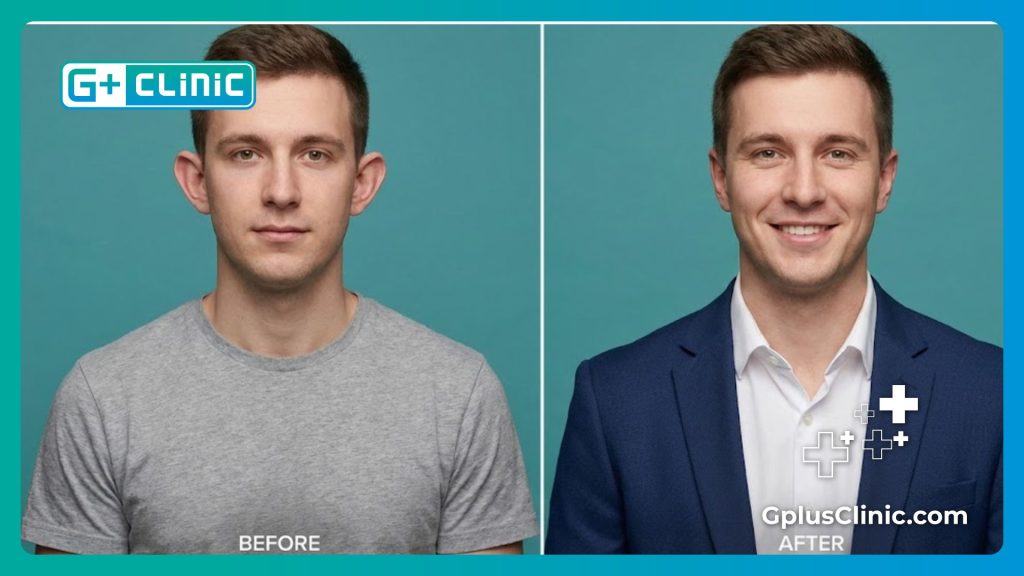
Safety is the absolute priority when considering cosmetic surgery, and understanding the potential Risks of Otoplasty in Turkey is the first step toward a successful transformation. At G+ Clinic, we believe that informed patients make the best decisions, which is why we provide transparency about safety protocols that turn anxiety into confidence.
## What Are the Real Risks of Otoplasty in Turkey?
Otoplasty is statistically one of the safest facial surgeries globally, with serious complication rates remaining below 1% when performed by board-certified surgeons, meaning most “risks” are merely temporary side effects like swelling.
(According to Cleveland Clinic, the procedure is low-risk, and permanent damage is extremely rare when proper medical guidelines are followed).
Risks of Otoplasty in Turkey are often misunderstood by patients who confuse temporary recovery symptoms with long-term dangers. By choosing a JCI-accredited facility like G+ Clinic, patients ensure that every step of the procedure is monitored to mitigate these concerns effectively.
## Common Complications and Safety Measures
Transparency is vital, so we must openly list the potential complications associated with Risks of Otoplasty in Turkey to ensure you are fully prepared:
- Infection: Rare occurrences treated easily with antibiotics.
- Hematoma: Blood collection under skin, drained if necessary.
- Asymmetry: Slight difference between ears, often natural.
- Scarring: Hidden behind the ear, fading over time.
- Suture Extrusion: Internal stitches may surface but are removable.
- Numbness: Temporary loss of sensation in the earlobes.
- Over-correction: Ears pinned back too tightly (Pinneaplasty).
Managing these factors is our specialty, and understanding these Risks of Otoplasty in Turkey allows our medical team to prevent them proactively.
Expert Insight from G+ Clinic:
“Safety in plastic surgery is not an accident; it is the result of high-level preparation. When we talk about Risks of Otoplasty in Turkey, we are mostly discussing manageable healing processes. Our ‘Zero-Infection Protocol’ at G+ Clinic ensures that your journey is focused on the result, not the worry.”
## Cost vs. Safety: Is Cheaper Risky?
Many patients worry that lower prices imply higher Risks of Otoplasty in Turkey, but the reality is linked to economic factors, not medical quality:
| Region | Average Cost (€) | Safety Standard (Accreditation) | Risk Level |
| Turkey (G+ Clinic) | €1,800 – €2,500 | High (JCI / ISO) | Very Low |
| United Kingdom | €4,500 – €6,500 | CQC Regulated | Low |
| United States | €6,000 – €9,000 | AAAASF | Low |
| Eastern Europe | €1,600 – €2,200 | Variable Standards | Moderate |
Analyzing this data reveals that Risks of Otoplasty in Turkey are not elevated by the affordable cost; rather, the price difference comes from lower operational expenses in Istanbul.
## Technologies That Reduce Risks
Modern medical engineering has introduced specific tools designed to minimize Risks of Otoplasty in Turkey and accelerate the healing timeline:
- Incisionless Technique: Uses sutures only, eliminating skin cutting.
- Laser Assistance: Seals blood vessels instantly to prevent bleeding.
- Mustarde Sutures: Specialized stitching to create anti-helical folds.
- Furnas Sutures: Deep stitches to anchor the concha to the mastoid.
- Biocompatible Threads: Reduces rejection rates and inflammation.
Employing these advanced technologies at G+ Clinic significantly lowers the biological impact of the surgery, directly reducing Risks of Otoplasty in Turkey.
## The Ideal Candidate for Maximum Safety
The ideal candidate is a healthy individual, non-smoker, without active ear infections, who seeks improvement rather than perfection, as good health is the best defense against complications.
(According to Mayo Clinic, children aged 5 and older are excellent candidates because their cartilage is stable enough for correction).
Risks of Otoplasty in Turkey are significantly higher for heavy smokers or those with uncontrolled diabetes. Therefore, our surgeons conduct rigorous pre-operative screenings to ensure your body is ready for a safe and smooth recovery.
## Target Areas and Anatomical Safety
Surgeons must navigate specific zones of the ear carefully to avoid Risks of Otoplasty in Turkey related to structural damage:
- Helix Rim: The outer curve requiring smooth contouring.
- Anti-Helix Fold: Often created surgically to reduce protrusion.
- Conchal Bowl: Deep cartilage that may need reduction.
- Post-Auricular Sulcus: The hidden groove where incisions are placed.
- Lobule: The soft earlobe which may need repositioning.
Precision in these delicate areas is mandatory, as improper handling here constitutes one of the primary cosmetic Risks of Otoplasty in Turkey.
## Anesthesia: Safety Protocols
Anesthesia management is a critical component when discussing Risks of Otoplasty in Turkey, and the choice depends largely on the patient’s age. Children are almost always treated under general anesthesia to ensure they remain still and traumatized, while adults typically undergo the procedure with local anesthesia and mild sedation.
Risks of Otoplasty in Turkey related to anesthesia are extremely low in modern medicine. At G+ Clinic, a dedicated anesthesiologist monitors heart rate, oxygen levels, and blood pressure throughout the surgery, ensuring a safe experience from start to finish.
## The Step-by-Step Safety Timeline
Following a strict surgical protocol is the most effective way to neutralize Risks of Otoplasty in Turkey throughout the patient’s journey:
| Phase | Medical Action | Safety Impact |
| Consultation | Physical exam & medical history review | Identifies high-risk patients |
| Preparation | Sterilization of the surgical field | Prevents bacterial infection |
| Incision | Hidden cut behind the ear | Avoids visible keloid scarring |
| Modeling | Reshaping cartilage with permanent sutures | Ensures long-term stability |
| Closure | Dissolvable stitches applied | Eliminates removal pain |
| Bandaging | Compression headwrap applied | Prevents hematoma formation |
Adhering to this timeline allows the medical team to control every variable, effectively eliminating the unpredictable nature of Risks of Otoplasty in Turkey.
## Why Choose G+ Clinic for Maximum Safety?
Selecting the right medical provider is the single most effective way to neutralize Risks of Otoplasty in Turkey, and here is why G+ Clinic is the preferred choice for international patients:
- JCI Accreditation: The highest global standard for hospital safety.
- Board-Certified Surgeons: Specialists dedicated exclusively to facial plastic surgery.
- Sterile Environments: Operating rooms equipped with HEPA filters.
- Multilingual Support: Eliminating communication barriers that cause errors.
- Comprehensive Aftercare: 24/7 access to medical staff post-surgery.
By strictly adhering to these pillars of excellence, we ensure that Risks of Otoplasty in Turkey are kept to an absolute minimum, providing a safe harbor for your aesthetic journey.
## Detailed Procedure Protocol
Knowledge is power, and understanding the precise surgical steps helps patients realize how controlled the Risks of Otoplasty in Turkey truly are during the operation:
- Final Verification: Surgeon confirms the plan with the patient.
- Anesthesia Administration: Ensuring total comfort before starting.
- Precision Incision: A small cut hidden in the retro-auricular fold.
- Skin Excision: Removing a narrow strip of skin to prevent bunching.
- Cartilage Sculpting: Scoring the cartilage to weaken and fold it.
- Suture Placement: Using permanent threads to hold the new shape.
- Symmetry Check: Comparing both ears before final closure.
- Wound Closure: Using dissolveable stitches to minimize irritation.
- Dressing Application: Applying a protective head wrap immediately.
- Recovery Monitoring: Observation in the recovery room for 1-2 hours.
This meticulous workflow at G+ Clinic leaves no room for error, systematically reducing Risks of Otoplasty in Turkey at every stage.
## Technology Comparison: Safety Profiles
Different surgical methods carry different safety profiles, and comparing them helps in understanding the specific Risks of Otoplasty in Turkey associated with each technique:
| Feature | Traditional Otoplasty | Incisionless (Thread) | Laser-Assisted |
| Invasiveness | Moderate (Skin Incision) | Low (Needle Entry) | Low to Moderate |
| Bleeding Risk | Low | Minimal | Very Low (Cauterization) |
| Recurrence Risk | Very Low (Permanent) | Moderate (Suture Breakage) | Low |
| Scarring | Thin line behind ear | None / Dots | Fine line |
| Recovery Time | 1-2 Weeks | 3-5 Days | 1 Week |
| Anesthesia | Local or General | Local | Local |
While non-surgical options seem appealing, traditional methods often provide the most stable long-term results with manageable Risks of Otoplasty in Turkey.
## When Do Results Become Visible?
You will notice an immediate improvement in ear position once the first bandages are removed (Day 3-5), but the final, refined result appears after 3 to 6 months when all micro-swelling has subsided.
Patience is crucial because judging the results too early is a psychological aspect of Risks of Otoplasty in Turkey. It is normal for ears to look slightly swollen or “over-pinned” initially. (According to ISAPS, tissue settling is a gradual biological process that cannot be rushed).
## Preparation to Minimize Surgical Risks
The patient plays a vital role in preventing Risks of Otoplasty in Turkey by adhering to a strict pre-operative checklist designed to optimize body functions:
- Stop Smoking: Nicotine constricts blood vessels, risking necrosis.
- Avoid Blood Thinners: Stop Aspirin/Ibuprofen 2 weeks prior.
- Limit Supplements: Avoid Vitamin E and fish oil to prevent bleeding.
- Stay Hydrated: Drink plenty of water in the days leading up.
- Wash Hair: Thoroughly clean hair the night before to reduce bacteria.
- Fast Properly: No food or water 8 hours before general anesthesia.
Compliance with these simple yet critical rules is the most effective way to lower Risks of Otoplasty in Turkey related to anesthesia and wound healing.
## Pros and Cons: A Transparent View
We believe in honest medicine at G+ Clinic, so we present a balanced view of the benefits versus the Risks of Otoplasty in Turkey:
| Pros (Benefits) | Cons (Potential Risks) |
| Psychological Relief: Ends bullying and boosts self-esteem. | Temporary Discomfort: Itching and throbbing for a few days. |
| Permanent Results: Cartilage memory is reset forever. | Suture Sensitivity: Feeling the internal knots (rare). |
| Invisible Scars: Hidden completely behind the ear fold. | Asymmetry: Minor differences between left and right. |
| Quick Recovery: Return to normal life within a week. | Headband Wear: Requirement to sleep with a band for weeks. |
The consensus among patients is that the life-changing confidence boost far outweighs the minor and temporary Risks of Otoplasty in Turkey.
## VIP Services for Stress-Free Surgery
High stress levels can negatively impact recovery, which is why our VIP services are designed to remove logistical anxiety, indirectly lowering Risks of Otoplasty in Turkey:
- Private Chauffeur: VIP transfers between airport, hotel, and clinic.
- 5-Star Accommodation: Recovery in a luxury hotel environment.
- Personal Translator: Ensuring you understand every medical instruction.
- Dedicated Nurse: Post-op visits to your hotel room for check-ups.
- City Tours: Optional safe tours once you are medically cleared.
By handling the logistics, G+ Clinic allows you to focus entirely on resting, which is the best antidote to Risks of Otoplasty in Turkey.
## Common Myths About Otoplasty Risks
A prevalent myth is that Otoplasty can damage hearing; however, the surgery is strictly confined to the outer ear (pinna) and never touches the middle or inner ear mechanisms, making hearing loss impossible.
Dispelling such myths is essential to understanding the true nature of Risks of Otoplasty in Turkey. Another myth is that ears will “pop back” to their original position; with modern permanent sutures, this is extremely rare. Education is the best tool to combat fear regarding Risks of Otoplasty in Turkey.

## Managing Potential Side Effects
While we strive for perfection, biology varies. Knowing how to manage potential side effects is key to mitigating Risks of Otoplasty in Turkey if they arise. For instance, “Telephone Ear” (a slight deformity) can occur if the middle part of the ear is pinned back too aggressively.
At G+ Clinic, we use a “mirror check” during surgery (under local anesthesia) to let the patient see the position before we close. If a hematoma (blood clot) occurs, it is a simple office procedure to drain it. Knowing that every one of the Risks of Otoplasty in Turkey has a medical solution provides immense peace of mind.
## Recovery Timeline and Milestones
A structured recovery is your roadmap to safety, helping you distinguish between normal healing and potential Risks of Otoplasty in Turkey:
- Day 1: Rest in the hotel, keep head elevated to reduce swelling.
- Day 3: First check-up, removal of bulky bandages.
- Week 1: Return to work (desk job), wear headband 24/7.
- Week 2: Stitches dissolve or are removed, bruising fades.
- Month 1: Resume light exercise, wear headband only at night.
- Month 3: Contact sports allowed, sensation returns to ears.
- Month 6: Final position achieved, scars are mature and pale.
Sticking to this timeline ensures that you navigate the post-op period without triggering any avoidable Risks of Otoplasty in Turkey.
Patient Stories: Overcoming the Risks of Otoplasty in Turkey
Hearing from real patients provides a relatable perspective on how to navigate the mental and physical Risks of Otoplasty in Turkey:
Sarah (24, UK): “I was terrified of the Risks of Otoplasty in Turkey, specifically infection. But the hygiene standards atG+ Clinicwere higher than my local hospital. My ears look perfect now.”
David (32, Ireland): “My biggest worry regarding the Risks of Otoplasty in Turkey was the language barrier leading to mistakes. The personal translator stayed with me 24/7, making the process seamless and safe.”
Elena (29, Germany): “I read about the Risks of Otoplasty in Turkey and scarring. The surgeon placed the incision so perfectly in the fold that even my hairdresser can’t see it. The result is life-changing.”
Mark (Parents of Noah, 8): “We worried about anesthesia Risks of Otoplasty in Turkey for our son. The pediatric team was incredible, and Noah was back to playing video games the next day.”
These narratives prove that with the right clinic, the Risks of Otoplasty in Turkey are manageable and the rewards are immense.
Hidden Costs Associated with Minimizing Risks of Otoplasty in Turkey
While the surgery is affordable, budgeting for safety essentials is critical to avoiding financial Risks of Otoplasty in Turkey:
The following items are often overlooked but are essential for a recovery free from Risks of Otoplasty in Turkey:
- Extra Headbands: Essential for hygiene during the first month.
- Post-Op Medications: Antibiotics and painkillers to prevent complications.
- Flight Flexibility: Costs for changing dates if recovery is slow.
- Companion Expenses: Hotel and food for your support person.
- Medical Garments: Specialized compression wear for optimal healing.
Planning for these expenses ensures that you never have to cut corners, thereby reducing the Risks of Otoplasty in Turkey.
Maintenance Tips to Prevent Long-Term Risks of Otoplasty in Turkey
Preserving your results requires dedication, as negligence can reintroduce aesthetic Risks of Otoplasty in Turkey:
Follow these maintenance rules to ensure your ears remain protected from the Risks of Otoplasty in Turkey:
- Sleep Position: Sleep on your back for 4 weeks minimum.
- Sun Protection: Apply SPF 50 to the ears to prevent scar darkening.
- Avoid Trauma: No contact sports (rugby, boxing) for 3 months.
- Hydration: Drink water to keep skin elastic and aid healing.
- Gentle Cleaning: Clean behind ears with saline solution daily.
Adhering to this routine is your lifetime warranty against the recurrence of Risks of Otoplasty in Turkey.
Comparison: Otoplasty vs. Non-Surgical Solutions
Patients often ask if non-surgical options have fewer Risks of Otoplasty in Turkey:
The table below compares the efficacy and safety profile of surgery versus fillers or threads in the context of Risks of Otoplasty in Turkey:
| Feature | Surgical Otoplasty | Thread Lift / Fillers |
| Result Longevity | Permanent | Temporary (12-18 months) |
| Correction Capability | High (Structure & Angle) | Low (Minor adjustments) |
| Infection Risk | Very Low (One-time) | Moderate (Repeated entry) |
| Cost over 10 Years | One-time Payment | High (Recurring costs) |
| Anesthesia | Local or General | Topical Cream |
| Scarring | Hidden Micro-Scar | None |
| Recovery | 1 Week | 1-2 Days |
| Satisfaction Rate | >95% | Variable |
While non-surgical options seem less invasive, surgery remains the only permanent solution that eliminates the long-term psychological Risks of Otoplasty in Turkey.
Healthy Lifestyle and Recovery
Surgery is just the beginning of the transformation. Adopting a healthy lifestyle boosts the immune system, which is the body’s natural defense against the Risks of Otoplasty in Turkey like infection or slow healing. Moreover, staying smoke-free protects micro-circulation, ensuring the cartilage heals without complications.
How to Book Your Safe Procedure at G+ Clinic
We have streamlined the booking process to ensure clarity and eliminate administrative Risks of Otoplasty in Turkey:
Follow these steps to secure a safe medical journey and manage the Risks of Otoplasty in Turkey:
- Contact: Reach out via WhatsApp for a free medical assessment.
- Photos: Send clear images for surgeon evaluation.
- Plan: Receive a detailed treatment plan and fixed price quote.
- Flight: Book your travel dates to Istanbul.
- Arrival: Meet our VIP driver at the airport.
- Surgery: Undergo the procedure in our JCI-accredited hospital.
This structured pathway ensures you are supported at every stage, mitigating the logistical Risks of Otoplasty in Turkey.
Conclusion: Are You Ready to Conquer the Risks of Otoplasty in Turkey?
Deciding to change your appearance is empowering. Throughout this guide, we have analyzed the Risks of Otoplasty in Turkey and demonstrated that they are minimal when managed by experts. At G+ Clinic, safety is not just a protocol; it is our promise.
If you are ready to look in the mirror with confidence, knowing you have minimized the Risks of Otoplasty in Turkey, we are here to guide you.
FAQ about Risks of Otoplasty in Turkey
We answer the most pressing questions to further clarify the Risks of Otoplasty in Turkey:
Will otoplasty affect my hearing?
No, the procedure creates zero risk to hearing. The Risks of Otoplasty in Turkey are limited to the external cartilage and skin; the surgeon never enters the ear canal or touches the eardrum.
Is the surgery painful?
Pain is not a major factor among the Risks of Otoplasty in Turkey. The procedure is painless due to anesthesia, and post-op discomfort feels like a mild throbbing, easily managed with prescribed painkillers for 2-3 days.
Can the ears “pop” back out?
Recurrence is one of the rare Risks of Otoplasty in Turkey (less than 3%). By using permanent sutures and scoring the cartilage to break its “memory,” we ensure the ears stay in their new position permanently.
What if I am unhappy with the results?
While dissatisfaction is a subjective aspect of the Risks of Otoplasty in Turkey, we offer a comprehensive consultation to align expectations. Revision surgery is possible but rarely needed given our high satisfaction rates.
How long until I can wash my hair?
To avoid infection Risks of Otoplasty in Turkey, you should wait 3-4 days before washing your hair. When you do, use a gentle baby shampoo and avoid rubbing the area behind the ears vigorously.


