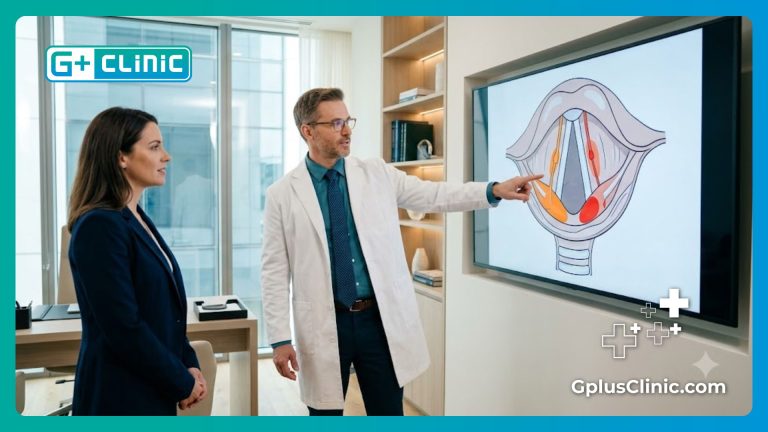
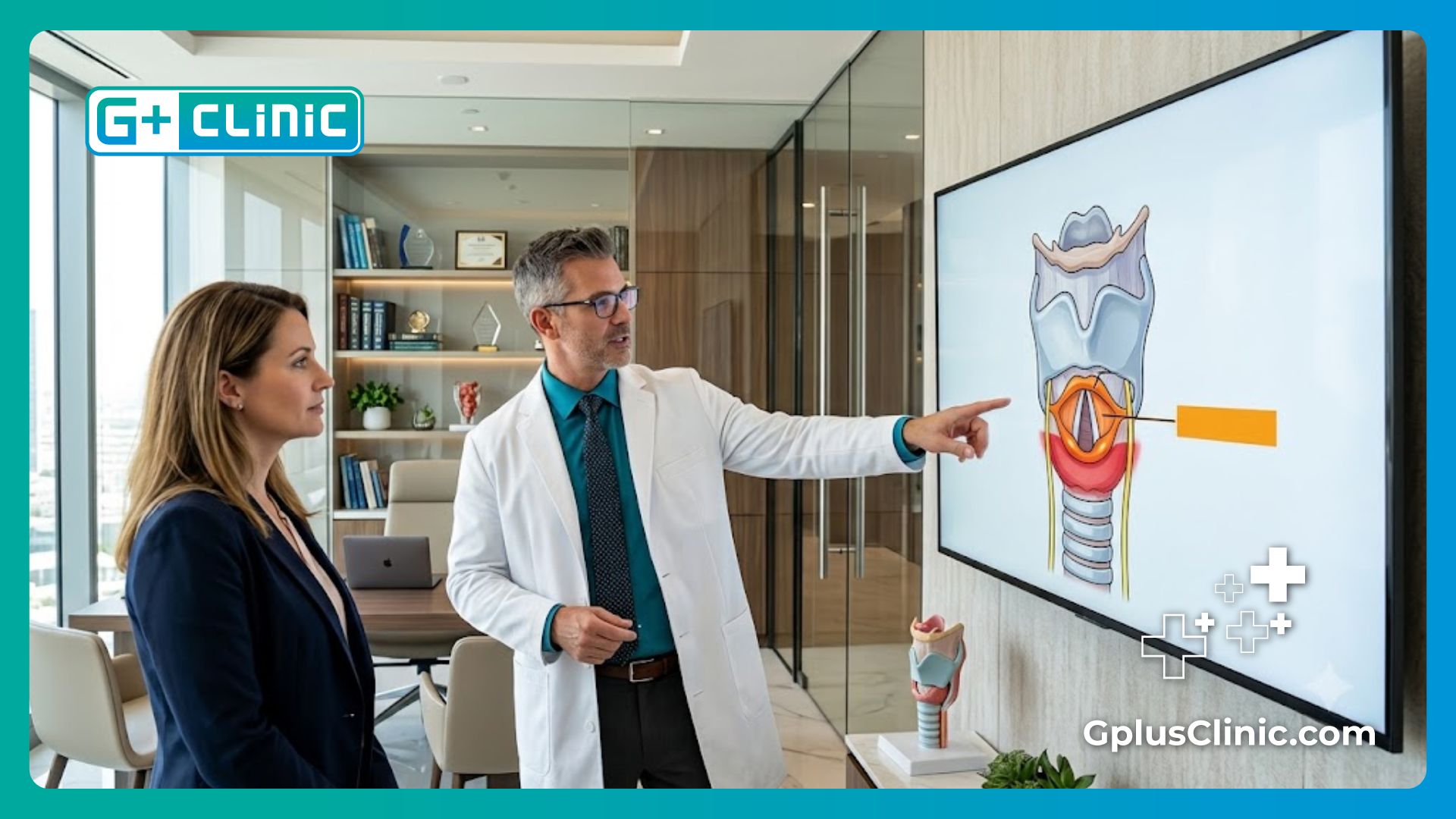
Voice care after surgery is a critical phase in the journey to complete vocal recovery and optimal laryngeal health. At G+ Clinic, we provide comprehensive, scientifically backed rehabilitation programs tailored to each patient. Consequently, this specialized regimen ensures that healing is accelerated, complications are minimized, and your natural vocal resonance is restored with absolute confidence.
When do Voice care after surgery Results Appear?
Voice care after surgery results appear gradually, with patients noticing an immediate reduction in strain once initial swelling subsides within the first few weeks. However, the final, refined vocal tone stabilizes and reaches its peak clarity between three to six months. This requires strict adherence to the prescribed voice rest and therapy guidelines.
Recovery Timeline in Voice care after surgery
Here are the essential recovery stages for Voice care after surgery that you must strictly follow:
- Maintain absolute vocal rest initially.
- Strictly avoid whispering or shouting.
- Drink abundant room-temperature water.
- Stay away from smoking environments.
- Attend all scheduled speech therapy.
- Utilize a room humidifier daily.
Adhering to these steps ensures your Voice care after surgery journey yields a flawless and rapid return to normal vocal function.

What is Voice care after surgery?
Voice care after surgery is a specialized set of medical and behavioral protocols designed to protect healing vocal cords, reduce post-operative swelling, prevent scar tissue formation, and restore optimal phonation. (وفقاً لـ Cleveland Clinic, strict adherence to vocal rehabilitation reduces long-term voice complications by over 80%). Therefore, it is an indispensable step to guarantee sustainable and healthy surgical outcomes.
Voice care after surgery Cost Table
Understanding the financial aspects of Voice care after surgery is vital for patients seeking comprehensive recovery without unexpected burdens:
| Service and Rehabilitation Type | Cost in Turkey (€) | Cost in Europe (€) | Cost in USA (€) |
| Initial Endoscopic Evaluation | 150 – 250 | 400 – 800 | 800 – 1,200 |
| Speech Therapy Sessions (Per Visit) | 80 – 150 | 200 – 400 | 300 – 600 |
| Laser Treatment for Scar Reduction | 500 – 900 | 1,500 – 2,500 | 3,000 – 4,500 |
| Localized Corticosteroid Injections | 300 – 500 | 800 – 1,200 | 1,500 – 2,000 |
| Hydrating Medications & Supplements | 50 – 100 | 150 – 300 | 200 – 400 |
| Psychological Support Counseling | 100 – 150 | 250 – 400 | 400 – 600 |
| Comprehensive Recovery Package (Month) | 1,200 – 1,800 | 3,500 – 5,000 | 6,000 – 9,000 |
| Remote Medical Follow-up Telehealth | 50 – 100 | 150 – 250 | 200 – 400 |
These figures demonstrate that investing in Voice care after surgery in Turkey provides world-class medical quality coupled with significant financial savings.
Advanced Technologies for Voice care after surgery
Here are the cutting-edge technologies utilized to enhance the effectiveness of Voice care after surgery:
- High-definition flexible video laryngoscopy.
- Advanced computerized acoustic frequency analysis.
- Pulsed-dye laser treatments reducing congestion.
- Biofeedback software for muscle training.
- Micro-mist laryngeal hydration nebulizer devices.
These technological advancements ensure that Voice care after surgery remains precise, comfortable, and built upon a solid scientific foundation.
Ideal Candidate for Voice care after surgery
The ideal candidate for Voice care after surgery is any patient who has undergone laryngeal, thyroid, or vocal cord procedures and requires structured rehabilitation to prevent aspiration and restore voice quality. (وفقاً لـ Mayo Clinic, early rehabilitative intervention is the definitive key to the success of the primary surgery).
“While a precise surgical intervention masterfully corrects the anatomical issue, it is proper rehabilitation that truly restores natural function. AtG+ Clinic, we believe that patience and strict adherence to Voice care after surgery protocols transform temporary challenges into spectacular, permanent results.”
Voice care after surgery Steps Timeline
Reviewing this detailed timeline for Voice care after surgery helps patients mentally and physically prepare for their healing journey:
| Recovery Phase | Medical Procedure Description | Estimated Duration | Primary Objective |
| Initial Days (1-3) | Total silence and absolute voice rest | 72 Hours | Prevent bleeding and reduce acute swelling |
| First Week | Speaking in a very soft, gentle tone | 7 Days | Stimulate light movement without strain |
| Second Week | Beginning specialized speech therapy | 1-2 Sessions | Retrain healing laryngeal muscles safely |
| First Month | Deep breathing and air control exercises | 4 Weeks | Support the voice, reducing laryngeal burden |
| Second Month | Gradually resuming moderate speaking | Continuous | Assess vocal endurance in daily life |
| Third Month | Endoscopy for final healing evaluation | 30 Minutes | Ensure scar absence and tissue flexibility |
| Sixth Month | Comprehensive advanced acoustic analysis | 45 Minutes | Measure the return of natural resonance |
| Annual Follow-up | Routine visit maintaining laryngeal health | Yearly | Prevent future strain or vocal relapses |
By strictly following this schedule, your Voice care after surgery plan guarantees the safest and most effective functional outcome possible.
Target Areas for Voice care after surgery
Here are the specific anatomical zones focused on during Voice care after surgery:
- True vocal cords and vibrations.
- False vocal cords and protection.
- Internal and external laryngeal muscles.
- Mucous membrane lining the vocal tract.
- Diaphragmatic and respiratory support mechanisms.
Precise targeting of these vital structures ensures that Voice care after surgery provides a flawless environment for perfect healing.
Anesthesia and Duration in Voice care after surgery
Voice care after surgery requirements vary based on the specific supportive intervention needed. In most scenarios, speech therapy and behavioral training sessions are entirely non-invasive and require zero anesthesia, with each session lasting between 45 to 60 minutes. On the other hand, if a detailed diagnostic laryngoscopy or localized hydration injection is required to accelerate healing, a mild topical anesthetic spray is used. This spray numbs the throat instantly and wears off within minutes, guaranteeing maximum patient comfort.
Furthermore, the expert medical team at G+ Clinic is dedicated to providing a serene, supportive environment throughout the rehabilitation phase. Consequently, the Voice care after surgery timeline is highly flexible and tailored exactly to your individual biological response. This personalized care minimizes the risk of future relapses and ensures you regain your vocal confidence seamlessly.
Why G+ Clinic for Voice care after surgery?
Here are the unparalleled global advantages of choosing our facilities for your Voice care after surgery:
- Joint Commission International (JCI) accreditation.
- World-renowned speech and rehabilitation specialists.
- Customized therapeutic programs for every case.
- State-of-the-art laryngoscopy monitoring equipment.
- A tranquil recovery environment enhancing wellness.
These exceptional features make your Voice care after surgery journey a professional, highly successful medical experience.
Procedure Details for Voice care after surgery
Here are the meticulously connected clinical steps involved in Voice care after surgery:
- Endoscopic assessment evaluating healed tissue status.
- Designing strict vocal rest protocols initially.
- Initiating diaphragmatic breathing support exercises.
- Applying vocal resonance drills reducing fatigue.
- Continuously monitoring vocal cord vibration symmetry.
Following these scientific steps ensures that Voice care after surgery successfully restores vocal power and prevents frustrating relapses.

Comparing Voice care after surgery Techniques
Different rehabilitation methodologies exist; this table highlights the key differences within Voice care after surgery:
| Comparison Feature | Traditional Voice Therapy | Advanced Biofeedback Rehabilitation |
| Nature of Procedure | Coach-dependent breathing and speech | Training using real-time interactive screens |
| Precision Level | Relies on doctor’s auditory observation | Relies on precise computerized frequency data |
| Response Speed | Gradual, requiring more time | Faster due to immediate patient awareness |
| Visual Interaction | None, completely reliant on hearing | Patient views muscle movement and vibration |
| Estimated Cost | Economical and suitable for most | Higher cost due to advanced technology |
| Ideal Cases | Mild hoarseness and vocal fatigue | Cord paralysis and complex tumor recovery |
| Equipment Needed | No highly complex medical devices | Requires sophisticated software and sensors |
| Result Sustainability | Good if patient strictly follows rules | Excellent for reinforcing muscle memory |
This detailed breakdown helps you choose the most appropriate Voice care after surgery approach for your specific anatomical health.
Preparation for Voice care after surgery
Here are the vital preparatory steps required before actively starting your Voice care after surgery programs:
- Completely abstain from laryngeal irritants (smoking).
- Follow a strict anti-acid reflux diet.
- Install high-quality room air humidifiers.
- Organize work schedules allowing vocal breaks.
- Prepare notepads for temporary written communication.
Rigorous adherence to this preparation ensures that your Voice care after surgery proceeds smoothly and with complete peace of mind.
Pros and Cons of Voice care after surgery
Committing to Voice care after surgery yields pivotal benefits, though it demands daily patience and perseverance:
| Advantages and Benefits | Potential Challenges and Disadvantages |
| Prevents rigid scar formation on vocal cords | Requires long, strict adherence to silence |
| Accelerates return of natural tone and power | Patients may feel frustrated during silent days |
| Teaches lifelong healthy phonation habits | Cost of repeated therapy sessions adds up |
| Massively reduces the need for revision surgery | Requires radical dietary and lifestyle changes |
| Boosts mental health and speaking confidence | Mandates continuous, routine clinic visits |
| Protects respiratory tract from aspiration | Healing speed varies greatly among individuals |
| 100% non-invasive and safe for all ages | Necessitates time off from voice-heavy jobs |
| Provides continuous, precise healing monitoring | Difficult to maintain silence in family settings |
Understanding these comparative dimensions helps you approach Voice care after surgery with awareness, patience, and absolute transparency.
VIP Services for Voice care after surgery
Here are the luxury amenities designed for your absolute comfort during Voice care after surgery:
- VIP airport welcome with a private Mercedes.
- Comfortable stays in serene 5-star hotels.
- A dedicated native-speaking medical coordinator.
- In-suite private speech therapy sessions provided.
- Relaxing tourism tours arranged across Istanbul.
These premium, comprehensive services transform your Voice care after surgery into a stress-free, rejuvenating medical holiday.
Myths about Voice care after surgery
A prominent myth is that whispering relaxes the vocal cords; however, scientific reality proves that whispering places significantly more strain and pressure on the larynx than normal speech. Therefore, whispering is strictly forbidden during Voice care after surgery. Consequently, you must commit to total silence or speak very softly without forcing a whisper.
Risks of Voice care after surgery
Voice care after surgery procedures do not involve actual surgical risks; instead, the primary risks stem from individual negligence and failure to follow directives. Premature vocal strain can tear newly healed tissues or trigger rigid fibrous scars that hinder natural vibration. On the other hand, untreated gastroesophageal reflux can cause severe chemical inflammation in the larynx, drastically stalling rehabilitation. To counter this, G+ Clinic implements rigorous, continuous educational protocols ensuring patients are fully aware of what to avoid, successfully navigating Voice care after surgery without complications.
Patient Stories: Voice care after surgery
Voice care after surgery programs have transformed the lives of many who trusted our elite medical services:
- Ahmed (45): “After my laryngeal polyp removal, my voice was incredibly weak. Committing to the Voice care after surgery program restored my speech power and confidence in just a few short weeks.”
- Sarah (38): “I ignored vocal rest initially, but the G+ team guided me precisely. Their Voice care after surgery sessions were the absolute savior of my teaching career.”
- Omar (55): “Rehabilitation post-thyroid surgery was daunting. The biofeedback machines used during my Voice care after surgery made me master my laryngeal control brilliantly.”
- Elena (30): “As a professional singer, silence was terrifying. But the comprehensive Voice care after surgery protocol guaranteed my return to the stage with a purer tone than ever before.”
Hidden Costs of Voice care after surgery
Here are the auxiliary expenses to consider when meticulously budgeting for your Voice care after surgery:
- Costs of specialized home air humidifiers.
- Fees for extra speech sessions beyond packages.
- Expenses for strict anti-reflux medications.
- Costs for temporary soft, easy-to-swallow foods.
- Transportation expenses for personal companions.
Transparent, upfront financial planning for Voice care after surgery prevents any financial stress from hindering your peaceful recovery.
Maintaining Voice care after surgery Results
Here are the healthy daily habits required to sustain the success of your Voice care after surgery:
- Keep the larynx hydrated with constant water.
- Perform vocal warm-ups before lengthy speaking.
- Treat colds and coughs immediately upon onset.
- Permanently quit smoking in all its forms.
- Avoid noisy environments prompting you to shout.
These calculated daily habits ensure the results of your Voice care after surgery remain effective and highly satisfying for a lifetime.
Voice care after surgery vs Open Surgery
There is a vast difference between vocal rehabilitation and complex surgical interventions; this table clarifies them perfectly:
| Comparison Metric | Voice care after surgery Programs | Open Surgical Intervention (Thyroplasty) |
| Clinical Nature | Non-invasive behavioral and therapeutic | Complex surgery requiring neck incision |
| Anesthesia Type | No anesthesia (except topical endoscopy) | Requires full general anesthesia usually |
| Resulting Scars | Leaves absolutely zero visible external scars | Leaves a small, noticeable surgical neck scar |
| Medical Risks | Very rare, limited to temporary fatigue | Relatively higher (infection, bleeding, nerve) |
| Recovery Period | Requires self-discipline and days of silence | Requires hospital stay and weeks of swelling |
| Result Speed | Gradual, improving with consistent exercises | Immediate anatomical change, takes time to settle |
| Reversibility | Highly flexible and adjustable to response | Permanent and difficult to modify post-healing |
| Financial Cost | Economical, distributed comfortably over sessions | High cost paid upfront to the hospital facility |
This analytical table highlights the massive importance of strict adherence to Voice care after surgery to avoid complex, additional surgeries.
Healthy Lifestyle
A medical procedure is never the end of the line. To preserve long-term benefits, patients must adopt a healthy lifestyle focusing on entire respiratory system wellness. (وفقاً لـ ISAPS, maintaining overall physiological wellness significantly enhances tissue healing and mucosal integrity). This includes avoiding spicy foods that exacerbate acid reflux and practicing deep breathing exercises that support the diaphragm. Ultimately, proper, balanced nutrition rich in antioxidants and vitamins plays a highly effective role in maintaining laryngeal elasticity long after Voice care after surgery concludes.
How to Book Voice care after surgery
Here are the fast and easy steps to begin your journey toward proper Voice care after surgery:
- Contact our medical consultation team via WhatsApp.
- Send your previous surgical reports and laryngoscopies.
- Discuss the rehab plan with a certified speech therapist.
- Schedule your session dates and arrange travel.
- Arrive at the airport for immediate, comprehensive evaluation.
We await you to deliver the finest Voice care after surgery programs in a safe environment that prioritizes your medical health.
Ready for Voice care after surgery?
In conclusion, the decision to strictly commit to Voice care after surgery programs represents a true investment in your quality of life and your ability to communicate effectively and confidently. By integrating advanced global technologies with highly specialized medical teams, G+ Clinic guarantees the safe and rapid restoration of your natural voice. Whether you are battling post-operative hoarseness or accelerating healing after tumor removal, Voice care after surgery is the optimal medical solution. Are you ready for your recovery journey? Contact us today for your comprehensive free consultation.

FAQ about Voice care after surgery
Is Voice care after surgery painful?
No, Voice care after surgery programs are entirely painless. They rely primarily on vocal rest, gentle therapeutic exercises, and behavioral guidance without any surgical interventions that would cause severe pain or discomfort to the patient.
When can I return to work during Voice care after surgery?
This depends on your profession; if your work is office-based and does not require extensive speaking, you can return in a few days. However, professions relying on continuous voice use (like teaching or law) require a longer leave determined by your response to Voice care after surgery.
Are warm liquids beneficial for Voice care after surgery?
Yes, drinking moderate-temperature water and liquids is an essential pillar in Voice care after surgery. It helps to continuously hydrate the laryngeal mucous membranes, facilitating the movement of the vocal cords and preventing harsh friction between them.
What happens if I ignore my Voice care after surgery?
Neglecting Voice care after surgery protocols can lead to severe complications, including the formation of permanent fibrous scars on the healing vocal cords, chronic hoarseness, or even the complete failure of the primary surgery you previously underwent.
Can I sing after completing Voice care after surgery?
Yes, once the specialist confirms complete tissue healing and the success of Voice care after surgery in restoring laryngeal elasticity and proper vibration, you can gradually return to singing, preferably under the supervision and guidance of a professional vocal coach.