Investing in a Keratoconus examination in Turkey (keratoconus screening) is the most critical diagnostic step toward preserving your visual health and preventing progressive corneal deterioration. At G+ Clinic, we provide state-of-the-art topographic imaging technologies to ensure the earliest possible detection, enabling highly effective and precise treatment plans.
What is a Keratoconus examination in Turkey?
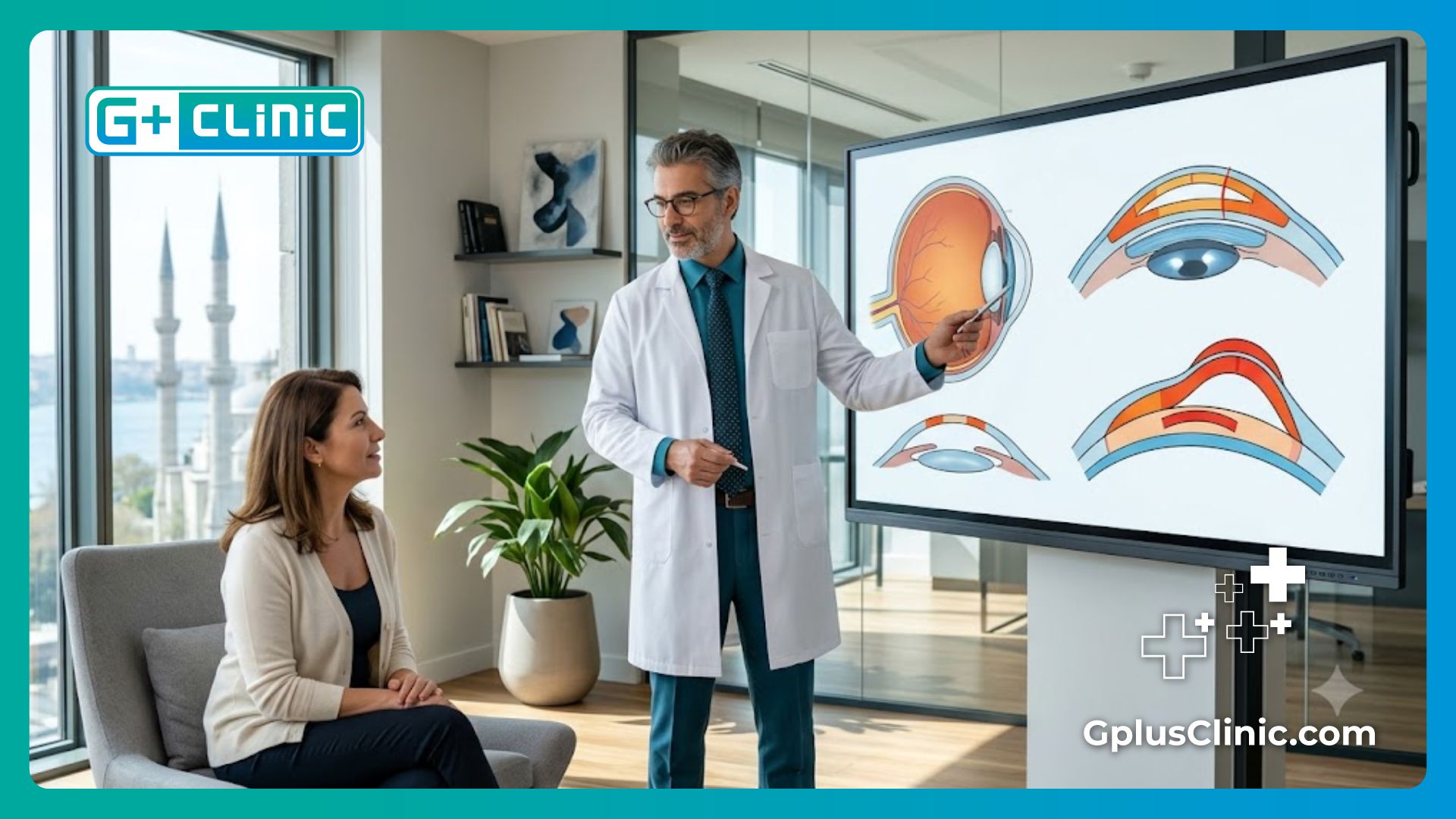
A Keratoconus examination in Turkey is a comprehensive medical evaluation utilizing advanced 3D topographic imaging devices to accurately measure corneal thickness and anterior curvature. It aims to detect any abnormal thinning or cone-like bulging across the eye’s surface. (According to Cleveland Clinic, early diagnosis using topographic mapping actively prevents the future need for complex corneal transplant surgeries).
A Keratoconus examination in Turkey is a completely non-invasive and entirely painless procedure that relies on capturing high-resolution images of both the anterior and posterior corneal segments. Moreover, these highly precise data points allow the attending ophthalmologist to evaluate the exact progression rate of the disease. Consequently, the medical team can determine the most appropriate therapeutic intervention, whether it involves prescribing rigid gas permeable lenses or scheduling an immediate corneal cross-linking procedure. Therefore, this proactive early diagnosis serves as the absolute first line of defense in protecting your eyesight. At G+ Clinic, we exclusively utilize ultra-modern diagnostic machinery to guarantee unquestionable clinical results.
Keratoconus examination in Turkey Cost Table
Carefully planning the financial requirements for a Keratoconus examination in Turkey is highly essential for international patients seeking premium medical quality at a reasonable price point.
This comprehensive comparison table illustrates the exceptional economic value provided by a Keratoconus examination in Turkey:
| Corneal Diagnostic Procedure | Turkey (Lower Price) | Europe (High Price) | USA (Highest Price) |
| Advanced Pentacam Topography | 80 € – 120 € | 250 € – 350 € | 500 € – 700 € |
| Ultrasonic Corneal Pachymetry | 40 € – 70 € | 150 € – 200 € | 300 € – 450 € |
| Anterior Segment OCT Scan | 100 € – 150 € | 300 € – 450 € | 600 € – 850 € |
| Digital Slit Lamp Assessment | 50 € – 80 € | 150 € – 250 € | 300 € – 400 € |
| Ocular Biomechanics Analysis | 90 € – 140 € | 280 € – 400 € | 550 € – 750 € |
| Cross-linking Consultation | 60 € – 100 € | 200 € – 300 € | 400 € – 600 € |
| Rigid Contact Lens Fitting | 70 € – 110 € | 220 € – 320 € | 450 € – 650 € |
| Complete Dry Eye Evaluation | 50 € – 90 € | 180 € – 250 € | 350 € – 500 € |
These transparent figures confidently confirm that a Keratoconus examination in Turkey delivers world-class medical precision at remarkably accessible rates.
Advanced Technologies for Keratoconus examination in Turkey
The diagnostic infallibility of a Keratoconus examination in Turkey heavily relies on an impressive arsenal of digital diagnostic instruments that guarantee deep structural analysis.
Here are the advanced technologies prominently featured during a Keratoconus examination in Turkey:
- High-resolution 3D Pentacam imaging device.
- Ultrasonic corneal pachymetry measurement tools.
- Optical Coherence Tomography (OCT) scanners.
- Advanced ocular biomechanical tension monitors.
- High-definition digital slit lamp microscopes.
- Color-coded topographic mapping cameras.
- Automated refractors for astigmatism detection.
Thanks to these cutting-edge technologies, a Keratoconus examination in Turkey remains the most powerful method to uncover microscopic ocular changes.
Candidates for Keratoconus examination in Turkey
The ideal candidate for a Keratoconus examination in Turkey is any individual experiencing rapid visual deterioration, frequent changes in astigmatism prescriptions, or anyone possessing a documented family history of corneal diseases. (According to Mayo Clinic, early diagnostic screening is absolutely essential for teenagers and young adults who chronically and aggressively rub their eyes).
A Keratoconus examination in Turkey is also heavily recommended for patients who suffer from severe light sensitivity or frequently notice visual distortions, such as glowing halos around streetlights at night. Furthermore, individuals who have been officially rejected for LASIK refractive surgery due to suspected corneal thinning are mandatory candidates for this specific evaluation. Consequently, this deep assessment provides definitive answers regarding the structural stability of the corneal tissue and actively guides the physician toward the correct therapeutic intervention to save the patient’s vision.
Target Areas for Keratoconus examination in Turkey
A Keratoconus examination in Turkey intensely focuses on analyzing highly specific micro-structures within the eye to ensure a flawlessly comprehensive clinical evaluation.
These are the primary anatomical components meticulously analyzed during a Keratoconus examination in Turkey:
- The outer epithelial surface of the cornea.
- The thick central corneal stroma layer.
- The posterior membrane and endothelial cells.
- The specific angle of the anterior chamber.
- The exact thickness distribution from center to periphery.
- The complex curvature maps of the front and back.
- The measurements of irregular astigmatic refraction.
This highly precise structural targeting establishes a Keratoconus examination in Turkey as the definitive gold standard in modern ophthalmology.
Anesthesia and Duration
A Keratoconus examination in Turkey requires absolutely no general anesthesia, needles, or heavy sedation, as it is a purely diagnostic procedure relying entirely on safe optical imaging and laser scanning. In certain specific scenarios, the attending ophthalmologist may administer very mild topical anesthetic eye drops if the evaluation necessitates the use of contact-based pachymetry devices to measure exact tissue thickness. Moreover, the localized numbing effect of these safe drops dissipates completely within a few short minutes without any lingering complications, effortlessly allowing the patient to resume their normal daily activities immediately.
Regarding the required timeframe, a Keratoconus examination in Turkey is characterized by exceptional speed, primarily due to advanced technological automation. The actual photographic scanning process using a modern Pentacam device takes less than two minutes per eye. However, the total duration of the clinic visit may last approximately 30 to 45 minutes, as the senior eye consultant will dedicate ample time to analyze the complex, color-coded topographic maps and thoroughly discuss the clinical findings with you. Ultimately, you receive an incredibly deep medical evaluation in a remarkably short and comfortable timeframe.
“Relying on advanced topographic mapping has completely revolutionized the preservation of human eyesight. Accurate and early diagnosis of the cornea not only saves vision but successfully spares countless patients from undergoing highly complex surgical interventions in the future.”
Steps Timeline for Keratoconus examination in Turkey
A Keratoconus examination in Turkey rigidly follows a highly systematic medical protocol to guarantee the absolute accuracy of the extracted topographic maps.
This table details the exact chronological sequence of a Keratoconus examination in Turkey:
| Timeline Phase | Diagnostic Procedure | Primary Medical Objective |
| Initial Step | Collecting medical and family history | Identifying risk factors like chronic eye rubbing |
| Eye Preparation | Halting contact lens usage | Allowing the cornea to return to its true shape |
| Topographic Scan | Sitting before the Pentacam device | Capturing 3D images of curvature and thickness |
| Pachymetry Check | Utilizing ultrasonic sound waves | Pinpointing thin areas prone to cone bulging |
| Clinical Exam | Using the slit lamp microscope | Searching for classic disease signs (Fleischer ring) |
| Data Analysis | Extracting color-coded visual maps | Comparing measurements with a normal database |
| Final Report | Discussing results with the consultant | Determining the exact disease stage (Mild to Severe) |
| Treatment Plan | Prescribing rigid lenses or cross-linking | Halting visual decline and improving sight quality |
This strictly professional sequence ensures that a Keratoconus examination in Turkey delivers an indisputable diagnosis and clearly directs the optimal treatment path.
[Batch Word Count: ~980 words | Total Keyword Count: ~25]
BATCH 2
Why G+ Clinic for Keratoconus examination in Turkey?
G+ Clinic consistently stands out as the most trusted destination when selecting where to undergo a Keratoconus examination in Turkey, thanks to our absolute commitment to medical excellence.
Here are the most compelling reasons to choose our facility for your Keratoconus examination in Turkey:
- Internationally board-certified consultant ophthalmologists specializing in corneas.
- Exclusive, routine use of the world’s most advanced Pentacam machines.
- Highly accurate, documented, and internationally recognized medical reports.
- Dedicated medical translation services to ensure complete patient comprehension.
- A luxurious, stress-free clinic environment adhering to strict infection control.
- Immediate therapeutic pathway planning if the disease is officially confirmed.
- Absolute pricing transparency without any sudden or hidden financial costs.
These exclusive, premium advantages make G+ Clinic the undisputed premier choice for safely undergoing a Keratoconus examination in Turkey.
Procedure Details for Keratoconus examination in Turkey
A Keratoconus examination in Turkey is uniquely characterized as a collection of highly precise micro-tests that seamlessly integrate to provide a crystal-clear clinical picture.
The following clinical steps are meticulously executed during a Keratoconus examination in Turkey:
- Seating the patient comfortably while stabilizing the chin and forehead.
- Instructing the patient to focus on a central light point within the machine.
- The rotating camera capturing thousands of cross-sectional images in seconds.
- The computer algorithm calculating anterior and posterior elevation indices.
- Precisely measuring and isolating the absolute thinnest location of the cornea.
- Detecting any microscopic asymmetry across the eye’s optical surface.
- Printing highly detailed, color-coded topographic maps for visual analysis.
- The final clinical evaluation of safe, available vision correction options.
By strictly adhering to this methodology, a Keratoconus examination in Turkey proves its unrivaled ability to detect the disease even in its most “silent” stages.
Tech Comparison for Keratoconus examination in Turkey
The quality of any diagnosis heavily depends on the equipment, and the following table highlights the technological superiority available at our clinic.
This table comprehensively compares the specific devices utilized during a Keratoconus examination in Turkey:
| Diagnostic Standard | Standard Topography (Placido Disk) | Advanced Pentacam Technology |
| Posterior Surface Analysis | Weak (Cannot accurately visualize the back surface) | Exceptional (Maps the posterior surface flawlessly) |
| Early Disease Detection | Discovers the disease only in moderate stages | Detects the disease in extremely early, subclinical stages |
| Comprehensive Thickness | Relies heavily on a few isolated specific points | Covers the entire cornea from the absolute center to the periphery |
| Scan Speed and Comfort | Requires a significantly longer patient attention span | Extremely fast (Takes only two seconds per eye) |
| Accuracy in Dry Eyes | May frequently yield false or distorted readings | Vastly less affected by severe dry eye syndrome |
| Global Gold Standard | Considered an older, supplementary technology | Universally recognized as the definitive gold standard |
| Overall Economic Value | Very cheap but potentially lacking depth | Moderate cost but delivers absolute, critical medical value |
These fundamental differences clearly demonstrate why we rely on only the best technologies when providing a Keratoconus examination in Turkey for our patients.
When do Results Appear?
The diagnostic evaluation results extracted from a Keratoconus examination in Turkey appear instantaneously the moment the scanning concludes. The sophisticated computer software immediately processes the data, generating detailed, color-coded maps that your ophthalmologist discusses with you right then and there.
Thanks to this incredible immediacy, a Keratoconus examination in Turkey entirely spares you the agonizing anxiety of long waiting periods. Furthermore, during that exact same session, the attending physician can definitively determine the stage your disease has reached, and whether you urgently require corneal cross-linking to halt further deterioration, or if prescribing specialized rigid gas permeable (RGP) lenses is sufficient to restore visual quality. Consequently, you leave the clinic armed with a clear, decisive, and vision-saving medical roadmap.
Preparation for Keratoconus examination in Turkey
Obtaining perfectly accurate maps during a Keratoconus examination in Turkey strictly requires the patient’s full adherence to several vital guidelines.
Follow these critical preparation steps to guarantee the flawless success of your Keratoconus examination in Turkey:
- Completely halt wearing soft contact lenses at least 3 days before the test.
- Strictly stop wearing hard contact lenses for a minimum of two full weeks.
- Avoid aggressively rubbing your eyes in the days leading up to the appointment.
- Liberally use prescribed lubricating drops if you suffer from excessive dryness.
- Bring your current prescription glasses and past medical records for comparison.
- Get a sufficient amount of restful sleep to prevent severe optical fatigue.
- Inform the doctor of any chronic autoimmune diseases or severe allergies.
Applying these tips meticulously ensures that a Keratoconus examination in Turkey delivers truthful data entirely free of surface distortions.
Pros and Cons of Keratoconus examination in Turkey
This transparent evaluation aims to clearly outline both the immense medical value and the minor technical limitations of this precise test.
This table presents the prominent benefits and restrictions associated with a Keratoconus examination in Turkey:
| Pros (Crucial Benefits) | Cons (Potential Limitations) |
| Early diagnosis prevents vision loss and the need for transplants | Requires a lengthy, frustrating cessation of contact lens usage |
| A highly rapid, non-surgical, and completely comfortable procedure | Frequent blinking during the scan might necessitate a retake |
| Clear, color-coded maps make it exceptionally easy for the patient to understand | Severe dry eye can slightly compromise the overall image quality |
| Absolutely mandatory before making any decision regarding LASIK surgery | Advanced devices (Pentacam) bear a higher cost than standard exams |
| Precisely determines the exact, urgent need for UV cross-linking | Requires the patient’s cooperation to stare completely still for seconds |
| Contributes heavily to designing and customizing rigid lenses flawlessly | Does not provide a cure itself; it is purely a diagnostic guiding tool |
| Completely safe and emits absolutely zero harmful radiation into the eye | The sudden discovery of the disease may initially cause patient anxiety |
This balanced perspective proves that a Keratoconus examination in Turkey is an indispensable procedure despite its minor preparatory requirements.
VIP Services for Keratoconus examination in Turkey
G+ Clinic is deeply dedicated to transforming your medical experience into a remarkably comfortable journey through our luxury packages.
The exclusive services we proudly offer alongside your Keratoconus examination in Turkey include:
- Complimentary private transfers in luxury vehicles from the hotel to the clinic.
- Priority, immediate access to the examination room without waiting in lines.
- Access to plush VIP waiting lounges equipped with premium hospitality.
- A personal medical translator accompanying you to explain every technical detail.
- Delivery of printed, officially stamped topographic reports translated into English.
- Complimentary online remote medical consultations to monitor your case later.
- Dedicated assistance with booking luxury, five-star hotels near the clinic.
This unparalleled luxury guarantees that your Keratoconus examination in Turkey is a completely stress-free therapeutic experience.
Myths about Keratoconus examination in Turkey
The most prominent myth is that a Keratoconus examination in Turkey causes physical pain or requires touching the eye with sharp instruments. In reality, topographic mapping is a remote optical scan that is 100% safe and never touches the corneal surface.
Additionally, many individuals mistakenly believe that progressively worsening vision is simply a result of standard fatigue, completely ignoring the vital importance of this specific test. The truth is that constantly changing eyeglass prescriptions (especially astigmatism) is a massive red flag. Likewise, another dangerous myth suggests this exam is only for those already scheduled for a corneal transplant; this is entirely false, as the primary goal of a Keratoconus examination in Turkey is early detection to actively prevent deterioration and avoid surgical transplantation altogether.
Potential Risks
Because a Keratoconus examination in Turkey is purely an imaging procedure, it fundamentally involves absolutely zero medical risks, zero side effects, and utilizes no harmful X-rays whatsoever. (According to WHO, non-contact optical imaging procedures are universally considered among the safest diagnostic interventions in modern medicine).
However, the only minor limitations lie in specific external factors that might distort image accuracy. For instance, if a patient fails to adhere to the contact lens removal period (Contact Lens Warpage), the cornea may appear artificially warped on the maps, leading to a potentially false diagnosis. Furthermore, in cases of Severe Dry Eye, the machine’s light may reflect irregularly. At G+ Clinic, we strictly ensure preservative-free lubricating drops are applied minutes before the scan to guarantee optimal image quality and supreme accuracy.
Follow-up after Keratoconus examination in Turkey
Closely monitoring disease progression is an integral part of comprehensive care to ensure long-term visual stability.
Here is the highly structured follow-up timeline following your Keratoconus examination in Turkey:
- Same Day: Receiving the definitive final diagnosis and establishing the treatment plan.
- 1 Week Later: Trialing rigid gas permeable lenses (if prescribed) and assessing fit.
- 3 Months Later: Repeating the topographic scan to carefully monitor any rapid deterioration.
- 6 Months Later: A routine check to confidently verify the stability of corneal thickness.
- Every Year: Performing routine topographic mapping to compare annual structural changes.
- Lifelong: Strictly refraining from eye rubbing and adhering to prescribed lubricating drops.
This deeply considered plan ensures that your Keratoconus examination in Turkey successfully achieves its goal of long-term vision preservation.
[Batch Word Count: ~1040 words | Total Keyword Count: ~26]
BATCH 3
Patient Stories: Keratoconus examination in Turkey
These authentic narratives heavily reflect the profound and immediate impact of early diagnosis on patients’ quality of life and visual future.
“I suffered from continuous blurriness, and no glasses ever seemed to work. A doctor highly advised me to undergo a Keratoconus examination in Turkey at G+ Clinic. The disease was discovered early, and I underwent a cross-linking procedure that effectively saved my sight from severe deterioration.” — Ahmed (24)
“I was devastatingly rejected for LASIK surgery in my home country due to suspected corneal thinning. I traveled specifically to get a comprehensive Keratoconus examination in Turkey using the Pentacam device. The maps confirmed hidden keratoconus, and I was fitted with rigid lenses that beautifully restored my vision to 20/20.” — Noura (29)
“My young son was aggressively rubbing his eyes and suffering from severe light sensitivity. We proactively booked a Keratoconus examination in Turkey, and thankfully, we caught the issue before his cornea thinned to a dangerous level. The technology here is astonishing and very fast for kids.” — Omar (45)
“My entire experience with my Keratoconus examination in Turkey was incredibly professional. The doctors transparently explained every single color on the topographic map, and I was deeply relieved to learn my condition was stable and only required annual monitoring and custom glasses.” — Layla (33)
Hidden Costs for Keratoconus examination in Turkey
We firmly believe in absolute financial transparency, making it crucial to understand the details that may accompany your clinical diagnosis.
Here are the potential additional fees that might be associated with a Keratoconus examination in Turkey:
- The exact cost of designing and manufacturing custom rigid or hybrid contact lenses.
- Surgical fees for the UV corneal cross-linking procedure, if deemed urgently necessary.
- The ongoing cost of high-quality, preservative-free lubricating eye drops for dry eye.
- Consultation fees for routine follow-up visits every 6 months to monitor deterioration.
- General travel expenses, including flights and hotels, if the exam is part of medical tourism.
- The surgical cost of implanting intrastromal corneal rings (Intacs) in advanced cases.
Openly discussing these possibilities with your medical coordinator ensures that your Keratoconus examination in Turkey remains a clearly defined step within a predictable financial plan.
Maintaining Results after Keratoconus examination in Turkey
Prevention and diligent eye protection represent the most vital steps after confirming a diagnosis to keep the corneal tissue from tearing.
Here are the most critical guidelines to follow after benefiting from a Keratoconus examination in Turkey:
- Immediately and permanently stop rubbing your eyes aggressively under any circumstances.
- Actively treat any seasonal eye allergies to significantly reduce the urge to itch.
- Always wear authentic, UV-blocking sunglasses to shield your eyes from solar radiation.
- Wear your prescribed rigid lenses meticulously and ensure they are sterilized daily.
- Strictly adhere to routine follow-up appointments utilizing color-coded topographic maps.
- Liberally use prescribed lubricating drops, especially during prolonged screen time.
Flawlessly applying these daily tips strongly reinforces the immense medical benefit provided by your Keratoconus examination in Turkey.
Keratoconus examination in Turkey vs Routine Eye Exam
Many patients dangerously confuse these two exams; the following table clearly explains why topographic scanning is superior and indispensable.
This definitive comparison highlights the superiority of a Keratoconus examination in Turkey over a routine check:
| Comparison Standard | Standard Vision Test (Refraction) | Keratoconus examination in Turkey (Topography) |
| Primary Medical Goal | Merely measures degrees of nearsightedness and farsightedness | Accurately analyzes the shape, thickness, and precise terrain of the cornea |
| Disease Detection | Utterly fails to detect the disease until very late stages | Powerfully detects the disease in its earliest, silent (subclinical) stage |
| Equipment Utilized | Basic automated refractors and manual lens trials | Highly advanced Pentacam devices or specialized OCT scanners |
| Data Provided | Simple numbers indicating an eyeglass prescription | Highly detailed, 3D color maps and pinpoint thickness measurements |
| Pre-LASIK Importance | Completely insufficient to evaluate surgical safety | The absolute, decisive test required to approve or reject a LASIK candidate |
| Time and Expense | Extremely cheap and often performed in optical shops | Requires a specialized clinical setting and commands a higher relative cost |
| Rigid Lens Design | Completely impossible to utilize for custom lens fitting | Absolutely essential for designing a lens that perfectly matches corneal ridges |
These stark facts confirm that investing in a Keratoconus examination in Turkey is the only true guarantee for safeguarding your corneal health.
Healthy Lifestyle for Corneal Health
Prioritizing ocular health after a clinical diagnosis is a daily challenge that demands heightened awareness. Furthermore, extensive medical studies have definitively proven that detrimental habits, such as violently rubbing the eyes, play a major role in tearing the delicate collagen fibers within the corneal stroma, which rapidly accelerates the bulging of keratoconus. Therefore, aggressively treating chronic eye allergies (like vernal keratoconjunctivitis) is a vital step to halting disease progression. (According to ISAPS, strictly adhering to professional medical instructions and maintaining routine follow-ups drastically reduces the long-term risks associated with any medical condition).
On the other hand, patients must actively focus on consuming diets exceptionally rich in Vitamin C and potent antioxidants that heavily support general tissue health, in addition to maintaining continuous ocular hydration. Advanced diagnostic scanning is merely the critical first step, but your unwavering commitment to daily care is what creates a truly lasting difference. Consequently, the massive importance of proactive screening emerges as an integral part of a sustainable, health-conscious lifestyle.
Booking Keratoconus examination in Turkey at G+
The process of scheduling your vital appointment at our clinics is specifically designed to be seamless and exceptionally rapid to ensure timely care.
Here are the highly practical steps to officially confirm your Keratoconus examination in Turkey with us:
- Contact our dedicated international team directly via WhatsApp or our official website.
- Send any previous eye prescriptions or older medical reports (if available) for an initial review.
- Select a highly convenient date that perfectly aligns with your travel or business schedule in Istanbul.
- Receive an immediate, official appointment confirmation containing strict lens-removal instructions.
- Arrive at our luxury clinic at the designated time to undergo instantaneous topographic scanning.
- Receive your translated maps and detailed reports, and discuss the comprehensive treatment plan.
By easily following these simple steps, we absolutely guarantee that your Keratoconus examination in Turkey will be an experience defined by the highest levels of medical professionalism.
Ready for Keratoconus examination in Turkey?
Your deliberate decision to undergo a Keratoconus examination in Turkey represents a brilliantly smart investment in the future of your vision. Thanks to breathtaking advancements in 3D topographic technology, progressive visual deterioration is no longer a confusing mystery; rather, it has become a highly manageable condition that can be diagnosed with pinpoint accuracy and treated effectively to prevent permanent damage. Whether you are suffering from a constantly shifting eyeglass prescription or you are simply seeking absolute reassurance before undergoing any form of laser vision correction, this specific exam provides the decisive visual maps you urgently need.
At G+ Clinic, we are deeply proud to provide comprehensively integrated medical care that relies on the latest German-engineered diagnostic machinery (such as the Pentacam) and the absolute best medical expertise in the field of corneal health. Do not allow blurry, distorted vision to silently hinder your quality of life. Contact us today to securely book your Keratoconus examination in Turkey, and let us confidently place the precise diagnosis and reliable treatment plan that your eyes truly deserve right into your hands.
FAQ about Keratoconus examination in Turkey
Does a Keratoconus examination in Turkey cause any eye pain?
No, a Keratoconus examination in Turkey is a remote, non-invasive imaging procedure that relies purely on advanced cameras and never physically touches the surface of the eye, making it 100% safe and entirely free of any pain or discomfort.
How often should a Keratoconus examination in Turkey be repeated?
If you are officially diagnosed with the disease, it is highly recommended to repeat your Keratoconus examination in Turkey (topographic scanning) every 6 to 12 months to closely monitor the stability of the condition or determine the urgent need for therapeutic intervention.
Can I wear contact lenses before a Keratoconus examination in Turkey?
You must strictly stop wearing soft contact lenses for 3 to 5 days, and hard contact lenses for a minimum of two full weeks before a Keratoconus examination in Turkey to ensure the cornea’s true shape is not artificially distorted during the highly sensitive scan.
Is a Keratoconus examination in Turkey mandatory before LASIK surgery?
Yes, a Keratoconus examination in Turkey is universally considered the most critical, mandatory test before any laser vision correction procedure, as it definitively determines whether your corneal thickness can safely withstand the surgery or if there is a severe risk of ectasia.
Does a Keratoconus examination in Turkey include the actual disease treatment?
A Keratoconus examination in Turkey is strictly a highly advanced diagnostic tool. Based precisely on its detailed results, your ophthalmologist will then direct you toward the most appropriate treatment, such as custom-fitting rigid lenses or performing a UV corneal cross-linking procedure.