
Safety is the absolute priority when considering Facelift Risks in Turkey, as every surgical decision carries weight. (Rhytidectomy) is a transformative procedure, but understanding the potential complications is crucial for a secure journey with G+ Clinic. Our medical team believes that informed patients are the safest patients, which is why we provide total transparency regarding safety protocols.
What are the Primary Facelift Risks in Turkey?
While generally safe, potential complications include hematoma, infection, nerve injury, and scarring, though the incidence rate drops significantly in JCI-accredited hospitals.
Understanding the medical reality is the first step in managing Facelift Risks in Turkey. Complications are rare but possible, and knowing them empowers the patient to choose the right surgeon. (According to Cleveland Clinic, choosing a board-certified surgeon is the most effective way to minimize surgical risks).
The following points outline the specific Facelift Risks in Turkey that patients must be aware of:
- Hematoma: A collection of blood under the skin requiring drainage.
- Infection: Rare but possible without proper sterile protocols.
- Nerve Injury: Temporary weakness in facial muscles is possible.
- Scarring: Incision healing varies based on genetics and technique.
- Hair Loss: Temporary hair thinning near incision sites may occur.
- Anesthesia Reaction: Individual responses to sedation vary.
- Asymmetry: Uneven healing during the initial recovery phase.
- Skin Necrosis: Tissue loss, primarily a risk for heavy smokers.
By adhering to strict medical guidelines, G+ Clinic works tirelessly to mitigate every aspect of Facelift Risks in Turkey.
“Safety in plastic surgery is not an accident; it is the result of high intention and sincere effort. At G+ Clinic, we utilize Deep Plane techniques not just for better results, but because they preserve the natural blood supply, significantly lowering Facelift Risks in Turkey related to skin healing.”
— Senior Plastic Surgeon at G+ Clinic
Defining the Procedure to Understand Risks
A Facelift is a comprehensive surgical procedure that removes excess skin and tightens underlying muscles to restore a youthful contour, with safety protocols tailored to patient anatomy.
To fully grasp Facelift Risks in Turkey, one must understand that this is not merely skin-deep. The surgery involves manipulating the SMAS (Superficial Musculo-Aponeurotic System) layer. (According to Mayo Clinic, a thorough preoperative evaluation is essential to identify any conditions that could complicate surgery). This depth of intervention is why choosing an expert is vital to avoid Facelift Risks in Turkey.
Cost Table: Balancing Price and Safety
Choosing a clinic based solely on the lowest price can dangerously increase Facelift Risks in Turkey, as quality medical care requires investment.
The following table compares international costs while highlighting that our competitive pricing maintains the highest safety standards to minimize Facelift Risks in Turkey:
| Procedure Type | Turkey (High Safety/Lower Cost) | Europe (High Cost) | USA (Highest Cost) |
| Full Facelift | €3,500 – €4,500 | €10,000 – €15,000 | €20,000 – €30,000 |
| Mini Facelift | €2,500 – €3,500 | €7,000 – €9,000 | €12,000 – €18,000 |
| Neck Lift | €2,000 – €3,000 | €5,000 – €7,000 | €10,000 – €15,000 |
| Blepharoplasty | €1,200 – €1,800 | €3,000 – €5,000 | €6,000 – €8,000 |
| Brow Lift | €1,500 – €2,200 | €3,500 – €5,500 | €7,000 – €10,000 |
| Fat Grafting | €1,000 – €1,500 | €2,500 – €4,000 | €5,000 – €8,000 |
| Consultation | Free at G+ Clinic | €150 – €300 | €300 – €500 |
| Pre-op Tests | Included in Package | €200 – €400 | €500 – €800 |
This data proves that affordable options in Turkey do not mean compromising on quality or increasing Facelift Risks in Turkey.
Technologies to Minimize Facelift Risks in Turkey
Advanced medical technology plays a pivotal role in precision surgery, directly reducing the margin for error and associated Facelift Risks in Turkey.
Here are the cutting-edge technologies used at G+ Clinic to manage Facelift Risks in Turkey:
- Endoscopic Cameras: For minimal incisions and maximum visibility.
- Ultrasonic Devices: To liquefy fat without damaging nerves.
- High-Definition Monitors: Ensuring precise muscle manipulation.
- Tissue Glue: Reducing the need for excessive sutures.
- Cooling Systems: Minimizing post-operative swelling and bruising.
- Laser Resurfacing: For refining skin texture safely.
- 3D Imaging: Planning the surgery to predict outcomes.
Utilizing these tools allows surgeons to operate with confidence, drastically lowering potential Facelift Risks in Turkey.
Ideal Candidates for Low Facelift Risks in Turkey
The ideal candidate is a non-smoker with good general health and realistic expectations, as these factors significantly influence the body’s healing ability.
Patient selection is the most critical factor in preventing Facelift Risks in Turkey. Not everyone is suitable for surgery, and honest medical advice is part of our safety protocol. (According to ISAPS, smoking is the leading cause of wound healing complications in facial surgery). Therefore, strictly adhering to candidate criteria protects patients from unnecessary Facelift Risks in Turkey.
Target Areas and Specific Risks
Different zones of the face carry different anatomical challenges, and understanding them helps in anticipating Facelift Risks in Turkey.
Here are the primary target areas treated with extreme caution to avoid Facelift Risks in Turkey:
- Mid-Face (Cheeks): Lifting sagging malar fat pads safely.
- Jawline: Defining the contour without over-tightening.
- Neck Area: Removing bands while protecting the airway.
- Forehead: Smoothing wrinkles while preserving expression.
- Eyelids: Removing skin without causing dry eyes.
- Nasolabial Folds: Softening lines naturally.
Precision in these specific zones ensures a harmonious result while navigating the Facelift Risks in Turkey.
Anesthesia Protocols and Safety
General anesthesia is standard for patient comfort, administered by board-certified anesthesiologists who monitor vital signs continuously throughout the procedure.
Many patients fear sedation more than the surgery itself, considering it one of the major Facelift Risks in Turkey. G+ Clinic employs dedicated specialists who customize the anesthesia plan based on age and health. The thorough pre-operative screening ensures that the cardiovascular system can handle the stress, effectively neutralizing this aspect of Facelift Risks in Turkey.
Procedure Steps to Mitigate Risks
A structured surgical workflow is essential for maintaining sterile conditions and avoiding Facelift Risks in Turkey.
The following table outlines the timeline of the surgery designed to minimize Facelift Risks in Turkey:
| Surgical Phase | Action Taken for Safety | Duration |
| 1. Preparation | Final marking of incision lines | 30 – 45 Mins |
| 2. Anesthesia | Induction and airway protection | 15 – 20 Mins |
| 3. Incision | Careful placement in hidden zones | 20 – 30 Mins |
| 4. Dissection | Separating skin from SMAS layer | 45 – 60 Mins |
| 5. Lifting | Repositioning deep tissues | 60 – 90 Mins |
| 6. Excision | Removing excess skin without tension | 30 – 45 Mins |
| 7. Closure | Layered suturing to reduce scarring | 30 – 45 Mins |
| 8. Recovery | Monitoring in the PACU unit | 1 – 2 Hours |
Strict adherence to this timeline prevents prolonged anesthesia exposure, thereby reducing Facelift Risks in Turkey.
Why Choose G+ Clinic to Minimize Risks?
Selecting the right medical facility is the single most effective way to neutralize Facelift Risks in Turkey. G+ Clinic operates under strict international medical protocols, ensuring that patient safety is never compromised for cost.
Here are the specific reasons why our clinic is the safest choice to avoid Facelift Risks in Turkey:
- JCI Accreditation: Adherence to the highest global safety standards.
- Board-Certified Surgeons: Specialists with decades of facial surgery experience.
- Sterile Operating Theaters: HEPA-filtered environments to prevent infection.
- Comprehensive Aftercare: 24/7 nursing support during the initial recovery.
- Transparent Pricing: No hidden costs that compromise material quality.
- Advanced Diagnostics: Pre-op cardiac and blood screening for everyone.
These pillars of excellence ensure that Facelift Risks in Turkey are kept to an absolute minimum for our patients.
Detailed Procedure: From Arrival to Discharge
A standardized medical process is crucial for predicting outcomes and managing Facelift Risks in Turkey.
The following list details the patient journey designed to eliminate Facelift Risks in Turkey:
- Initial Consultation: Detailed physical examination and history review.
- Pre-Operative Clearance: Blood tests and anesthesia evaluation.
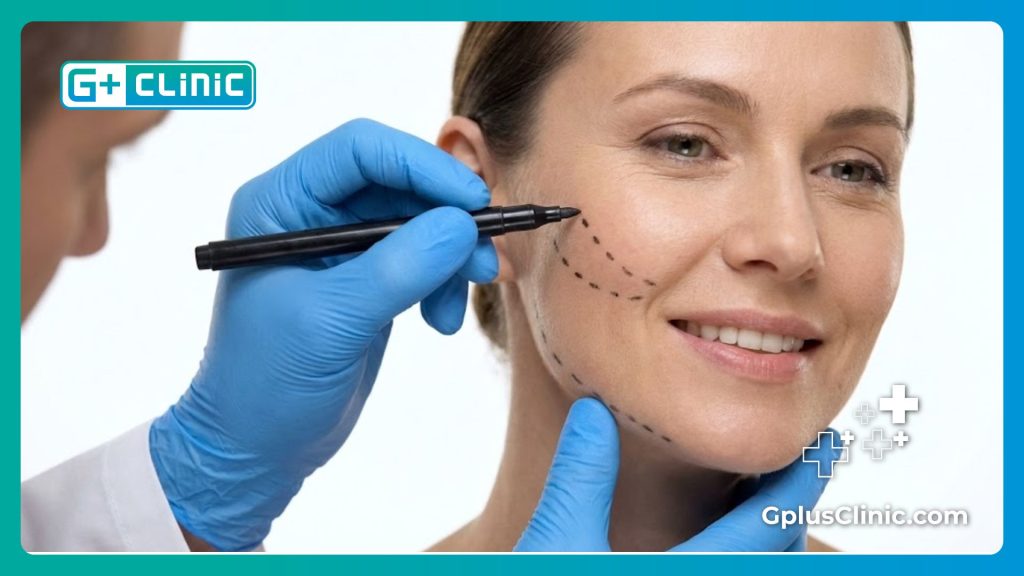
- Surgical Mapping: Precise marking of incision lines while awake.
- Anesthesia Induction: Smooth transition to sleep by specialists.
- The Procedure: Executing the facelift with gentle tissue handling.
- Hemostasis Check: Ensuring all bleeding is stopped before closure.
- Sterile Dressing: Applying bandages to support the face.
- Recovery Room: Monitoring vitals until full wakefulness.
- Overnight Stay: Hospital observation to manage early swelling.
- Discharge Check: Final assessment before returning to the hotel.
Following this strict protocol allows G+ Clinic to control every variable related to Facelift Risks in Turkey.
Technique Comparison: Risk vs. Reward
Different surgical techniques carry varying levels of invasiveness, which directly correlates to Facelift Risks in Turkey.
The table below compares popular techniques to help you understand the associated Facelift Risks in Turkey:
| Technique | Invasiveness | Recovery Time | Risk Level | Longevity |
| Deep Plane Lift | High | 3 – 4 Weeks | Moderate (Requires Expert) | 10-15 Years |
| SMAS Lift | Moderate | 2 – 3 Weeks | Low to Moderate | 8-10 Years |
| Mini Facelift | Low | 1 Week | Very Low | 3-5 Years |
| Thread Lift | Non-Surgical | 2 – 3 Days | Minimal (Temporary) | 1-2 Years |
| Ponytail Lift | Moderate | 1 – 2 Weeks | Low | 5-7 Years |
| MACS Lift | Moderate | 2 Weeks | Low | 7-10 Years |
| Liquid Facelift | Non-Surgical | Immediate | Very Low (Injection risks) | 6-12 Months |
| Stem Cell Lift | Minimally Invasive | 1 Week | Low | Variable |
التصدير إلى “جداول بيانات Google”
Choosing the appropriate technique based on age and skin quality is essential for mitigating Facelift Risks in Turkey.
When Do Facelift Results Appear?
Initial results are visible immediately after dressing removal, but the final, refined outcome appears between 3 to 6 months post-surgery once all residual swelling and edema have fully resolved.
Patience is a medical necessity here. Rushing the recovery or judging the appearance too early can lead to unnecessary anxiety about Facelift Risks in Turkey. (According to Cleveland Clinic, post-operative swelling can obscure the final contour for several weeks). Therefore, understanding this timeline helps patients distinguish between normal healing and actual Facelift Risks in Turkey.
Preparation: The Patient’s Role in Safety
Preparation is a partnership between the doctor and the patient to lower Facelift Risks in Turkey.
The following steps are mandatory for patients to minimize Facelift Risks in Turkey:
- Stop Smoking: Cease nicotine use 2 weeks prior to avoid necrosis.
- Medication Review: Halt blood thinners like Aspirin 10 days before.
- Hydration: Drink plenty of water to prepare the skin.
- Healthy Diet: Increase protein intake to support tissue repair.
- Alcohol Restriction: Avoid alcohol for 48 hours before surgery.
- Rest: Ensure adequate sleep to boost the immune system.
- Supplements: Stop herbal teas and Vitamin E to prevent bleeding.
Adhering to these instructions significantly drops the probability of encountering surgical Facelift Risks in Turkey.
Pros and Cons: A Balanced View
An objective analysis of the benefits versus the Facelift Risks in Turkey is required for informed consent.
The table below highlights the trade-offs to consider regarding Facelift Risks in Turkey:
| Pros (Benefits) | Cons (Potential Downsides) |
| Dramatic Rejuvenation: Turns back the clock 10+ years. | Recovery Period: Requires downtime from social life. |
| Long-Lasting: Results are permanent (aging continues slowly). | Surgical Risks: Hematoma or infection (rare). |
| Confidence Boost: Psychological improvement is significant. | Temporary Numbness: Sensory changes near ears. |
| Natural Look: Modern techniques avoid the “wind-blown” look. | Cost: Requires financial planning. |
| Neck Definition: Eliminates turkey neck effectively. | Scarring: Incisions exist (though hidden). |
| Combined Procedures: Can be done with eyelids/brows. | Swelling: Face looks puffy for weeks. |
التصدير إلى “جداول بيانات Google”
Weighing these factors helps patients realistically assess whether they are ready to accept Facelift Risks in Turkey.
VIP Services: Reducing Stress for Better Healing
Stress releases cortisol, which can impede healing, so our VIP services are designed to lower stress and, by extension, Facelift Risks in Turkey.
Here is how our premium services contribute to a safer experience regarding Facelift Risks in Turkey:
- Private Transport: VIP transfers eliminate travel stress.
- Luxury Accommodation: 5-star hotels ensure restful sleep.
- Dedicated Nurse: Professional medical aid at your hotel.
- Personal Translator: Removes language barriers completely.
- Post-Op Kit: Includes all garments and medications needed.
- City Tours: Relaxing excursions once recovery allows.
By managing the logistics, G+ Clinic allows the patient to focus entirely on healing, indirectly reducing Facelift Risks in Turkey.
Common Myths About Facelift Risks
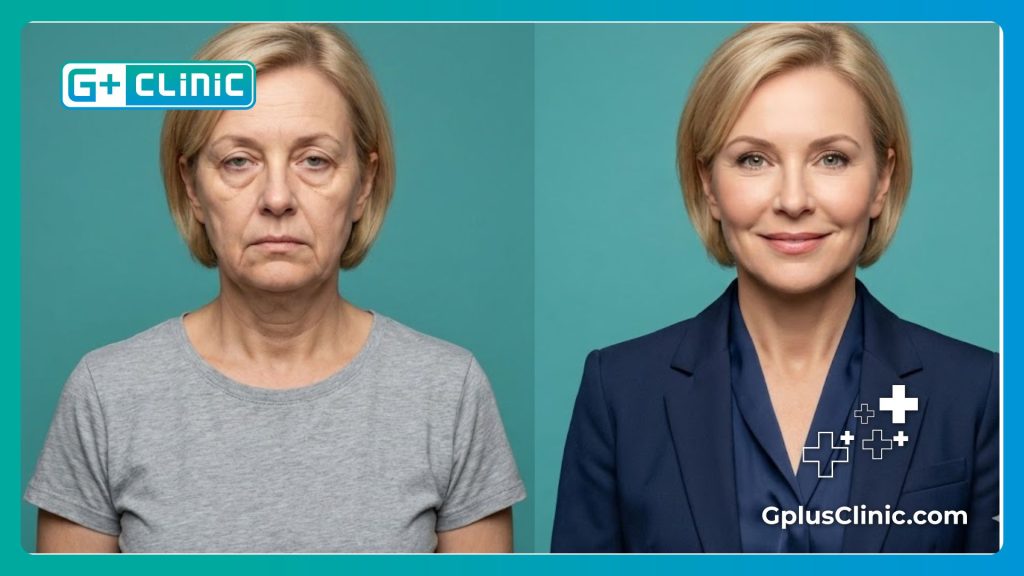
A prevalent myth is that facelifts always result in a fake, “pulled” appearance; however, modern Deep Plane techniques reposition muscle rather than just stretching skin, ensuring a natural look.
Another common misconception is that Facelift Risks in Turkey are higher due to lower costs. In reality, the lower cost is due to economic exchange rates, not a lack of medical quality. Furthermore, many believe that the surgery is extremely painful. Most patients report feeling tightness rather than acute pain, which is easily managed with medication. Dispelling these myths is key to understanding the true nature of Facelift Risks in Turkey.
Mitigating Specific Complications
While we discussed general risks earlier, knowing how surgeons actively manage them provides reassurance against Facelift Risks in Turkey.
At G+ Clinic, specific protocols are in place to handle potential Facelift Risks in Turkey:
- Preventing Hematoma: Surgeons use meticulous hemostasis and may place temporary drains to remove excess fluid, significantly lowering this risk.
- Avoiding Nerve Damage: By staying in safe anatomical planes and using blunt dissection techniques, the main branches of the facial nerve are protected.
- Reducing Infection: Prophylactic antibiotics are administered before, during, and after surgery.
- Managing Scars: Incisions are closed with tension-free techniques, and scar therapy (gels/laser) is initiated early.
These active measures demonstrate that Facelift Risks in Turkey are manageable variables, not random occurrences.
Recovery Timeline: What to Expect
Knowing the daily progress helps patients distinguish between normal healing and potential Facelift Risks in Turkey.
The following timeline illustrates the typical recovery path free from Facelift Risks in Turkey:
- Day 1: Rest in the hospital with head elevated; mild discomfort.
- Day 3: Swelling peaks; drains (if used) are typically removed.
- Week 1: Stitches are removed; bruising begins to fade yellow.
- Week 2: Swelling subsides significantly; makeup can conceal signs.
- Month 1: Most normal activities resume; numbness may persist.
- Month 3: Facial contour refines; sensation returns gradually.
- Month 6: Final results are visible; scars have faded considerably.
Tracking your progress against this schedule helps in the early detection of any Facelift Risks in Turkey.
Real Patient Stories: Overcoming the Fear
Hearing directly from those who have walked this path is the best way to alleviate anxiety regarding Facelift Risks in Turkey. Real-life experiences validate that safety protocols work effectively.
Here are stories from patients who conquered their fears of Facelift Risks in Turkey to achieve life-changing results:
- Sarah (54, UK): “I was terrified of nerve damage, which I read was one of the Facelift Risks in Turkey. The team at G+ Clinic mapped my facial nerves before surgery, and I woke up with full movement and a smile I hadn’t seen in years.”
- James (61, USA): “As a diabetic, I thought infection was a guaranteed part of Facelift Risks in Turkey for me. The surgeons controlled my levels strictly and used advanced sterile techniques. My healing was flawless.”
- Elena (49, Canada): “The idea of ‘botched’ surgery was my biggest nightmare among Facelift Risks in Turkey. seeing the natural before-and-after photos and meeting the surgeon eased my mind. The result is so natural, no one knows I had surgery.”
- Marie (58, France): “I worried about hidden costs adding to the financial Facelift Risks in Turkey. The package was exactly as quoted, covering every medication and transfer. Transparency was total.”
These narratives prove that with the right team, Facelift Risks in Turkey remain a manageable concern, not a barrier to happiness.
Hidden Costs: Financial Transparency
While medical risks are primary, financial surprises can also be considered one of the stressful Facelift Risks in Turkey if not anticipated.
The following list details potential extra expenses to help you budget against financial Facelift Risks in Turkey:
- Flight Tickets: Prices vary by season and booking class.
- Extra Garments: Additional compression bandages for hygiene.
- Post-Op Meds: Specific scar gels or supplements not in the pack.
- Companion Costs: Hotel and food for your travel partner.
- Extended Stay: If you choose to rest longer before flying.
- Tourism: Sightseeing expenses once you feel well enough.
Being financially prepared eliminates stress, allowing you to focus on physical recovery from Facelift Risks in Turkey.
Maintenance Tips for Long-Lasting Results
Preserving the outcome is just as important as the surgery itself, and poor maintenance can reintroduce aesthetic issues often mistaken for Facelift Risks in Turkey.
Here are the essential rules to maintain your look and avoid late-stage Facelift Risks in Turkey:
- Sun Protection: SPF 50+ is mandatory to prevent scar pigmentation.
- Stable Weight: Fluctuations can stretch the skin again.
- Hydration: Water intake supports skin elasticity and health.
- No Smoking: Nicotine destroys collagen and ages skin rapidly.
- Gentle Skincare: Use medical-grade products recommended by us.
- Regular Checkups: Send photos to us for remote monitoring.
Adopting these habits ensures that the investment you made is protected against the recurrence of aging or Facelift Risks in Turkey.
Comparison: Facelift vs. HIFU (Non-Surgical)
Patients often debate between surgical and non-surgical options to avoid Facelift Risks in Turkey, but understanding the trade-off is vital.
The table below compares the efficacy and risks of Surgery versus High-Intensity Focused Ultrasound (HIFU) regarding Facelift Risks in Turkey:
| Feature | Surgical Facelift | HIFU (Non-Surgical) |
| Primary Goal | Structural repositioning of muscle/skin | Collagen stimulation via heat |
| Risk Profile | Moderate (Anesthesia, Healing) | Very Low (Redness, soreness) |
| Result Longevity | 10 – 15 Years (Permanent reset) | 1 – 2 Years (Temporary) |
| Downtime | 2 – 3 Weeks | Zero (Lunchtime procedure) |
| Cost Value | High upfront, long-term value | Lower upfront, repeated often |
| Effectiveness | severe sagging and loose skin | Mild to moderate skin laxity |
| Scarring | Hidden surgical incisions | No incisions |
| Anesthesia | General Anesthesia required | None or topical cream |
While HIFU avoids surgical Facelift Risks in Turkey, it cannot replicate the dramatic, structural results of a true facelift.
Healthy Lifestyle: The Foundation of Safety
Facelift Risks in Turkey are significantly lower for patients who maintain a healthy lifestyle before and after the procedure.
The body’s ability to heal is directly linked to nutrition and fitness. G+ Clinic emphasizes that surgery is a reset button, but your lifestyle is the maintenance plan. Eating antioxidant-rich foods, managing stress, and getting adequate sleep are not just “good advice”—they are medical necessities to prevent infection and poor wound healing, which are key components of Facelift Risks in Turkey.
How to Book Your Safe Journey
Booking with a reputable clinic is the final step in securing yourself against Facelift Risks in Turkey.
Follow this streamlined process to ensure a safe experience free from logistical Facelift Risks in Turkey:
- Contact Us: Reach out via WhatsApp or our website form.
- Medical Assessment: Send photos for surgeon review.
- Custom Plan: Receive a detailed treatment plan and quote.
- Flight Booking: Confirm your travel dates with our coordinators.
- Arrival: Meet our VIP team at the airport for transfer.
- Surgery: Undergo the procedure with our expert team.
- Follow-Up: Continuous checks until you fly home safely.
We manage every detail so you never have to worry about the logistical side of Facelift Risks in Turkey.
Conclusion: Are You Ready for a Safe Transformation?
Facelift Risks in Turkey are a reality of medicine, but they are variables that can be controlled, minimized, and managed by expert hands. Choosing G+ Clinic means choosing a partner who values your safety above all else. If you are ready to look as young as you feel, with the assurance of world-class medical protocols, we are here to guide you. The journey to a rejuvenated self is safe, provided you take the first step with the right experts.
FAQ about Facelift Risks in Turkey
Is a Facelift in Turkey truly safe for international patients?
Yes, when performed in JCI-accredited hospitals, it is extremely safe.
Turkey enforces strict medical regulations for medical tourism. Choosing a reputable clinic like G+ Clinic ensures you are protected against the common Facelift Risks in Turkey associated with uncertified facilities.
What is the most common risk associated with Facelifts?
Hematoma (blood collection) is the most common complication.
However, it occurs in less than 2-3% of cases. Surgeons mitigate this specific aspect of Facelift Risks in Turkey by controlling blood pressure and using drains if necessary.
Can a Facelift cause permanent nerve damage?
Permanent nerve damage is exceptionally rare (less than 1%).
Most “nerve issues” are temporary numbness or weakness that resolves in weeks. Skilled surgeons understand facial anatomy deeply to avoid this severe category of Facelift Risks in Turkey.
How does smoking affect Facelift risks?
Smoking drastically increases the risk of skin necrosis and infection.
Nicotine constricts blood vessels, starving the healing tissue. We require patients to stop smoking weeks in advance to eliminate this preventable cause of Facelift Risks in Turkey.
Will I look natural after the surgery?
Yes, modern techniques focus on repositioning muscle, not just stretching skin.
The “wind-tunnel” look is a relic of the past. Our goal is to make you look refreshed, avoiding the aesthetic Facelift Risks in Turkey of looking “overdone.”